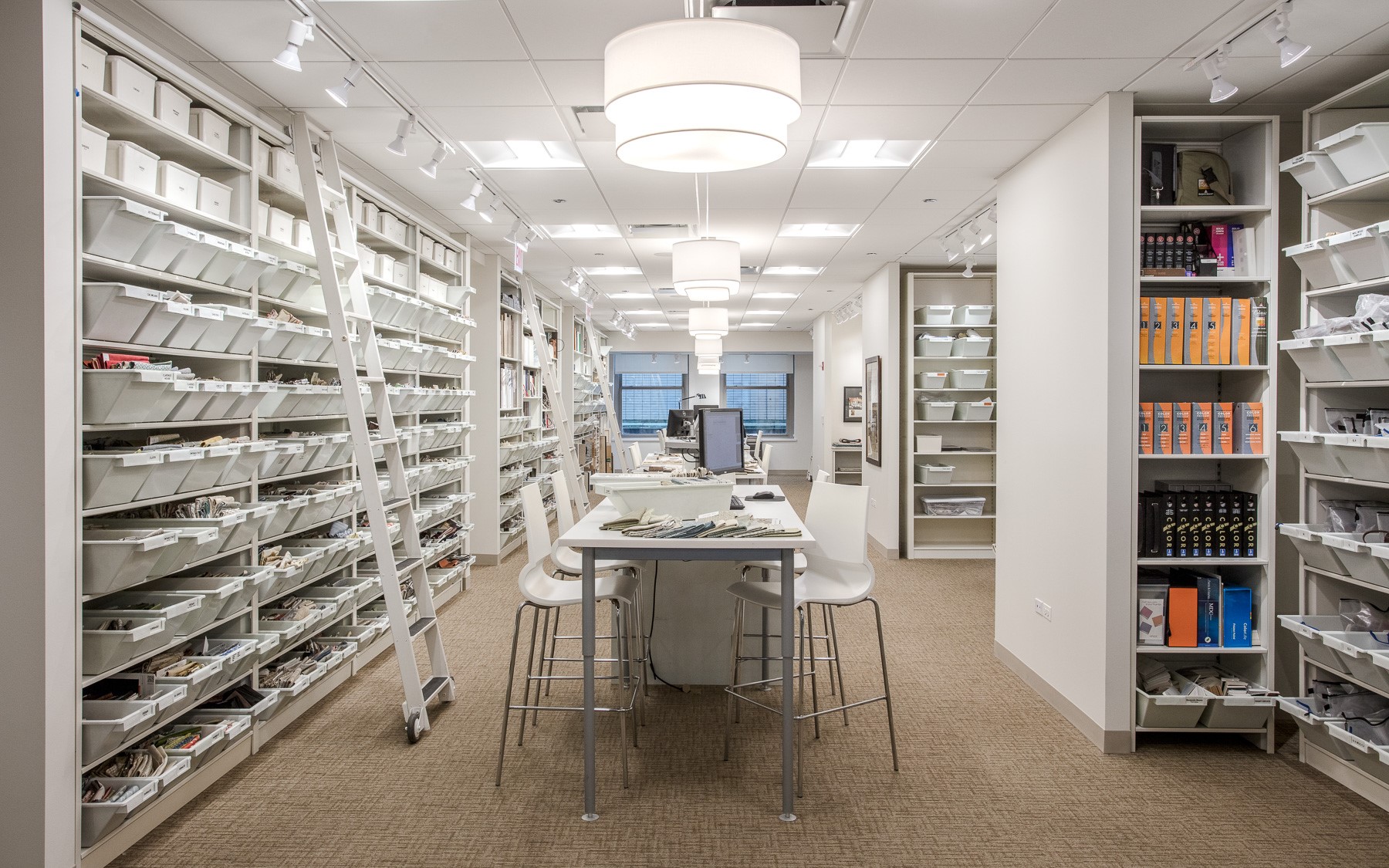
Founded 30 years ago, Chicago-based Tom Stringer Design Partners is a boutique interior design and architecture firm serving high-end residential clients nationwide. The firm delivers luxury home projects —ranging from client budgets of $200,000 to $2 million — purchasing on behalf of and reselling hundreds of custom furnishings to their clients.
Known for their turnkey service, from stocked kitchen drawers and cabinets to art hung on the walls, the firm has grown from a one-man shop into one of Chicago’s largest interior design firms, fueled by repeat clients, referrals and continuing to work for multigenerational families. The firm of 21 people is on track for record revenue and profits in 2025.
Overview
When it comes to paying for business expenses, business credit cards are the most popular means of payment for middle market companies. While Middle Market Indicator data show that companies put approximately 30% of their total expenses on business cards, they are paying for the additional 70% of their business purchases through a combination of other means, including check writing, which covers about 11% of expenses. Checks are an especially popular form of payment for compensating smaller, local and more artisanal vendors or business partners. However, writing checks is becoming a more outdated and less desirable practice for companies looking to introduce efficiencies and competitive advantage wherever they can. That may be part of the reason why many middle market companies — 30% — say they will need credit card solutions in the next few years. An even larger proportion of companies — 55% — express strong interest in working with fintech providers on expense management solutions.
This case study shares how one middle market interior design firm made the switch from processing thousands of checks every year to using a commercial payment card program for managing many of its business and vendor expenses. This move has netted the company more than $165,000 in rebate cash over the past three years while driving significant time and cost-saving efficiencies across the organization.
The Opportunity
Streamline the Accounts Payable Process through a Purchasing Card Program and Unlock Benefits, including a Significant Annual Rebate
As Tom Stringer Design Partners grew, so did its accounts payable burden. On a single full-service project, the team might make more than 1,000 payments to wholesaler and manufacturing vendors across hundreds of products — from architectural finishes to pillow trims — many with multiple installment payments throughout the process. For the accounts payable specialist, this meant manually processing a hefty stack of purchase orders and check requests every week, entering information in the ERP, printing out checks, stuffing envelopes, running them through the postage machine and making sure that they make it to the post office for delivery.
When everything went right, the time to process, mail and receive checks still added several days to a project timeline. When things went wrong — such as data entry errors, a mail delay, lost checks or, worse, a check being intercepted by a bad actor — the ensuing fallout could significantly disrupt a project, not to mention lead to other headaches and reactionary efforts by the firm.
We were printing and mailing more than 4,000 checks annually. It was costing us time, money and waste in paper and postage, and fees and effort to help safeguard against check fraud.”
Daniel Paul
Tom Stringer Design Partners Chief Operating Officer
The Approach
Explore, Select and Implement a Strategic Purchasing Card Program with Benefits for Both the Company and its Partners
In 2022, when a business consultant recommended that the company explore credit cards as a way to simplify vendor payments, the COO was doubtful that many of its smaller and middle market vendors would accept credit cards but was nevertheless willing to investigate the opportunity. Tom Stringer Design Partners addressed the pain points of using checks and opened the door to the rewards of leveraging credit cards by following a strategic adoption process.
Talk to vendors and payees to understand their payment preferences and needs.
The design firm’s accounts payable team started by contacting every vendor on its roster and simply asking whether they accepted credit cards. To Paul’s surprise, about 70% did — and many even preferred the faster payment cycle and cashflow advantages that come with credit card payments.
“I think a lot of people assume their vendors won’t take credit cards. That was me. But it turns out many do,” Paul says. “Talk to your vendors. Look at your volume. And if it makes dollars and sense, go for it. It’s really a painless process.”
Not surprisingly, around a third of the design firm’s vendors charged a processing fee (roughly 3%) to take credit card payments, something Tom Stringer Design Partners was not immediately willing to incur. Even removing these vendors, the company was left with a significant list of existing suppliers willing to take a card payment in lieu of a check, making the switch to cards well worth exploring and setting the firm on the path to finding the right program for its purchasing needs.
Research available programs and negotiate the terms.
Tom Stringer Design Partners already used American Express cards for its ancillary expenses, such as travel, meals and office supplies. Company leadership enjoyed earning the points and using them to help finance the partners’ and company’s travel expenses. However, the prospect of getting cash back through a rebate program instead of points was very meaningful to the company. The COO wanted to find out if such programs existed.
“When you think of a purchasing card program, you think of a Fortune 100 or 500 company with purchase volumes in the hundreds of millions of dollars,” Paul recalls. “I didn’t think anyone would be interested in working with our volume of $3 million to $5 million in purchases a year. That’s when I had this ‘aha’ moment: There are banks that service companies of our size. They want us to grow, and they want us to grow with them.”
Paul began talking with U.S. Bank, an organization with a reputation for working well with middle market companies, to explain its business model and purchasing needs and to discuss what a program could look like, including a cash-back rebate program. While rebates and credit limits were key points of discussion, the COO and AP teams also wanted to understand the bank’s technology platforms that support the card program. “Digital platform needs for mid-market companies are very different from large corporate needs,” says Paul. “You need to not only understand what your credit line will be but also consider the software platform and see how user friendly it is.”
Ultimately, the company landed on a Visa-branded U.S. Bank commercial card program with flexible terms, a tailored digital platform and — most importantly — a rebate program with cash-back incentives. “Earning a dollar is very different than earning 100 points,” Paul says. “Points are a nice perk, but dollars are cash in the bank.”
Implement a seamless rollout that puts cards into employees’ hands and transaction data at decision-makers’ fingertips.
With U.S. Bank’s help, Tom Stringer Design Partners enjoyed a seamless transition to its new payment method. The bank helped the design firm set employee credit limits and configure spending controls to help safeguard against card usage for unapproved expenses. Employees put their new cards to use right away and enjoy no longer needing to wait for reimbursement from the company for their out-of-pocket business expenditures.
The AP team looked for opportunities to streamline processes by putting its new credit card information on file with vendors to expedite purchasing and by setting up autopay for recurring expenses, such as utilities, insurance and supplies. The company also worked with the bank and its ERP software partner to integrate transaction data with its accounting systems and ERP. Custom reporting fields and seamless data uploads help eliminate error-prone manual data entry and significantly expedite the month-end reconciliation process and financial reporting efforts.
Refine and adjust to optimize benefits.
Initially, the company’s credit limit was lower than it liked, but that has increased over time. The AP team has learned to strategically make multiple payments in a month and to pay balances early to keep its credit line open and maximize its rebate. At the same time, firm leaders enjoy the flexibility to carry revolving credit debt if needed, if cashflow ever becomes tighter in the future.
Moving forward, the company plans to explore automating expense coding to map credit card payments to the general ledger, introducing additional efficiencies to its workflow. The team will also more thoroughly analyze the cost of credit card processing fees for its vendors that charge them and determine if the benefits of card usage offset those costs.
In hindsight, as pleased as Tom Stringer Design Partners is with its purchasing program, Paul says it would have been worth considering other banks’ offerings more closely and to compare and contrast services and rebate programs before making a decision. Especially as more banks look to better serve middle market companies, doing due diligence to understand the options and regularly review what else might be available to give your company an advantage is always a smart business move.
The Results
Time and Cost Savings, Less Fraud, and Valuable Rebates Make the Purchasing Card Program a Win/Win
Tom Stringer Design Partners now uses its card program for vendor purchases, utilities, travel and more, earning a significant annual rebate while increasing the efficiency of the accounts payable department and reducing the time, cost and expense of writing checks. Employees and vendors alike have embraced the transition, and clients benefit from faster overall project delivery as credit cards help to expedite the entire process of purchasing, manufacturing, and shipping products and supplies. The company is more confident in its data accuracy, less worried about the financial and reputational repercussions of check fraud, and better positioned to scale its business without the need to add headcount to its AP team. This year, Tom Stringer Design Partners is on track to receive a $65,000 cash rebate, which it will reinvest into its future successes.
There were no good reasons not to do this, candidly. Check fraud was eliminated. Time was saved. Expense was saved. The rebate is earned. Data is being uploaded right into our system, improving the accuracy of our accounting records and making it easy to reconcile our general ledger accounts. It really was a no-brainer.”
Daniel Paul
Tom Stringer Design Partners Chief Operating Officer
Results at a Glance
$55,000
Average annual rebate over the past three years
75%
Reduction in check printing and mailing
25-30%
Increase in accounts payable department efficiency
Read this case study to learn how a middle-market heavy equipment company transformed its treasury function through strategic investments in digital finance capabilities.
In the middle market, growth opportunities often outpace available cash, forcing companies to carefully balance ambition with financial discipline. Learn how one middle market company addressed this challenge by investing in its back office.
Subscribe Today
The Market That Moves America
Find Us on Social
Connect with the latest research, insights and perspectives from the Center, its partners, and other industry leaders.
Be among the first to access new middle market findings
Join the conversation on current trends and emerging issues
Get an inside look at the middle market from a variety of perspectives
Ensure your connection with the market that moves America.