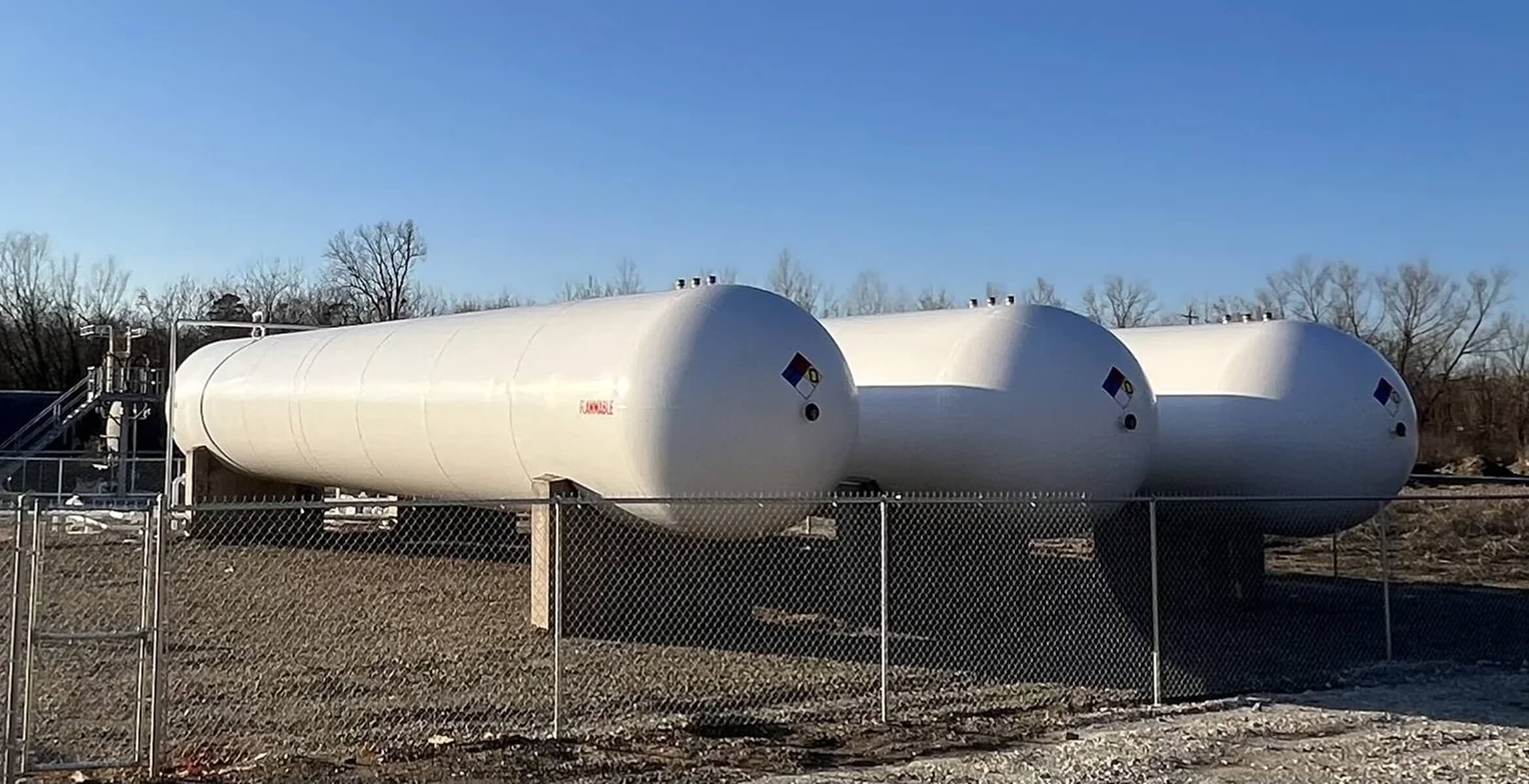
Founded in 2015 by four experienced energy professionals frustrated with the bureaucracy and slow pace of large organizations, 4J Energy is an energy logistics and midstream solutions company focused on the purchase, transportation, storage and wholesale marketing of crude oil and natural gas liquids across North America.
The company put itself on the map as a first mover in shipping propane by rail to Mexico following Mexican market liberalization in early 2016. Since then, 4J Energy has grown rapidly — approaching $1 billion in revenue and managing four commodities across three countries and several subsidiaries — by operating as a nimble, niche player and solving complex logistics challenges. Margins, however, remain narrow.
As the company has evolved from a startup into a more mature organization, a greater back-office structure has become essential to sustaining profitability.
Overview
In the middle market, growth opportunities often arrive faster than cash flow can support. As companies look to seize these opportunities and accelerate their growth trajectories, 83% of businesses anticipate a need for financing in the next one to three years, according to Middle Market Indicator data. Bank loans and lines of credit top the list of expected sources of capital.
Yet recent research on driving growth reveals a persistent challenge: nearly three-quarters of middle market companies describe financial risk — including access to capital — as very or extremely difficult to manage. This disconnect suggests that overcoming financial obstacles to growth remains a critical issue for most middle market businesses and their finance teams.
This case study examines how a middle market commodities company rose to the challenge by strategically investing in its back-office and evolving its finance function. With clearer structure and guidelines to support growth, the company was able to secure the capital needed to pursue its most profitable opportunities — while still preserving its entrepreneurial spirit.
The Opportunity
Remove the Capital Constraints Limiting Growth
About three years after launching their energy logistics business, the founders of 4J Energy found themselves at an inflection point: stay small or grow into a big-market footprint and a business capable of creating generational wealth.
Opportunities to replicate the company’s repeatable business model in underserved markets abounded, and making money would not be a problem. However, to scale successfully, the company needed a larger credit line and a more sophisticated approach to managing margins and controlling the slippage that could erode profits.
While it was important to the founders to stay agile and avoid unnecessary constraints on the company’s creativity or the problems it could solve, they knew they needed to bring in specific financial expertise to help manage the rapid growth they decided to pursue. Alexx Gonzalez, CPA, joined the team as the company’s first accounting hire in 2019. The founders agreed to give their new director of accounting the authority to establish some guardrails to help keep the growth journey on track.
The founders come from these really large shops where they saw structure as bureaucracy, consistency as red tape. There needed to be a mindset shift — an awareness of a middle space where there is enough structure that we can scale, but not so much structure that you can’t go chase the new deal.”
Alex Gonzales, CPA
4J Energy Chief Financial Officer
The Approach / Solution
Build the Back Office and Financial Function as Quickly as the Front
As the inaugural member of the back-office team, Gonzalez’s role with the organization and his staff grew as the company evolved. In the early days, he knew he needed to start by reframing structure as a strategic advantage rather than a bureaucratic necessity. That foundation enabled a deliberate, multi-step approach to scaling — strengthening accounting, banking relationships, automation and continuous learning along the way.
Communicate the Importance of Structure
Entrepreneurs can balk at structure and control — the very issues that often lead them to start their own initiatives. “Yet growing companies reach a point where not having consistency no longer makes sense, and they must apply some structure,” explains Gonzalez. “You just can’t have 50 subprocesses and expect something not to break.”
The key is finding similarities among the various opportunities, products and markets, and leveraging those parallels to define standard workflows that enable scaling without limiting creativity. The structure (and rationale behind it) must be clearly communicated to leadership with an emphasis on how it supports growth goals.
“Structure can help you get to yes on as many projects as possible while keeping you on the path of making informed decisions and prioritizing return on capital,” continues Gonzalez. “Come to me about refined products. Come to me about propane. Talk to me about vessels and barges and rail cars and trucks. It’s all available to you, but there’s a middle space where there’s enough structure that we can do this the right way.”
Build a Scalable Accounting Structure
Not every deal is destined to be profitable. While experienced dealmakers often rely on intuition, timely and accurate financial reporting is essential to validating those instincts and helping business leaders and their financial partners make the right decisions.
By prioritizing investments in its finance function, 4J Energy built an accounting structure and team that scaled alongside the business. Gonzalez’s own role evolved from the director of accounting to vice president of finance and, eventually, chief financial officer. The accounting team evolved beyond a traditional bookkeeping role into a strategic partner, delivering trusted, deal-level metrics at a consistent cadence. Cost isolation by transaction, limited prior-period adjustments and disciplined close timelines helped establish confidence that the numbers were both accurate and actionable. Just as important, Gonzalez and his team paired the data with insight—providing context and commentary on what the numbers meant for deal health, margins and risk.
As the company expanded into new products and geographies, including Canada and Mexico, this foundation became even more critical. Solid financial reporting provided the foundation on which additional complexity—such as tax, regulatory and compliance requirements—could be effectively managed. It also strengthened relationships with financing partners. Lenders and capital providers could clearly see the company’s ability to capitalize on its vision and generate returns. Besides evaluating opportunities based solely on ideas, these partners were now also considering them based on a clear financial rationale supported by metrics they could trust.
Upgrade Banking Relationships and Credit Line
For any company that purchases inventory before selling it, access to capital is critical. As a result, the credit line often becomes the headline of a banking relationship. Gonzalez cautions, however, that credit capacity should not be the sole consideration; a banking partner’s willingness to actively support growth matters nearly as much.
Like many middle market companies, 4J Energy initially partnered with a local bank, starting with an asset-backed credit line of approximately $6 million. As the business grew beyond that level, the company transitioned to a regional bank capable of providing a $20 million credit facility. Before long, however, 4J Energy once again found itself constrained by the limits of its financing.
“It felt like my relationship with my first two banking partners was entirely about, ‘Show me your financial statements. Show me your debt covenant calculations. OK, you’re fine—go about your business,’” Gonzalez explains. “It felt very much like being policed, to an extent.”
In 2023, the company began working with Wells Fargo, doubling its credit line to $40 million. “When we made the transition to Wells Fargo, we found the runway to grow—and a willing partner to help make that happen.”
Invest in Automation to Support Scaling
Access to credit is only part of the equation; companies must also manage that credit effectively. Negotiating favorable terms with vendors is critical, as is the ability to collect against those terms quickly and consistently.
“A cash conversion cycle drives every single thing that we do,” says Gonzalez. “My job—beyond just raising capital—is to manage our credit line really, really efficiently. I have to be able to support our marketers and say, ‘Yes, you can take on those oil wells. Yes, you can take on that producer—because we can pay them.’”
With the full support of its banking partner, 4J Energy has invested in a set of automation tools designed to shorten the cash conversion cycle and enable faster, more confident scaling, including:
– A branded payment portal integrated with the accounting system, reducing reliance on checks and enabling automated customer account drafts.
– A deal capture system that improves the timeliness of invoicing and automates the recording of bills of lading (BOLs) and product movements.
– An enterprise-grade ERP (Microsoft Dynamics) to automate labor-intensive accounts payable processes.
– A project management platform (Asana) that provides real-time visibility into the status of multiple back-office workflows across the organization.
As 4J Energy continues to implement and refine these tools, the company views automation not as a one-time initiative, but as an ongoing journey. Gonzalez encourages team members to explore each platform’s capabilities beyond their initial use cases, continuously identifying opportunities to streamline workflows, improve processes and support the company’s next phase of growth.
Maintain an Inquisitive Mindset About What’s Possible
Scaling profitably in a low-margin environment requires more than capital and systems—it takes healthy curiosity. Gonzalez approaches relationships with financial partners as ongoing learning opportunities. He actively seeks insight into what peers are doing, where others are finding incremental gains and how partners can help uncover new paths to growth.
That mindset comes with higher expectations. Gonzalez expects partners to bring more than products or capital to the table, and he looks for them to contribute perspective, expertise and proactive ideas. As a Wells Fargo client, Gonzalez takes full advantage of the bank’s economic forums and oil and gas events, using those venues to deepen his understanding of market dynamics and build relationships with industry leaders.
Those conversations have sparked new areas of exploration, most recently around foreign exchange strategy. As 4J Energy expands its footprint in Canada, the company is working with its bank to evaluate whether invoicing exclusively in U.S. dollars may be leaving margin on the table, and whether shifting some transactions to Canadian dollars could unlock incremental gains—gains that can make a big difference in an industry defined by thin margins.
“If I’m making $0.50 per barrel, that’s a triumph,” Gonzalez adds. “If I can move the peg up just a little bit—everywhere through the value chain, even on the treasury and finance side—in aggregate, I’m going to have a really successful company.”
I have blind spots like everyone else. So, every conversation I have with my bank is an opportunity to ask what I’m missing and what other companies are doing that I’m not. If I’m going this way and everybody else is going that way, what’s the why behind it?”
Alexx Gonzalez, CPA
Chief Financial Officer
The Results
Well Positioned to Pursue Profitable Growth
By making targeted investments in its finance function, 4J Energy has strengthened its ability to empower decision-makers, build trust with financial partners and act decisively on the right opportunities at the right time — all while preserving the entrepreneurial mindset that has fueled the company’s growth since day one. Today, financial reporting is timely, audits are cleaner and both invoicing and collections move significantly faster. Together, these improvements have positioned the company with the capital needed to support dramatic increases in volume and maintain profitability as it continues to scale.
Don’t be afraid to build your back office as quickly as you build your front office. You’ll see the payoff through quicker financial reporting, cleaner financials, cleaner audits and more trust in your numbers when you’re making strategic decisions.”
Alexx Gonzalez, CPA
Chief Financial Officer
Results at a Glance
567%
Increase in Line of Credit Since Companies Inception
60%
Reduction in Cash Conversion Cycle, From 30 to 12 Days
44%
Reduction in Close Cycle, From 45 Days to 25 Days
8x
Increase in Invoices Processed Per Week
Learnings for Other Middle Market Companies
Sometimes the entrepreneurial spirit that helps a company reach a certain point can end up blocking its ability to grow further.
Investing in more structure within the finance function can unlock new paths to growth — such as raising much-needed capital, identifying margin opportunities or accelerating cash flow turns to free up money for further investments.
Finding the right balance between preserving entrepreneurial spirit and building structure is key to reaching the next level. This often requires targeted investments in the right people, partners and technology.
Read this case study to learn how a middle-market heavy equipment company transformed its treasury function through strategic investments in digital finance capabilities.
As a growing interior design firm, Tom Stringer Design Partners was processing thousands of paper checks each year to cover business and vendor expenses. Learn about the changes they made to turn payments into a source of efficiency and financial advantage.
Subscribe Today
The Market That Moves America
Find Us on Social
Connect with the latest research, insights and perspectives from the Center, its partners, and other industry leaders.
Be among the first to access new middle market findings
Join the conversation on current trends and emerging issues
Get an inside look at the middle market from a variety of perspectives
Ensure your connection with the market that moves America.