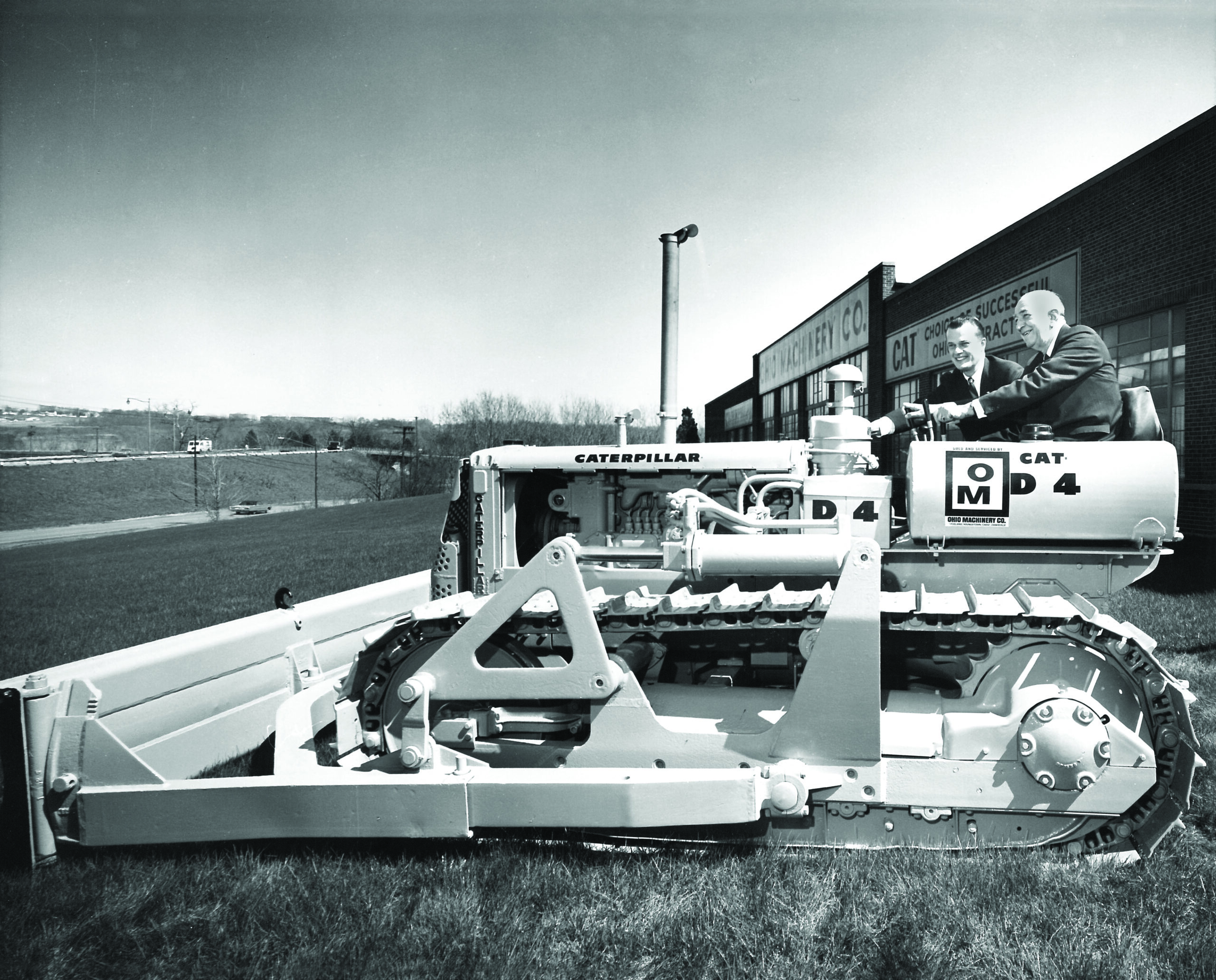
Founded in 1945 as a Caterpillar Inc. dealership, Ohio Machinery Co. is a family-owned heavy equipment sales and services company serving Ohio, Northern Kentucky and Southeastern Indiana. The acquisition of Holt Company of Ohio in 2003 doubled the company’s size and launched a period of accelerated growth, including the acquisitions of Allstate Peterbilt in 2018 and AMG Peterbilt in 2019.
Today, Ohio Machinery operates seven brands with approximately 1,800 employees across 35 locations. Its integrated model creates multiple revenue streams and deep customer relationships but also increases operational complexity, demanding efficient, scalable financial operations to support growth and strengthen customer and employee experiences.
Overview
Digitization and automation continue to reshape priorities in the middle market, with 35% of companies identifying digital transformation as a top five strategic objective over the next one to three years, according to Middle Market Indicator data. While intelligence tools, including AI, currently top the list of planned technology investments, many middle market companies are also considering near-term investments in finance automation tools: around 25% say they plan to invest in accounts payable and accounts receivable solutions.
These investments suggest a broader shift in how middle market companies think about growth. Leaders continue to cite improved productivity as the top advantage of digital investments, followed closely by time and cost savings. At the same time, many organizations increasingly view automation as a way to strengthen customer experience and improve employee satisfaction—priorities that align closely with the persistent challenges of sales growth and employee retention. The implication is clear: for many organizations, investments in digitization and automation—particularly within finance and treasury operations—may create opportunities not only to streamline operations but also to strengthen both internal and external relationships.
This case study explores how a middle-market heavy equipment company transformed its treasury function by investing strategically in digital finance capabilities. The company improved operational efficiency, enhanced customer experience and reduced administrative burdens, creating the perfect foundation for continued growth.
The Opportunity
Get Ahead of Operational Complexity and Build a Financial Foundation for Scalable Growth
With growth booming and major acquisitions on the near-term horizon, the Ohio Machinery Co. leadership team reached an inflection point: continue operating with largely manual, decentralized financial processes or invest in the infrastructure needed to support a larger, more complex organization.
The year prior to the Peterbilt acquisition, the accounts payable team processed approximately 14,000 checks entirely by hand, including printing, stuffing and mailing each payment. Receivables were equally labor-intensive, with cash and checks collected across a distributed branch network and physically transported for deposit, creating occasional delays and adding administrative complexity. Month-end close was often an all-hands-on-deck effort, with employees from across the accounting function pitching in to post payments and reconcile accounts.
Historically, the team’s dedication ensured accurate customer accounts and a high level of service. But leadership recognized that the manual processes could not scale alongside the company’s growth ambitions. With recent and planned acquisitions adding new customers, vendors, employees and transaction types, Ohio Machinery saw an opportunity to modernize its treasury and financial functions and create a more efficient and integrated operating model across its expanding footprint.
At the end of the day, the goal is to keep the customer experience at a high level. Customers shouldn’t see what’s happening behind the scenes—they just expect their accounts to be accurate, their credit to be clear and their experience to be seamless. We didn’t want accounting processes to be the thing that held that up.”
Mary Ellen Paukst
Accounting Manager
The Approach / Solution
Automate Treasury Through Partnership, Phased Investment, and Continuous Improvement
Pursuing a large-scale transformation all at once can be overwhelming. Ohio Machinery Co. elected to approach its treasury modernization journey as a strategic, ongoing process focused on solving the right problems at the right time.
Partner Strategically and With an Open Mind
Rather than approaching digital transformation alone, Ohio Machinery Co. looked to its partners for support. The company leaned into a long-standing, collaborative relationship with Wells Fargo to help modernize treasury operations and support the company’s next phase of growth.
Through regular communication and planning discussions, the company began sharing its evolving operational needs, acquisition plans and process pain points, while exploring how treasury automation could improve payment workflows, strengthen cash management and reduce manual effort. The open dialogue created a pathway for ideas, innovation and problem solving to thrive and has empowered Ohio Machinery to continuously evaluate and adopt new tools, fraud protections and automation capabilities aligned to its growth strategy and needs. Most importantly, the proactive approach has helped the company stay ahead of emerging risks and opportunities while creating a scalable foundation for future innovation.
Invest Incrementally and Modernize Payables and Receivables Step-by-Step
Ohio Machinery took a phased approach to treasury modernization, focusing first on high-impact opportunities within accounts payable and receivable.
On the payables side, the company transitioned from fully manual check processing to a centralized, automated payment system. Using Payment Manager, payment files are now uploaded digitally, and the company’s bank issues payments through checks, ACH or virtual cards based on vendor preferences. Positive Pay and other fraud management tools help detect altered or fraudulent checks before they clear.
On the receivables side, Ohio Machinery introduced both physical and virtual lockbox solutions. Customers can send payments directly to a secure processing center where checks are opened, scanned and deposited, while branch locations use scanners to electronically capture and deposit payments locally. These tools accelerated cash application, improved visibility into incoming payments and reduced the risk of lost or misapplied funds.
Collectively, the investments in the treasury function replaced fragmented, manual workflows with a more integrated digital process. Speed, accuracy, control and scalability improved even as payments became more secure.
Before, it felt like we were constantly digging out of a hole—leaving work unfinished, coming back the next day to even more and just trying to keep up. Now, people can come in, do their jobs and actually feel in control of the work. That’s lifted morale, reduced stress and given our team the space to focus on customers and vendors. When you’re not scrambling behind the scenes, people take more pride in their work—and that shows in every interaction.”
Alyssa Hatfield
Accounts Payable/Receivable Manager
Commit to Continuous Improvement–for Processes and for People
With core treasury processes automated, Ohio Machinery Co. continued building on that foundation over time, layering in additional tools, integrations and workflow improvements across accounts payable and receivable systems. New capabilities—including ACH account validation and enhanced fraud controls—helped further reduce risk while improving confidence in vendor and payment data.
Just as important, automation transformed the day-to-day experience of the accounting team by reducing repetitive manual work and creating more time for solving problems and supporting customers. “Automation has allowed our team to move beyond data entry,” says Alyssa Hatfield, accounts payable/receivable manager. “Our people understand the full accounting process now—so they can troubleshoot issues, improve workflows and actively look for ways to make our systems better.” Even as the company continued growing through acquisitions and increasing transaction volumes, Ohio Machinery maintained the size of its accounts receivable department while improving service levels. Employees experienced less administrative strain, the credit department operated more smoothly and customers benefited from faster, more accurate account management.
“Whenever you mention automation, there are people who are going to get nervous,” says Mary Ellen Paukst, accounting manager. “And there’s always a learning curve with change, but it didn’t take long for people to see the value. In the end, it made their jobs easier, improved the customer experience and made everyone wish we had done it sooner.”
Today, automation is seen not as a one-time project but as an ongoing journey. The company continues to explore new opportunities, including optimizing credit card processes, refining workflows and integrating additional systems to ensure the financial infrastructure keeps adapting alongside the business and the people supporting it every day.
From a customer experience perspective, we offer more payment options and apply money quicker and with more accuracy. From a vendor perspective, we offer a variety of different payment options, all using the same internal processes. From an internal control perspective, we separated duties within our staff and apply more checks and balances. From a risk management perspective, we validate vendor accounts with more confidence and utilize the bank portal to manage auto debits and check endorsements.
Kevin Keefer
Controller
The Results
Positioned to Scale with Greater Speed, Visibility, and Control
By modernizing treasury operations, Ohio Machinery Co. created a more scalable financial foundation that streamlined acquisition integration and positioned the business for ongoing growth without proportional increases in overhead. Between 2017 and 2025, the company doubled receipts while reducing the month-end close team from three people to two. Not only is the work faster and the cash flow improved, but also customers enjoy consolidated accounts and visibility into always-up-to-date credit lines, driving more sales, faster decision-making and a seamless experience across divisions.
These improvements have created momentum for ongoing modernization. “In today’s environment, you can’t afford to be stagnant, and you have to stay ahead of change,” says Paukst. “Investing in new technology allows you to grow faster, operate more accurately and keep people engaged. Once teams see the value, they’re more open to adopting what’s next.”
Results at a Glance
93%
Reduction in Payment Posting Time (from 2 weeks to 24 hours)
164%
Increase in Electronic Receipts, Improving Working Capital and Expediting Cash Flow
28%
Improvement in Average Days Sales Outstanding (from 40 days to 29 days)
200%
Increase in Receipts Managed Per Person
Learnings for Other Middle Market Companies
Digital transformation in finance is more than an efficiency play. Reducing manual work improves morale, enabling teams to deliver better experiences that drive sales.
Strong partnerships matter. Working closely with a banking or technology partner can surface new capabilities, reduce implementation friction and help companies evolve.
Investing early and incrementally in scalable financial infrastructure helps companies stay ahead of complexity instead of responding to it.
In the middle market, growth opportunities often outpace available cash, forcing companies to carefully balance ambition with financial discipline. Learn how one middle market company addressed this challenge by investing in its back office.
As a growing interior design firm, Tom Stringer Design Partners was processing thousands of paper checks each year to cover business and vendor expenses. Learn about the changes they made to turn payments into a source of efficiency and financial advantage.
Subscribe Today
The Market That Moves America
Find Us on Social
Connect with the latest research, insights and perspectives from the Center, its partners, and other industry leaders.
Be among the first to access new middle market findings
Join the conversation on current trends and emerging issues
Get an inside look at the middle market from a variety of perspectives
Ensure your connection with the market that moves America.