

Executive Summary
Most existing supply chain research and literature focuses on the needs and perspectives from the “end” of the supply chain—typically larger manufacturers, distributors, and retailers, many of which ultimately sell products to end users or consumers. Much less is known about the attitudes, approaches, and practices of those companies that operate as links in supply chains—the tier 1, 2, and 3 suppliers that are critical partners of those larger companies.
Since many middle market businesses serve as these links, the National Center for the Middle Market has endeavored to learn what makes a middle market company the perfect or ideal link. In other words, how do the most successful middle market suppliers meet their customers’ needs and efficiently partner with their own suppliers while growing their businesses at the same time?
The research shows that the best-performing middle market suppliers tend to be the largest and fastest-growing middle market companies; that is, company size correlates with superior supply-chain management, and superior supply-chain management correlates with growth. Compared to their less successful peers, these suppliers focus on fewer rather than more customers. As a result, they develop deep, collaborative customer relationships. They meet with their customers often and cede some level of decision-making to customers. Often their business systems are highly integrated with their customers’ systems across a wide spectrum of functions. The most successful middle market suppliers are likely to enhance their level of service to customers through a variety of techniques, including benchmarking, using third-party logistics providers (3PLs), participating in supplier councils, and leveraging data exchange to improve supply chain visibility.
Due to their dependence on a few critical customers, most middle market suppliers feel some level of pressure from their customers and may find themselves susceptible to the power dynamics of the larger corporations that they serve. To help offset this power imbalance, middle market firms work hard to ensure their customers rely just as heavily upon them. They tend to be the exclusive supplier (or one of only a few suppliers) for the products or services they offer. And they believe their customers are loyal and vested in their business’ success: Many say a key customer would be likely to step up offer assistance in the event of a financial hardship.
The most successful middle market companies tend to be just as collaborative with their own set of suppliers. They maintain close, long-term upstream relationships. As with customers, they feel some pressure from their suppliers. In turn, they typically exert a significant amount of influence over how their suppliers run their businesses.
As a result of these relatively narrow supply chains both upstream and down, many middle market firms keep tabs on the financial health of both their suppliers and their customers. Most middle market suppliers also take some action to safeguard against a major customer or supplier disruption. Middle market suppliers are equally, if not more, concerned with mitigating their operational and cybersecurity risks.
Effective supply chain management is most prevalent among the largest middle market businesses with revenues between $100 million and $1 billion. But the practices of these large firms are not purely a function of size. Middle market companies of all sizes that adopt the practices of top performers stand to benefit by improving their service levels and enhancing their value to their customers, and are likely to see their own fortunes grow as a result.
Key Takeaways
Top performing suppliers put more eggs in fewer baskets. The best supply chain links are much less diversified than average in terms of their customer base, focusing on a limited number of key customers. How they manage those relationships is critically important. They concentrate on developing deep, highly collaborative partnerships with customers, and are often willing to change their own business practices to meet customer needs.
Effective suppliers get help when they need it. Those companies that are most confident in their supply chain capabilities tend to look beyond their four walls, when necessary, to better serve their customers’ needs. The majority of these companies use 3PLs for functions such as transportation and warehousing. Many belong to supplier councils, or groups of suppliers who work together to share best practices and tackle challenges. They are also more open to outsourcing certain aspects of supply chain management, such as inventory management.
The best suppliers maintain mutually dependent customer relationships. Top suppliers are deeply entrenched in their customers’ businesses, often maintaining high levels of system integration across all aspects of the business. While these suppliers’ success clearly hinges upon a few key customers, those customers are just as dependent on their middle market suppliers. In many cases, the suppliers serve as the primary or exclusive provider of some products and services. Customers are often loyal to the point that they would be willing to help a supplier in a financial pinch.
Ceding some control to customers can lead to greater success. The best-performing suppliers give their top customers more control or influence over some aspects of supply chain decision-making, specifically new product development, data security procedures, choice of suppliers, and pricing. Companies that prefer to maintain greater in-house control typically serve a greater number of smaller customers. But they are less likely to be an exclusive provider to any of those customers. These companies also tend to be smaller, slower-growing middle market firms.
Size helps. With size come the benefits of scale, more resources, and greater expertise. The largest middle market firms leverage these advantages to serve as more proficient suppliers to their customers. As a result, large middle market firms are generally more satisfied with their overall supply chain performance, more invaluable to their top customers, and less vulnerable to risk. However, smaller middle market firms are not automatically excluded from adopting the practices of their larger peers just because they lack the same scale. Like their larger peers, smaller mid-sized firms are capable of developing collaborative relationships and rich interdependencies both up and down the supply chain.
Detailed Findings
Serving from the Middle: The Landscape for Middle Market Suppliers
Middle market manufacturers and distributors often find themselves in the unique position of a serving as a link in the supply chains of larger organizations. In this capacity, they operate as suppliers to businesses downstream, as well as a customer to other suppliers upstream.
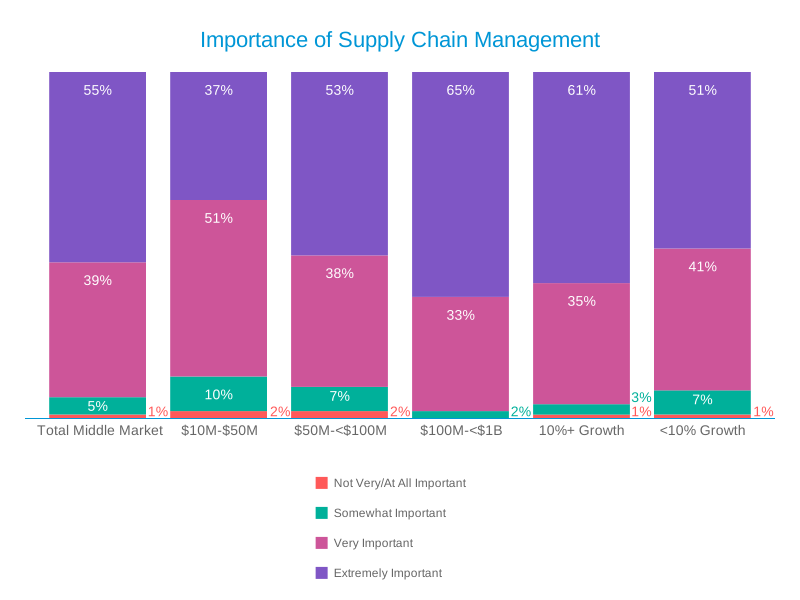
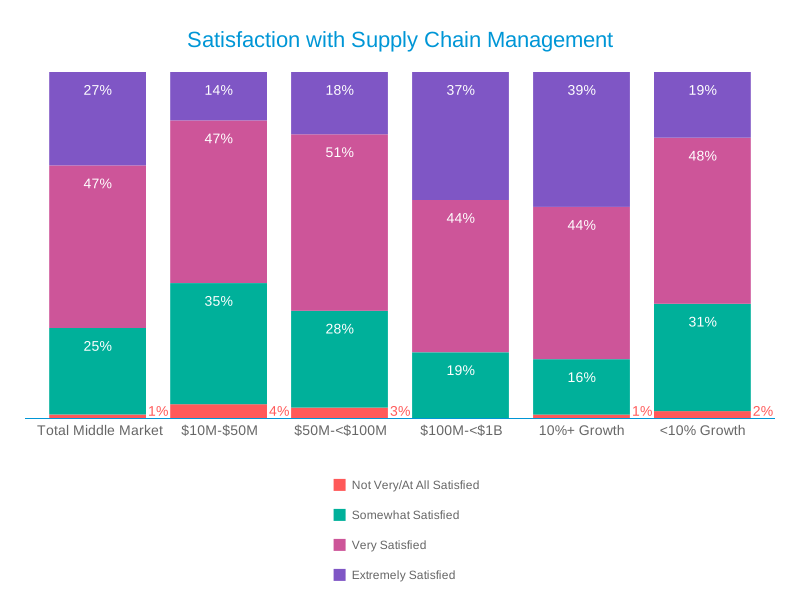
The Center’s research shows that while virtually all (94%) middle market suppliers prioritize the importance of supply chain management, and most (73%) are generally satisfied with how their firms handle supply chain management, key differences exist among firms when it comes to how they fulfill their roles. Those differences appear to be strongly related to company size and how fast the business is growing.
Importance and Satisfaction
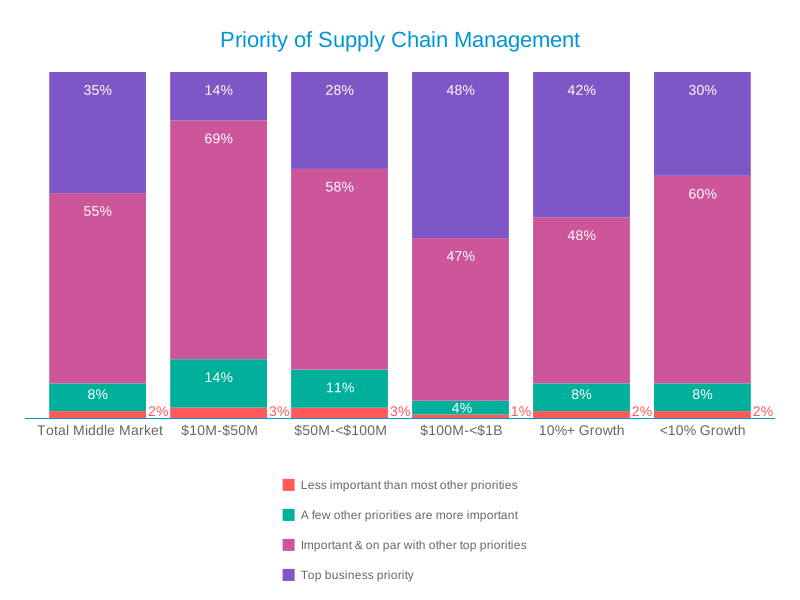
The largest middle market companies (those with revenues between $100 million and $1 billion) and the fastest growing middle market firms (with annual revenue growth of 10% or more) place considerably greater importance on supply chain management and are significantly more confident in their capabilities than smaller, slower-growing firms. These businesses are also much more likely to say that supply chain management is a top business priority.
Approach and Process
The emphasis these companies place on supply chain issues plays out in several ways. They tend to align supply chain strategy closely with corporate strategy and to view supply chain strategy as a vehicle for driving corporate success.
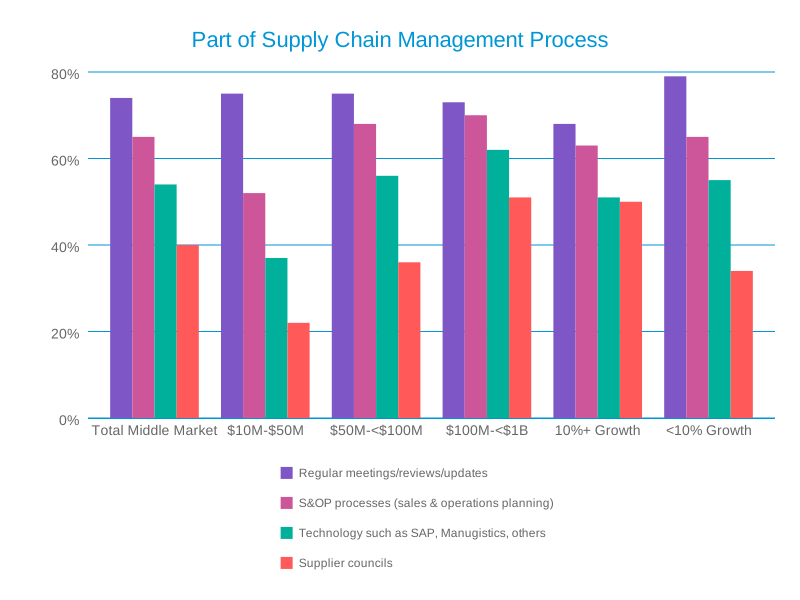
Not surprisingly, their approach to supply chain management is more sophisticated, too. While most middle market companies hold regular meetings or reviews as part of the supply chain management process, and the use of sales and operations planning is fairly widespread, just 54% leverage technology to manage their supply chain. The firms that do use tools such as SAP or Manugistics tend to be larger companies with at least $50 million in annual revenues.
Supplier Councils
These bigger firms, along with those that are growing rapidly, are more involved in supplier councils, or groups of suppliers who come together, often at a customer’s request, to exchange ideas and collaborate on solutions to shared problems. Across the middle market, 40% of firms participate in these groups. That percentage climbs to around 50% when looking at companies with more than $100 million in annual revenue and firms experiencing annual revenue growth of 10% or more. The firms that participate in supplier councils presumably leverage these forums to share best practices, troubleshoot issues, and review metrics and key performance indicators.
Supply Chain Visibility
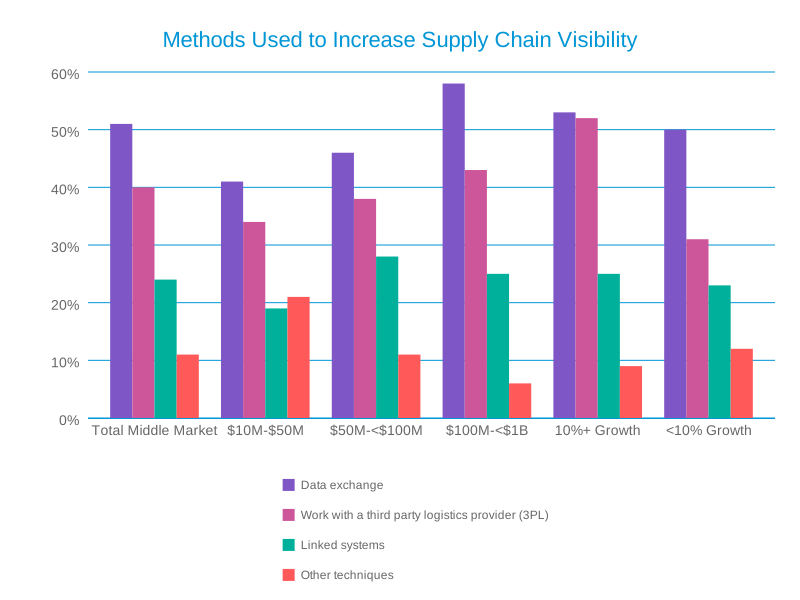
Visibility into the supply chain is becoming a more important issue, especially as companies deal with a wide range of security risks. Among middle market companies, data exchange, or an electronic means of exchanging business data, such as purchase orders, shipping notices, and invoices, is the most popular approach for increasing visibility. Four out of ten middle market companies work with third-party logistics providers, which may offer access to tools and software to increase supply-chain transparency. Linked systems—or integration with a customer’s or supplier’s system, which allows a company to view or keep tabs on its partners’ data and inventory levels—are less common but not rare. About a quarter of all middle market firms use this technique.
Benchmarking
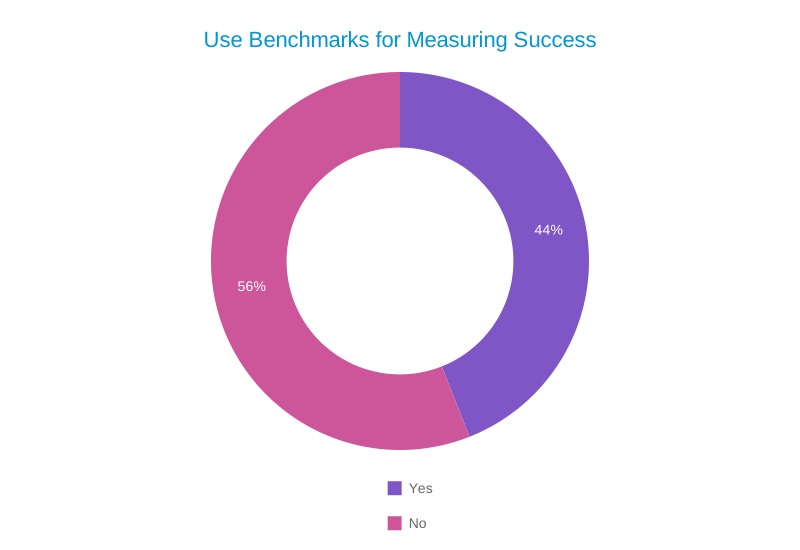
Fewer than half of all middle market companies use benchmarks to measure supply chain management success. The practice is more common among the largest middle market companies and those that are growing the fastest, while smaller companies are less likely to rely on setting clear goals.
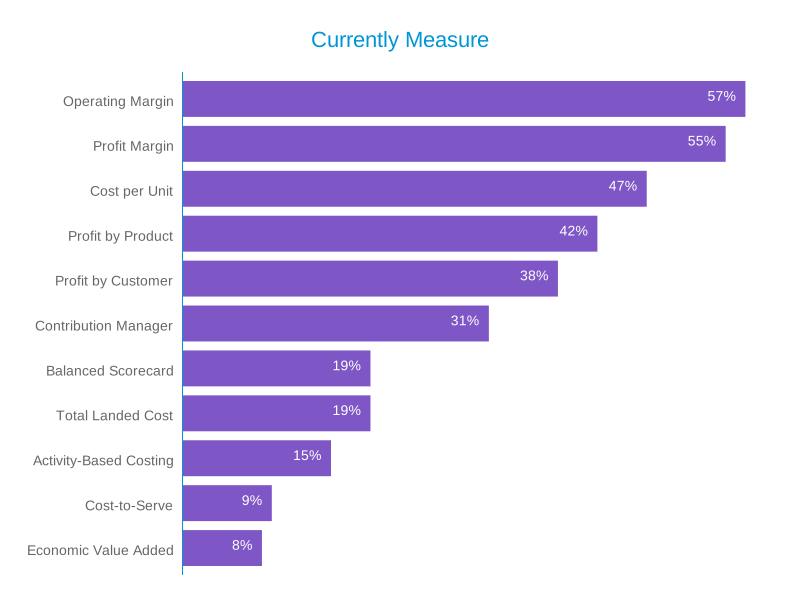
Companies most commonly keep tabs on margin-based metrics, such as operating margin and profit margin. They are less likely to use activity-based costing or measure cost-to-serve. This inability to distinguish where companies make money and lose money on a product-by-product, service-by-service, or customer-by-customer basis puts companies at risk of throwing good money after bad, i.e., continuing to invest in money-draining ventures. (Previous research conducted by the Center underscores these perils among middle market companies. To learn more on this topic, see the Center’s report, Margin Management Among U.S. Middle Market Firms.)
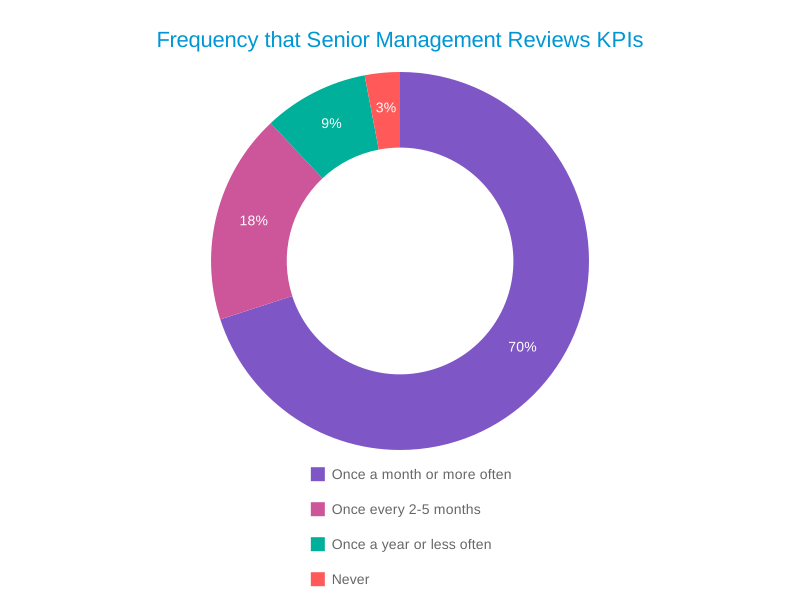
What they do measure, they review frequently. In 70% of companies, senior managers meet at least once a month to review KPIs. Leadership from the largest and fastest-growing companies tend to convene more often, coming together at least every two or three weeks to discuss supply chain KPIs.
Challenges
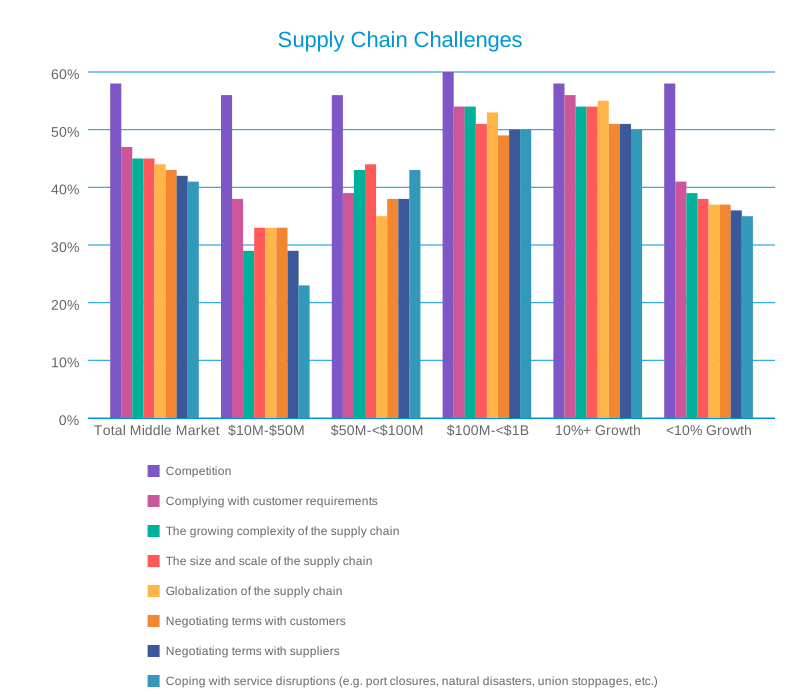
Competitors, customers, and complexity are the three biggest challenges in middle-market supply chain management, in that order. The largest middle market companies seem to be more challenged across a spectrum of issues, from dealing with the competition, to coping with service disruptions, to negotiating terms with their customers and suppliers. A majority of large firms cite globalization of the supply chain as a concern, while only about a third of their smaller peers feel the same way.
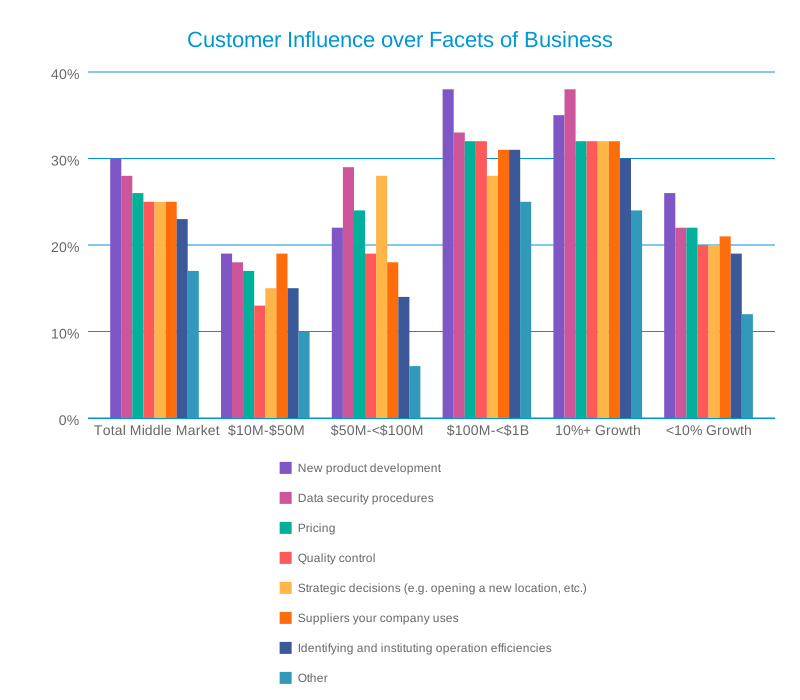
Challenges may become more pressing or urgent as a firm grows simply because the complexity of the business, customer relationships, and supply chain issues grows, too. In addition, larger companies may have more at stake in their relationships and business dealings, leading to a greater degree of perceived challenge. One might assume that the larger the company, the more influence it has over its customers and suppliers. But the reverse seems to be true. The largest middle market businesses are the most likely to say that their customers have more control over various aspects of the business. They are also more likely to say they feel pressure from both their customers and their suppliers. Higher levels of integration between firms reinforces the realization that the firms are “in it together” when it comes to conducting business.
Outsourcing and 3PL Usage
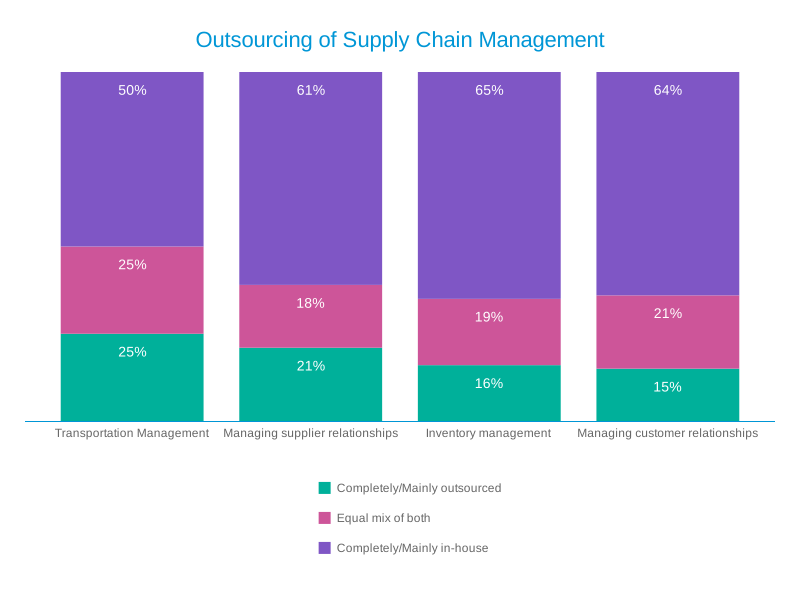
In general, middle market firms prefer to handle most aspects of supply chain management in-house, including inventory management and managing customer and supplier relationships. However, about 50% of companies at least partially outsource transportation management. Larger companies and fast growers appear more open to passing some responsibility for these functions to an outside firm.
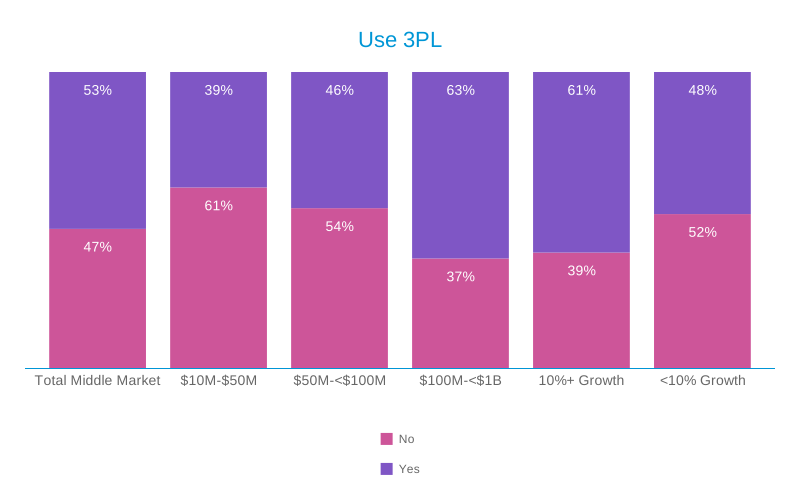
Similarly, larger firms and fast-growing companies are more apt to use a third-party logistics provider. Across the board, 53% of middle market businesses use 3PLs to manage various aspects of the supply chain, primarily transportation and warehousing. In comparison, 63% of the largest middle market businesses and 61% of the fastest-growing companies leverage third-party logistics services. This trend is consistent with firms as they grow: not only do they become more focused on their own core competencies, they often realize that logistics and other supply chain operations can be managed more effectively by third parties specializing in these activities.
In fact, virtually all middle market companies (91%) that use a 3PL partner believe these service arrangements enhance their ability to meet their customers needs by improving speed, accuracy, and safety and/or by affording them the ability to operate locally in regions around the world. The third-party logistics industry is among the most global of all economic sectors. Large 3PLs can typically offer coverage for a company’s inbound and/or outbound supply chains wherever they choose to do business.
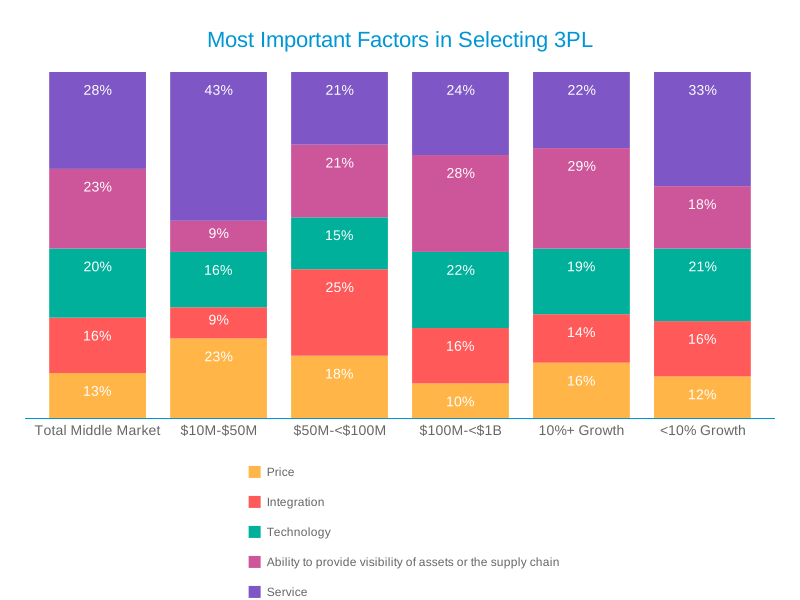
For the overall middle market, service is the most important factor when selecting a 3PL partner, followed closely by the partner’s ability to provide greater visibility into the supply chain. Interestingly, the largest and fastest-growing firms prioritize visibility into the physical flow or location of inventory above all other factors, and to a greater extent than their peers.
Relationship Management
Middle market manufacturers and distributors usually work with important, and often larger, businesses both upstream and downstream. And they can sometimes feel squeezed by the pressure applied from both customers and suppliers. The most effective middle market suppliers contend with that pressure by developing highly integrated, mutually beneficial relationships with their partners on both sides of the supply chain.
Customer Relationship Management
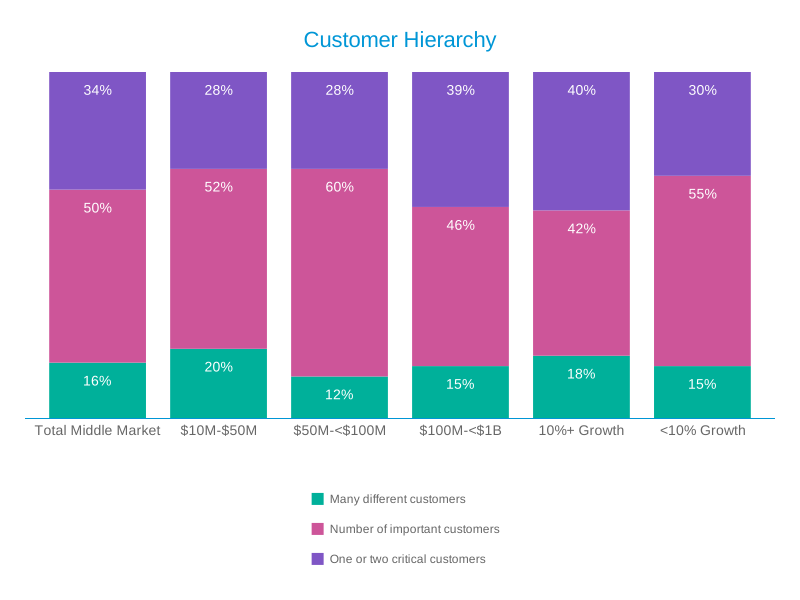
Most middle market suppliers primarily serve one or two dominant customers, The largest and fastest-growing middle market firms tend to be most heavily dependent on those one or two customers, while smaller firms generally serve a larger array of businesses. This may be because as businesses grow, they hitch their wagons to the one or two key account that contribute the most to driving their own business forward. While there is risk in this approach, companies that are the most satisfied with their supply chain management practices also tend to be more focused on just a few key customers. Overall, very few middle market suppliers have a truly diverse customer base. Managing the portfolio of customers remains one of the greatest challenges across the range of middle market firms.
Influence of Customers
In theory, focusing on several rather than many customers increases the impact and influence those customers have over their middle market suppliers’ businesses. The Center’s research bears out that theory. A notable majority of middle market firms (66%) believe they are being at least somewhat squeezed by their customers and 58% say customers apply too much pressure. However, very few (8%) believe that pressure constrains their ability to operate, and most (55%) feel that pressure from customers actually helps their company run more smoothly and efficiently. This is especially true for the largest, fastest-growing, and top-performing middle market suppliers. They feel that they are the better for having these demanding customers.
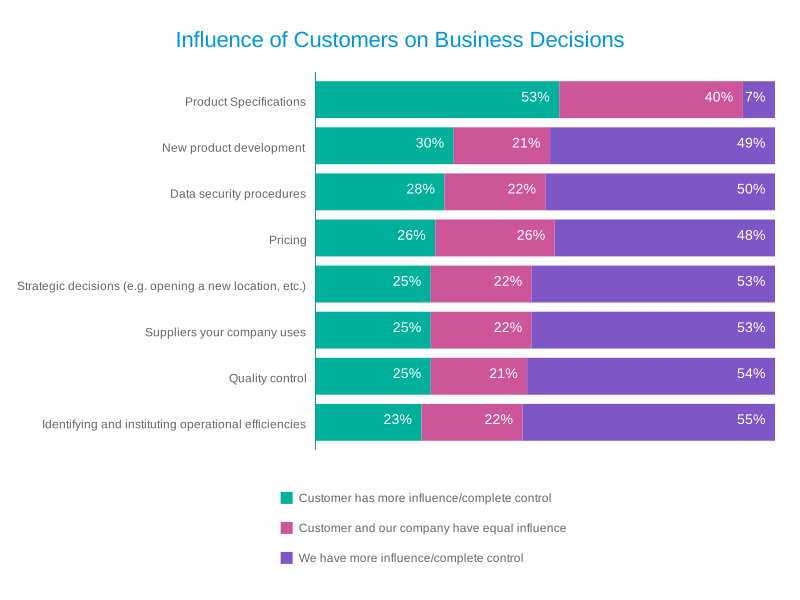
Major customers have substantial influence on all manner of business decisions, particularly new product development and pricing. In most cases, middle market suppliers maintain more say in their own business decisions. However, customers have the greatest influence over product specifications.
Because of the critical importance of key customers to their businesses, some middle market suppliers monitor the financial health of their customers. Over a third of all middle market firms subscribe to monitoring services and a slightly higher percentage of middle market companies use internal systems to keep tabs on their customers.
Customer Loyalty
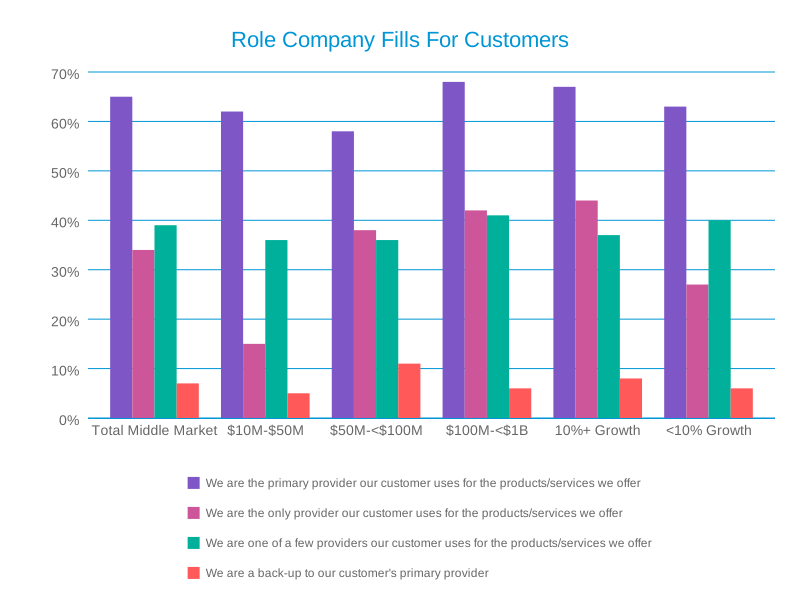
The dependency between middle market businesses and their suppliers goes both ways. Middle market firms are generally the exclusive or primary provider of a specific set of goods to their customers. The largest and fastest-growing middle market firms are especially likely to be exclusive providers, as are companies that are most satisfied with their supply chain management capabilities.
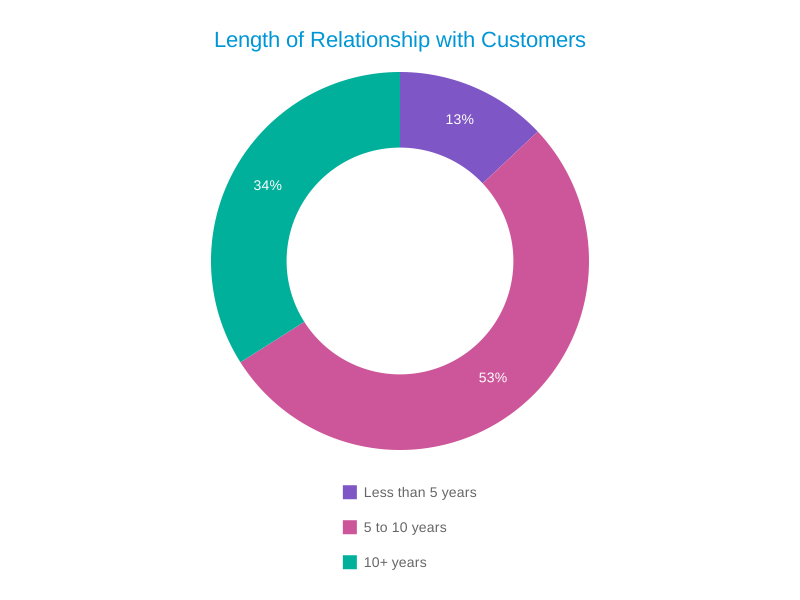
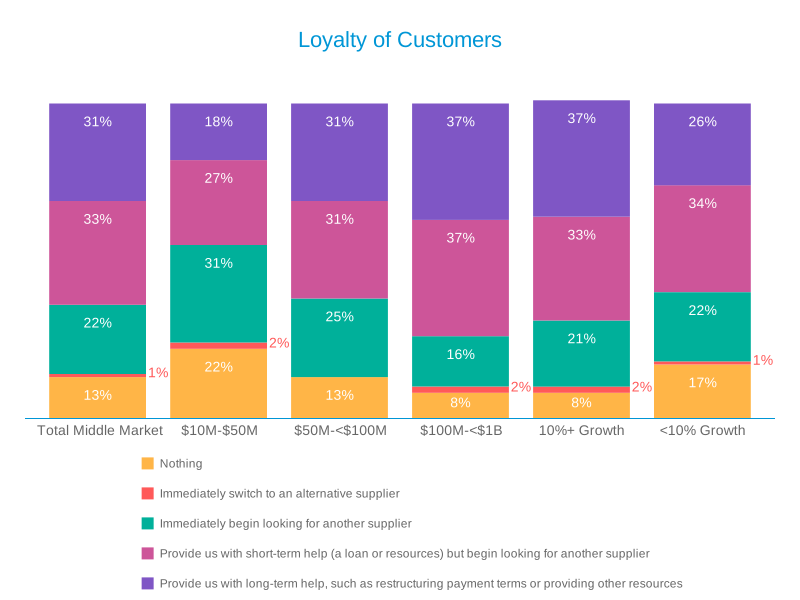
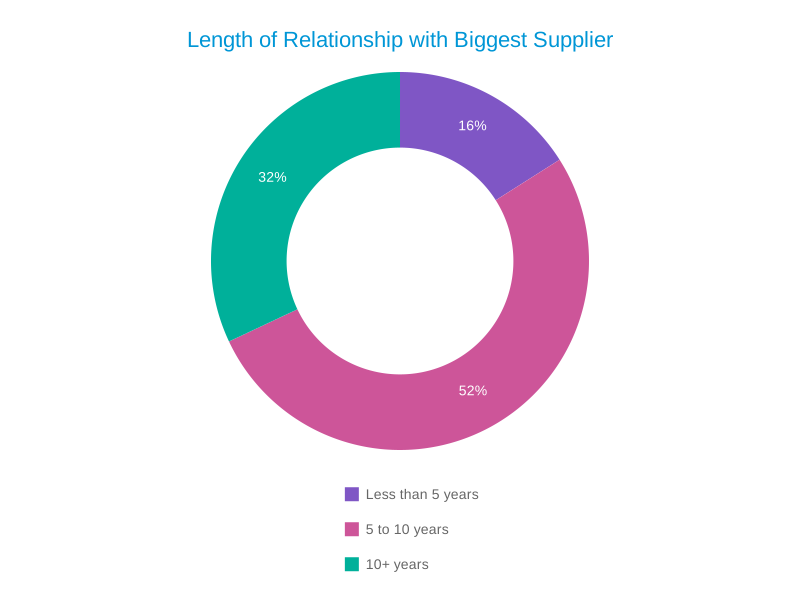
Indeed, customer loyalty might be said to have two tests: length of relationship and willingness to help out in time of trouble. By these measures, most middle market suppliers enjoy loyal customers: 87% of customer relationships have been in place for five years or more. And 64% of customers are willing to help a supplier that runs into trouble. Though many customers would also begin looking for a replacement.
Collaboration with Customers
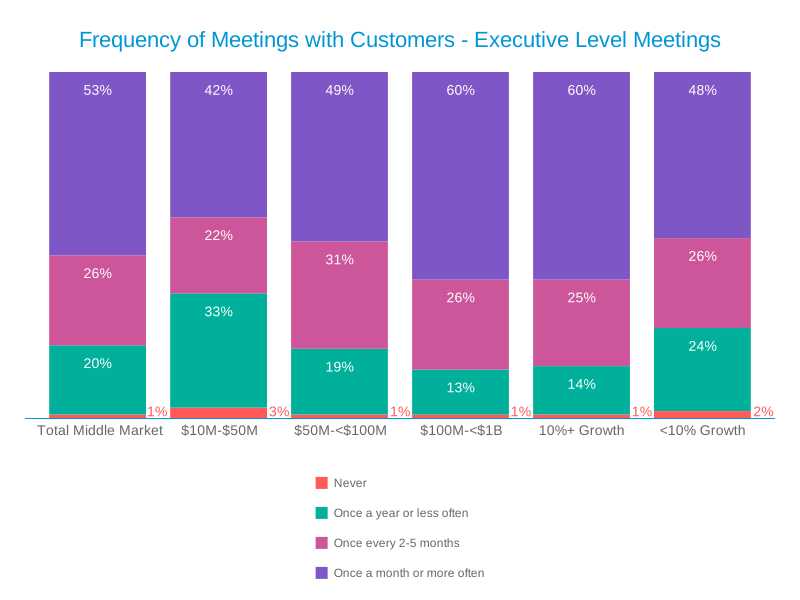
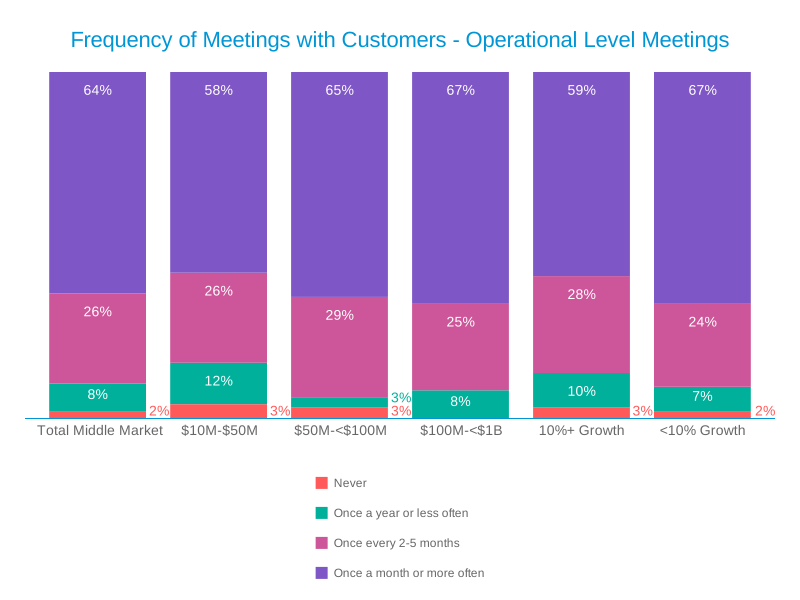
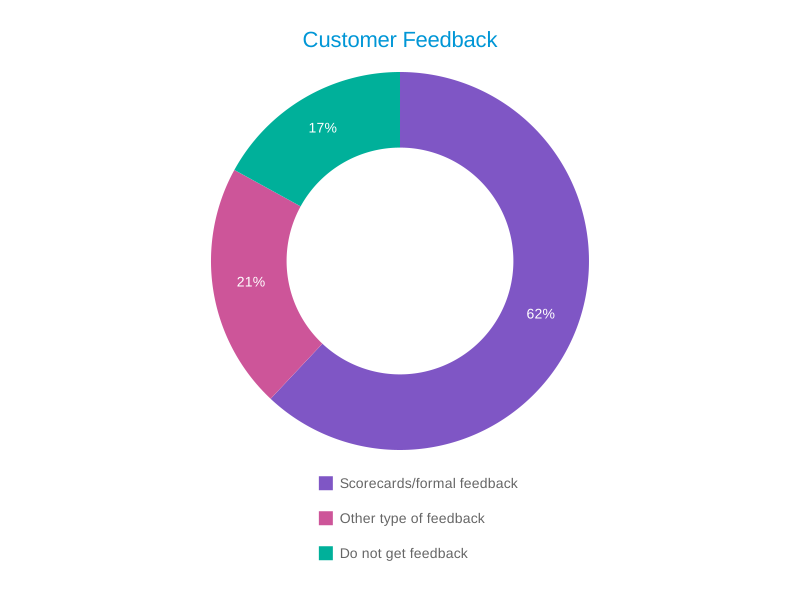
As a result of the codependency between middle market suppliers and their largest customers, customer relationships are highly collaborative, especially with major customers. Both executive-level and operational-level meetings with those major customers occur monthly or more often. This is particularly true for larger middle market companies, as they are likely to have more resources at both the executive and operational levels for these engagements. Customers typically provide feedback on quality, performance, and delivery, usually in a formal manner.
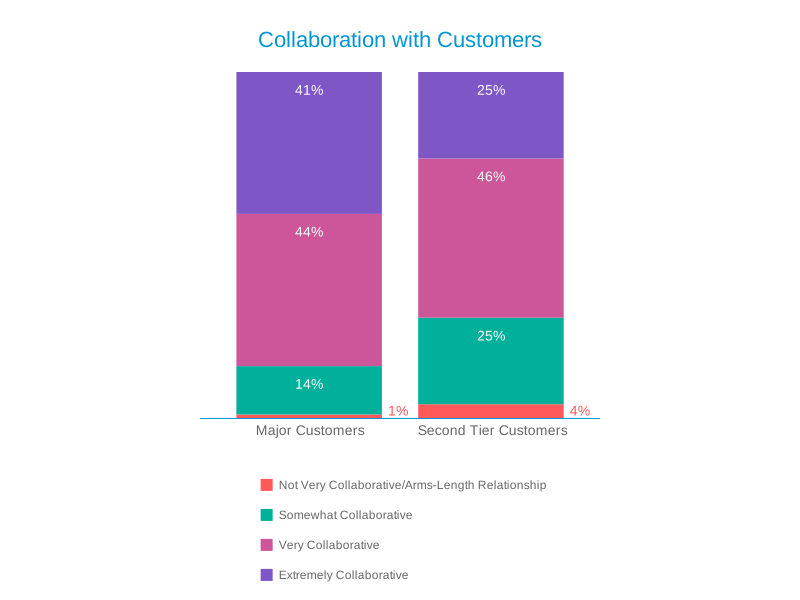
Most middle market suppliers (65%) believe that this close collaboration with their customers leads to higher profits, perhaps driven by new opportunities and cost-savings
Customer Systems Integration
In many cases, middle market suppliers not only collaborate with their critical customers, but systems tend to be integrated with those customers to a significant degree and across the spectrum of business functions. This is especially true if key customers maintain just-in-time inventory processes.
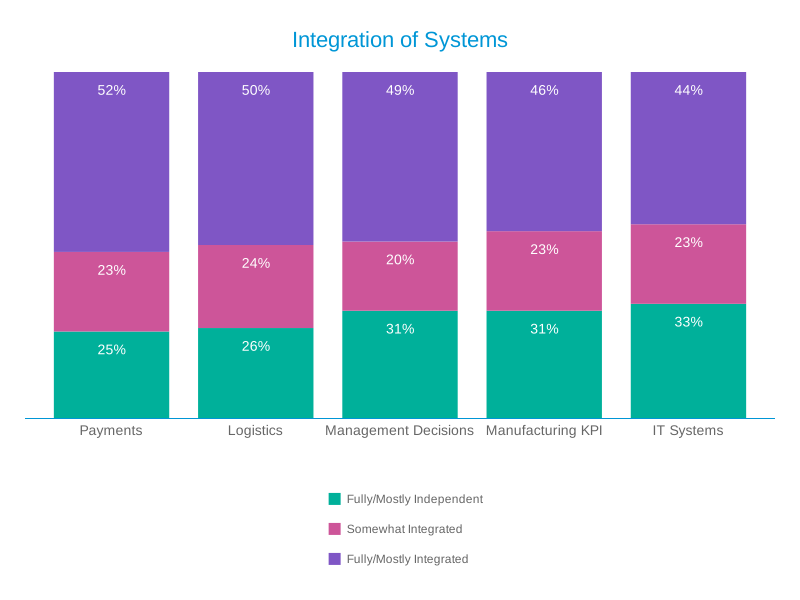
Middle market leaders believe integration is important, and most would consider further integrating. The benefits of such integration include optimization of processes, cost savings, improved delivery, lower inventory levels, and more control over upstream materials.
Supplier Relationship Management
Middle market companies handle their upstream relationships with suppliers in much the same way as they approach their downstream relationships with customers. They maintain long-term, collaborative relationships with suppliers and have typically been working with suppliers for more than five years. And as with customers, those relationships are two-way streets.
Supplier Influence
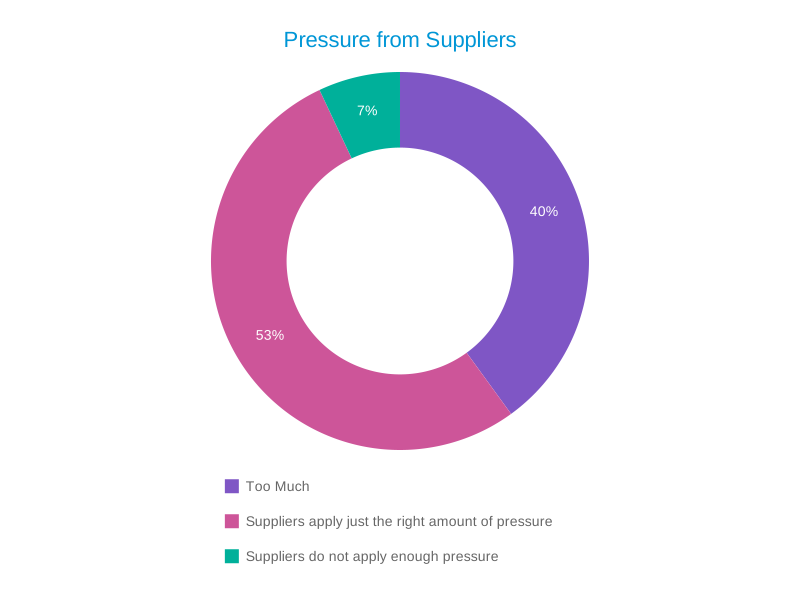
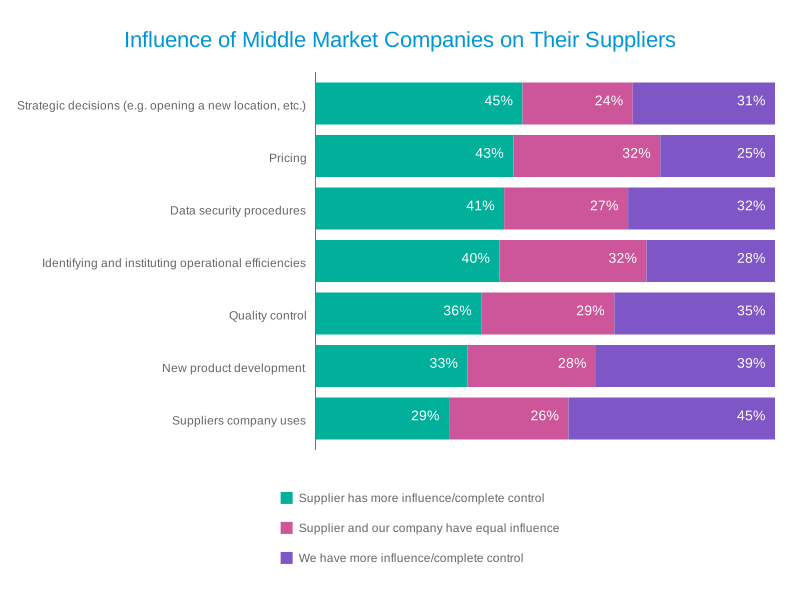
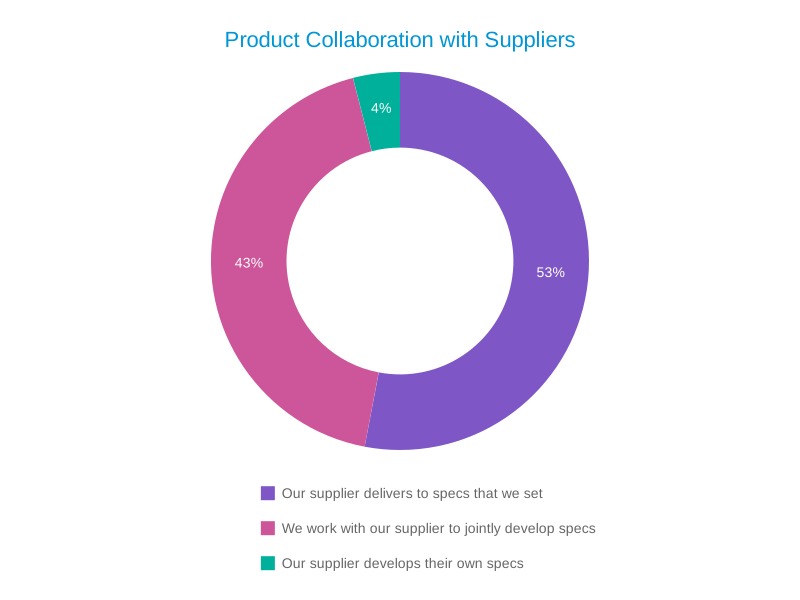
Four in 10 middle market firms say their suppliers exert too much pressure, and 49% feel somewhat squeezed by that pressure. However only one out of 10 companies feels that pressure from suppliers constrains performance. At the same time, middle market firms have a significant say in their suppliers’ business decisions, especially when it comes to their suppliers’ choice of suppliers, new product development, and quality control. In the vast majority of cases, suppliers deliver to specs set by their middle market companies, or spec development is a joint effort.
Supplier Collaboration and Systems Integration
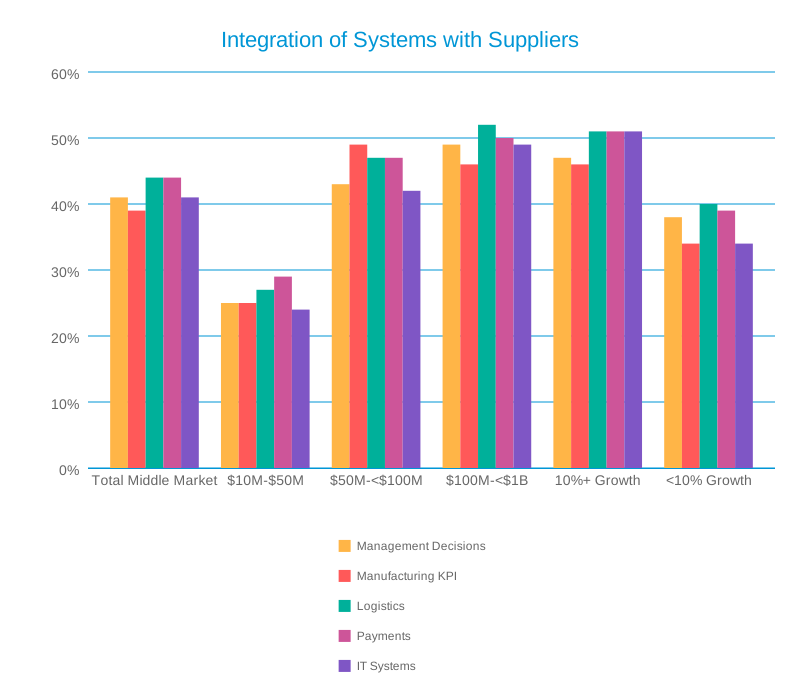
Middle market firms, and especially fast-growing companies and those that are most satisfied with supply chain management, typically are at least somewhat integrated with their suppliers’ systems across a spectrum of business functions, including payments, logistics, management decisions, IT systems, and manufacturing KPIs. About four in 10 firms would consider greater integration with their suppliers in order to realize greater efficiencies and improve communications, speed to market, and inventory control.
Considering the importance suppliers play in a middle market firm’s ability to meet the needs of its customers, close to half of companies monitor the financial health of their suppliers: 47% subscribe to monitoring services and 44% use internal systems for this purpose. In light of the integrated nature of strategic supply chain relationships, it makes good sense for firms to monitor the health of both downstream and upstream parties to ensure business continuity and growth.
Risk Management
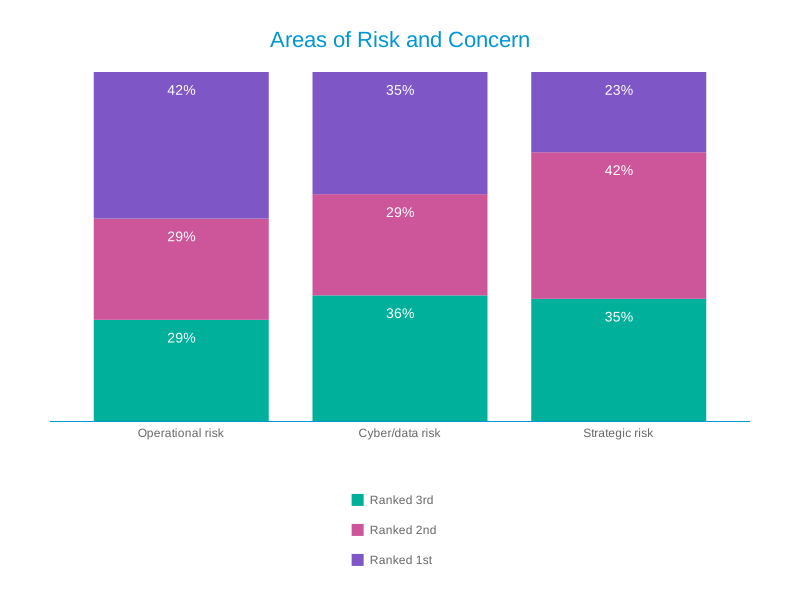
Given most middle market suppliers’ heavy dependence on one or two key customers, the strategic risk associated with losing one of those customers is obviously a concern. However, middle market suppliers are even more concerned with operational risks, such as disasters, strikes, and infrastructure problems. Cyber and data risks also weigh on the minds of middle market leaders.
Operational Risk
Most middle market companies, and large and fast-growing firms in particular, believe it is a priority to minimize operational risk. Customers and suppliers both play a role in minimizing operational risk. Customers often dictate specific rules and procedures while suppliers will make suggestions and provide guidelines.
Cyber Risk
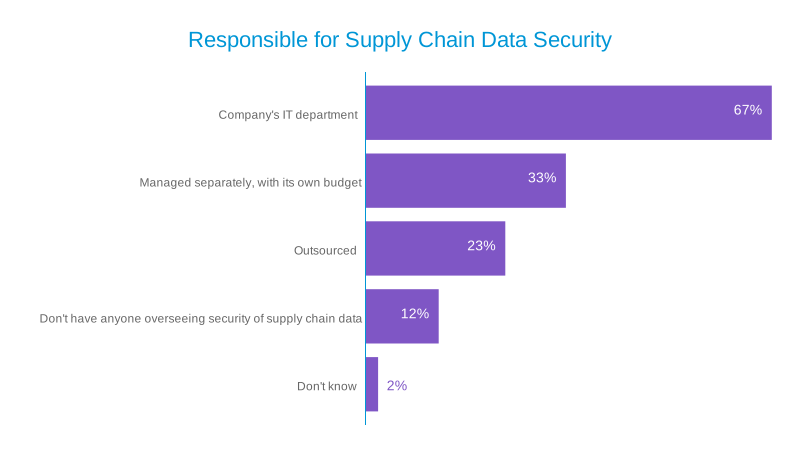
In middle market companies, data security in the supply chain is primarily the domain of the IT department. Data security is of particular importance to the largest middle market businesses and the fastest-growing firms. Within these companies, both customers and suppliers have a significant influence over how risk is handled.
Strategic Risk
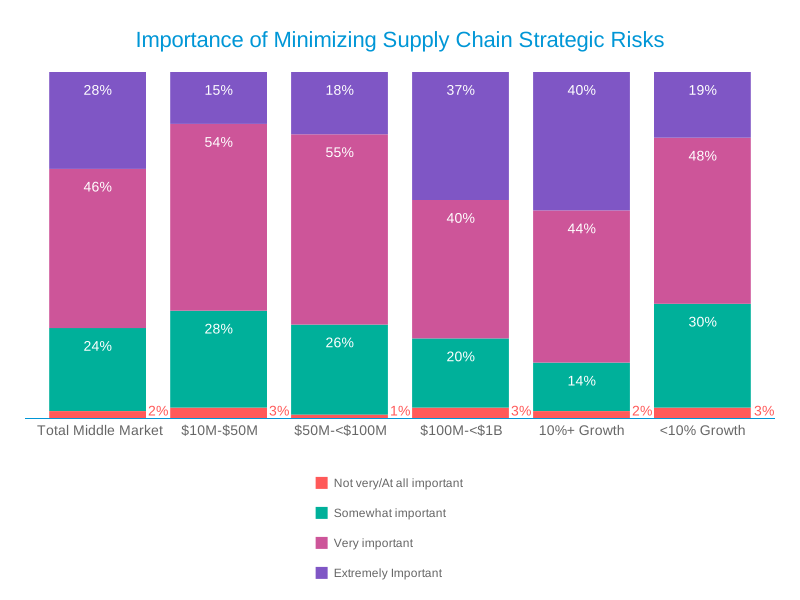
Smaller middle market firms are less concerned with minimizing the risk of a customer or supplier loss, perhaps because they are more diversified in these areas. Large and fast-growing firms are more apt to say it is extremely important to mitigate these risks, and, perhaps as a result, they believe they are much better prepared to handle such a loss.
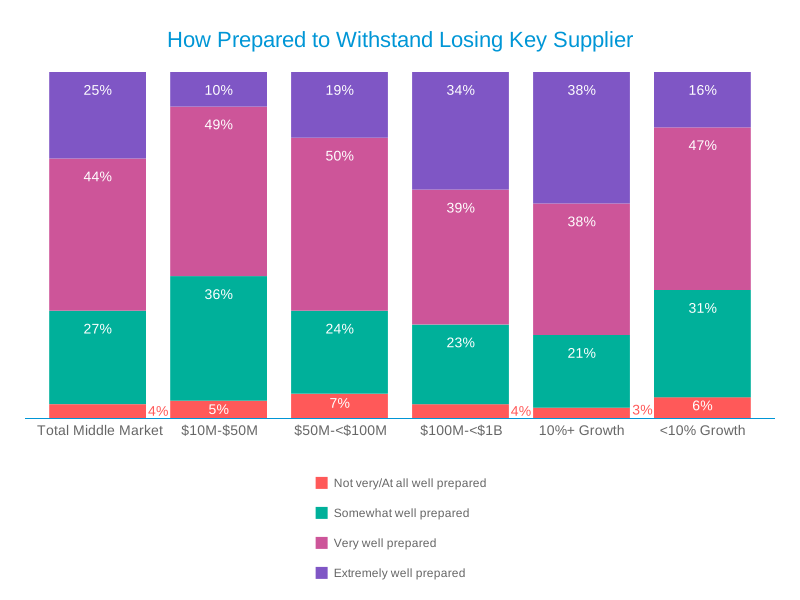
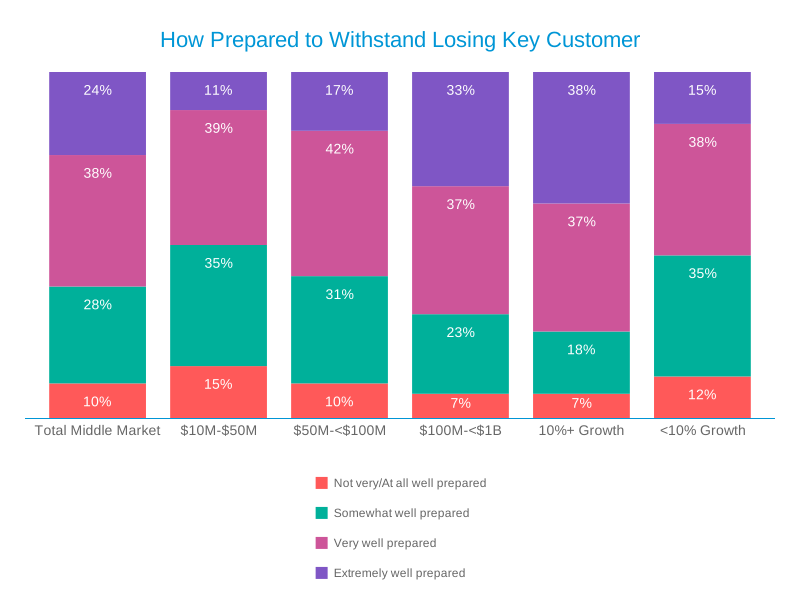
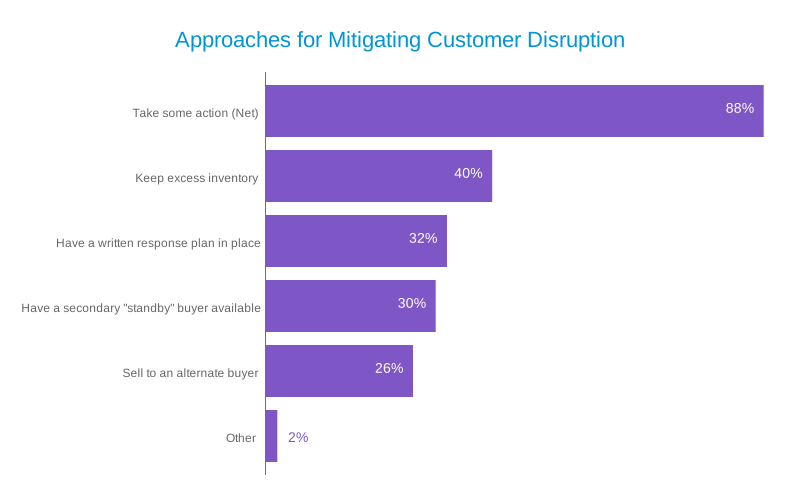
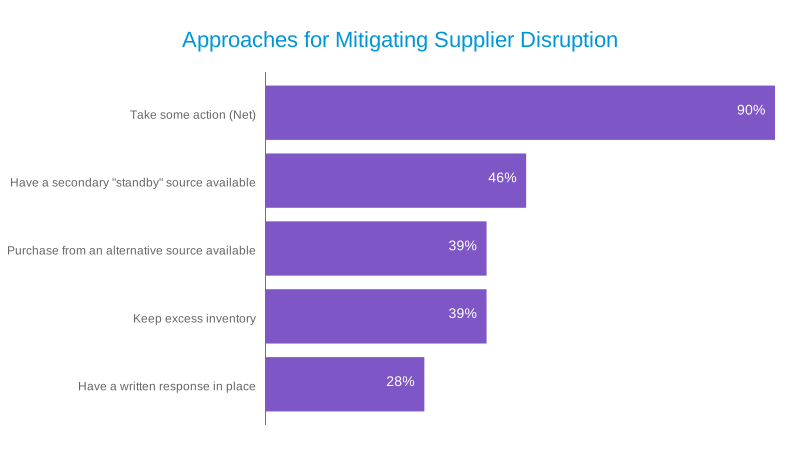
Most firms do take some action to prepare for a customer or supplier disruption. On the customer side, this primarily involves holding extra inventory. About a third of companies have a written response plan in place, and about a quarter have a specified secondary buyer standing by. On the supply side, companies prepare for a disruption by having a secondary source or holding extra inventory.
How Well Do You Link Up?
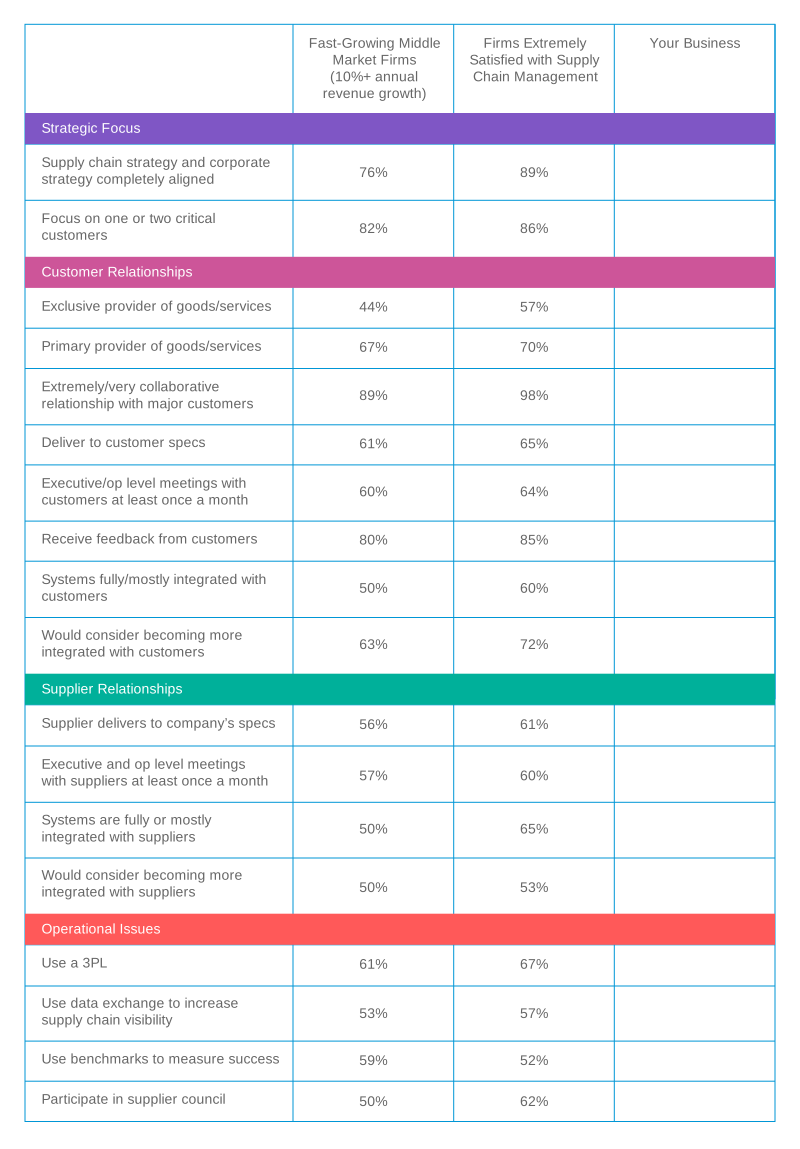
Among the fastest-growing middle market firms (firms with annual revenue growth of 10% or more), 84% say they are highly satisfied with their approach to supply chain management. Below is a snapshot of the supply chain practices in which these firms engage. You can download this checklist and put a check next to the practices that are in effect at your own company. And see how your supply chain practices compare to those of the highest-performing and fastest-growing middle market firms.
Your Supply Chain Score:
- 0-6 checkmarks = Opportunity to Improve. Use the information in this report to rethink how you are working with your customer and your suppliers and how you can enhance your supply chain operations
- 7-14 checkmarks = Average. Your business is engaged in some best practices, but you may have key opportunities to improve your supply chain strategy and your relationships with customers and/or suppliers
- 15+ checkmarks = Perfect Link. Congratulations! Your business is on par with the best-performing middle market suppliers
Best Practices
Once your know where your business stands compared to the best-in-class middle market suppliers, you may want to consider taking some practical steps to enhance your own performance as a supply chain link. You can start by determining the key touch points or areas of interconnection both upstream and downstream. Then assess your core responsibilities within each of those domains and what actions you can take to better fulfill and execute against those responsibilities. Finally, be sure to consider how you will protect against risk in all your activities and interactions.
As you consider your supply chain role and how you can become a stronger link, keep the following tips from leading industry experts in mind:
- Improve data management. The best suppliers adopt an integrated data architecture that goes beyond mere ERP to encompass the entire supply chain. Your data management solution can meet the needs of your own business while also coordinating effectively with your key customers. And it can incorporate different types of data based on your responsibilities as a supply chain link, such as sales and forecast data, information operations, and/or quality data.
- Focus on where you add value. Consider the core vs. context/ buy vs. build decision. Think about what you can outsource to other organizations that are best-in-class and may be able to deliver better service to your customers. Outsourcing activities that add no differentiation to your business or services allows you to focus on your key enterprise capabilities that add unique value.
- Simplify complexity. The simpler your supply chain is, the easier it is to manage. Think about areas where you can cut back, such as limiting the number of third parties you work with, the number of products and services you offer, or even your customer and supplier bases.
- Ensure compliance. Develop a baseline of practices and information needed to address the geographic variability of the regulatory and legislative landscapes in which you operate. You may be able to benefit from collaboration with other companies facing similar regulations.
- Build a comprehensive security architecture. Effective supply chain security involves deploying the right physical security, security technology, and operations/logical security, in the right place, at the right time. Take time to understand the latest trends, and how they can work in your business.
- Experiment with SC optimization. Today’s optimal solutions are fleeting. And it’s important to adapt quickly to changing circumstance. Some of the newest technologies and trends, such as S&OP forecast data and use of IOT in the factory, may be right for helping your business achieve its goals.
- Consider your liability. Start by defining your tolerance, then consider how you can cap it.
- Define metrics and incentives. Consider how to design reward systems that help companies do better business together. Are there ways to grow the pie rather than just split it?
- Choose partners invested in winning. Supply chain management is a team sport. When you work with customers and suppliers that invest in innovation in both products and processes, you put your own business in a better position to succeed. Remember to include small companies in your search. An alliance with an innovative small business that is very nimble in a specialized area or opportunity can prove to be a major advantage for your organization.
