

Executive Summary
Middle market life sciences companies are robust growers. Some companies in the category, including many that innovate new pharmaceuticals, biotech, and medical devices, are rapidly scaling themselves in anticipation of an IPO or sale to a large strategic buyer. This path resembles the one followed by many technology companies and appears to be increasingly popular in life sciences in particular: M&A activity in the industry reached an all-time high in 2019 at $357 billion.
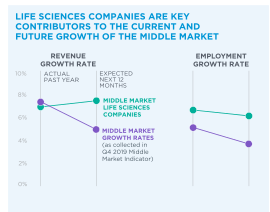
Other businesses in the category, including many of the contract manufacturers and researchers, clinical trials companies, and labs, operate in a more stable, organic growth mode like many of their middle market peers. Together, the diverse companies that make up this segment are optimistic about their future: Just before COVID-19, they projected significantly higher rates of both revenue and employment growth than the broader middle market for the 12 months ahead.
Even before the outbreak of the pandemic, companies knew that growth would not come without challenges and risks. Some of the headwinds are unique to the industry; some are uniquely intense. Challenges include keeping up with rapidly changing science, managing knowledge and innovation, finding the right distribution partners, and managing risk in an environment complicated by a rigorous and complex regulatory landscape. Supply chain vulnerabilities—which the COVID-19 pandemic has clearly illuminated for all industries, and for life sciences companies in particular—are another obstacle that seems more formidable now than ever. In addition, the long product-development cycle and the uncertainty of success for new products mean that life sciences companies ask a great deal of their investors. As a result, life sciences executives are about four times more likely than other middle market leaders to say that accessing and managing capital is a challenge for their businesses.
Individually and collectively, these obstacles and the interrelations between them factor into the ways middle market life sciences executives manage their businesses and the decisions they make in all of their activities, from the innovation phase through production and commercialization. They also affect the dynamics between companies that innovate new offerings and those further along the value chain that support the process of bringing innovations to market through testing, production, and distribution. This plays out in partnering decisions as organizations within the field look to work together to bring health- and life-changing products to clinicians and, ultimately, patients. Companies that are best at managing the challenges and risks that come with the territory tend to place higher priority on knowledge-based challenges and they understand the vital role of advanced technologies. They describe themselves as risk averse and take a sophisticated approach to everything from dealing with ever-present cybersecurity threats, to safeguarding against the loss of a key supplier, to being selective in the commercialization and distribution partners they choose. As a result, they are growing faster than their peers today, and they are confident in their continued success in the months to come.
The Life Sciences Ecosystem
The life sciences industry is heavily concentrated in the middle market. The mid-sized businesses that make up the industry include those that innovate, research, and develop pharmaceuticals, medical devices, and supplements as well as those companies that provide support and assistance throughout the lengthy process of testing, production, and distribution of life sciences products and services. Companies all along the value chain depend on each other to bring life-saving innovations to market and to ensure the continued, successful growth of this critical industry.
The Life Sciences Industry Includes:
- Pharmaceuticals
- Biotechnology
- Medical Devices
- Analytic Labs
- Contract Research Organizations
- Dietary Supplements
- Clinical Trials Services Companies
- Contract Manufacturers
- Distributors
Overview
Middle Market Life Sciences Companies Are Fast Growers with Complex Challenges
Pharmaceutical, medical device, biotech, and dietary supplements companies are what most often come to mind when people think about life sciences. These businesses, however, are part of a larger ecosystem required to research, develop, manufacture, and distribute healthcare products. Companies that innovate and engineer life sciences products rely on businesses that specialize in designing and conducting clinical trials. They work with analytical laboratories. They often contract out manufacturing. Distribution, too, is a subspecialty of the overall life sciences industry. The interdependencies within the ecosystem add layers of complexity that affect the overall performance of the industry.
Growth
Companies in the life sciences ecosystem are significant contributors to U.S. and Canadian economic growth and job creation. Over the 12 months that ended in February 2020, middle market life sciences companies collectively posted a healthy revenue growth rate of 6.9% and created new jobs at a rate of 6.6%, well above the overall U.S. middle market employment growth rate of 5%. Prior to COVID-19, these businesses anticipated playing an even greater role in strengthening the middle market: their projected revenue and employment growth rates for March 2020-April 2021 are far more aggressive than those of other middle market segments.
Challenges
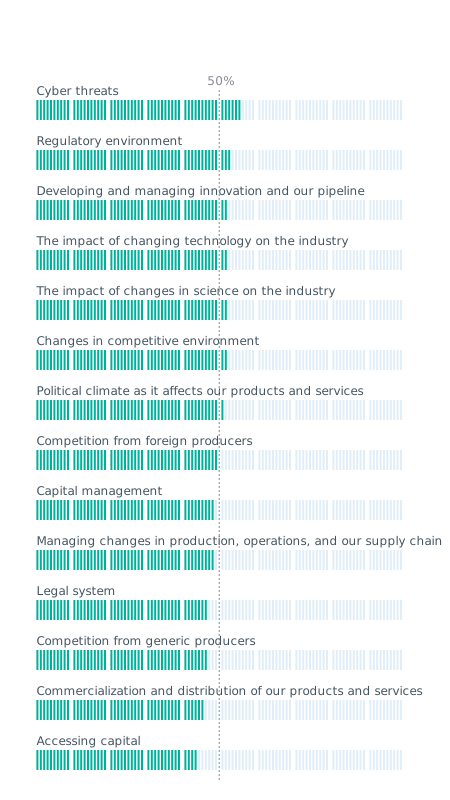
Achieving those aggressive growth goals won’t come without overcoming significant challenges, many of which are unique or especially daunting for the industry. Overall, companies indicate that their business environment is complex, with risk, regulation, and constantly evolving technology all presenting obstacles for the majority of companies. Cyber threats appear to be the most widespread challenge in the industry with 55% of companies saying they are a major issue. At least half of companies also cited regulations, keeping up with innovation and changing knowledge, the political climate, and competitive issues as formidable headwinds needing to be addressed.
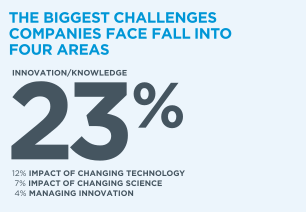
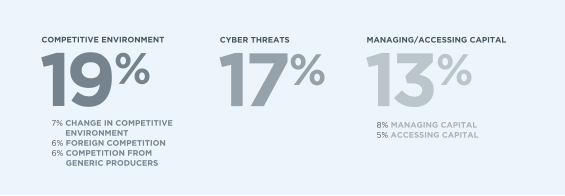
When asked which issue is the most challenging, knowledge-based challenges rose to the top. A combined 23% of businesses named changing technology, changing science, or developing and managing innovation as the most difficult aspect of the business to manage. A cluster of competitive issues—including competition from both foreign and generic producers—came in second place. This suggests that life sciences companies worry initially about getting to the finish line ahead of their peers, and then about protecting their innovations from competitors for as long as possible. Cyber threats come next on the list with 17% of the vote, and, as we will see, this risk may be closely tied to both knowledge and competitive issues. Managing and accessing capital, which usually do not present a major hurdle for middle market companies, round out the quartet of top challenges for the life sciences industry, pointing to the long lead time and high costs of successfully bringing innovations to market.
As is the case in many industries, the challenges life sciences companies face are interrelated, adding to their complexity. For example, regulatory rules often lag behind changes in science and technology, which complicates a company’s ability to simultaneously stay current with technological updates while remaining in compliance with mandates from governing agencies. Risk and supply chain are also interwoven: because of the independence of companies in the life sciences ecosystem, they are often exposed to more risk than they would otherwise face. All of this affects the decisions life sciences companies make as they work to bring innovations to market.
Companies cite a wide range of issues as very or extremely challenging
Knowledge Fuels Growth
Life sciences is a knowledge-based industry. Companies in the industry compete and thrive by being first to innovate new drugs, supplements, medical devices, and technologies that promote better health. Intellectual property, or IP, is their lifeblood, and some studies suggest that up to 80% of their overall value resides in that IP.
For other types of companies in the ecosystem—the clinical trials companies, labs, contract researchers, contract manufactures, and distributors—knowledge and innovation primarily manifest themselves in processes and protocols, which are often proprietary and must be first-rate in order to secure spots in the producers’ supply chains. Often, new pharmaceutical or biological medications must be manufactured with new techniques in new facilities, not just on retooled production lines.
Across the spectrum of life sciences companies, knowledge is the essence of competitive advantage, and managing that knowledge is critical. This means four things for these businesses:
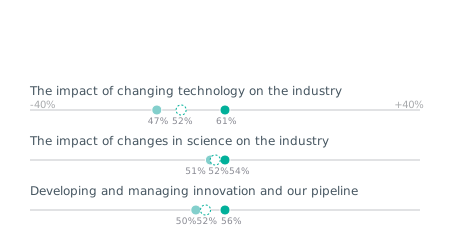
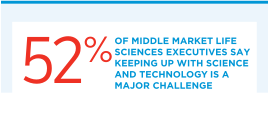
First, companies have to keep on top of a field where the science is rapidly changing, a contrast to industries where the underlying knowledge evolves more slowly. This is no easy task. As we have seen, the combined impact of changing technology and changing science is seen as the most difficult hurdle to overcome in order to succeed in the life sciences sector. Keeping pace is even more difficult for the fastest-growing companies, which are more likely to cite knowledge-based issues as extremely challenging compared to their slower-growing peers, perhaps because they are more likely to be working at the frontier of research.
Fast growing companies are more likely to cite knowledge-based issues as very or extremely challenging

Second, companies must be truly good at innovation and committed to developing their internal capability in that area. Life sciences companies, and especially the fastest-growing among them, are much more in tune with the importance of evolving technologies than the middle market as a whole. Compared to a 2018 study of the broader middle market manufacturing segment, life sciences leaders are much more likely than manufacturers in general to say that innovations in new materials and, even more so, in embedded sensor technologies will be key to their success in the next 12 months. Life sciences companies are also much more likely to already manufacture smart products: In the sector, 42% of manufactured products are smart, while the overall middle market manufacturing segment says that smart devices make up less than 25% of the product mix. Advanced technologies used in the manufacturing process are also important to the sector, because the products themselves are sophisticated, and perhaps because taking advantage of automation, rapid prototyping, and advanced controls can help speed time to market.
Life sciences companies, especially fast growers, view advanced technologies as very or extremely important

*Based on a survey of 250 middle market manufacturers fielded in March/April 2018.
Third, companies must excel at developing and orchestrating capabilities to translate innovation into products and services, including gaining approval for their innovations. Managing the back end of innovation is a time-consuming and expensive process and a major challenge, especially for fast-growing businesses. For example, new medicines take at least 10 years, on average, from the time they are discovered until they get to market, with clinical trials eating up the lion’s share of that time, and the average R&D cost for each successful drug coming in at a whopping $2.6 billion. Clearly, the more companies can improve and accelerate these processes, the more they stand to gain.
Fourth, life sciences companies must be vigilant about protecting their intellectual property and knowledge-based processes. For pharmaceutical, biotechnology, medical device, and dietary supplement companies, knowledge needing protection can come in the form of patents and also proprietary, pre-patent research. Of course, patents don’t last forever; the faster a company can turn its innovations into approved products, the more patent time it has on the market. Furthermore, piracy is widespread and difficult to stop—like technology companies, life sciences companies are acutely aware of the importance of cybersecurity to shield their work from thieves. Companies in the ecosystem that are less likely to hold patents (labs, manufacturers, and distributors, for example) are more apt to emphasize challenges like competitive environment or foreign competition. For these businesses, protecting their processes is key to sustaining competitive advantage and being seen as preferred partners by the makers in the industry. Companies must also protect the personal data of patients and participants in clinical trials.
Supply Chains Matter
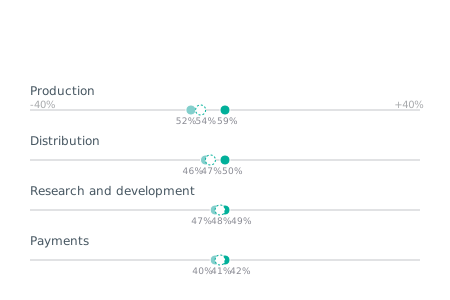
Organizing production, operations, and supply chains is a major challenge for about half of life sciences companies, and that number rises considerably among the distributors. Most life sciences companies have experienced a supply chain issue that has materially and negatively affected at least one aspect of their business with fast-growing businesses marginally more likely to report such disruptions. Most often, supply chain issues lead to production delays and an inability to meet demand; they also have negative implications for the research and development process, distribution, and payments.
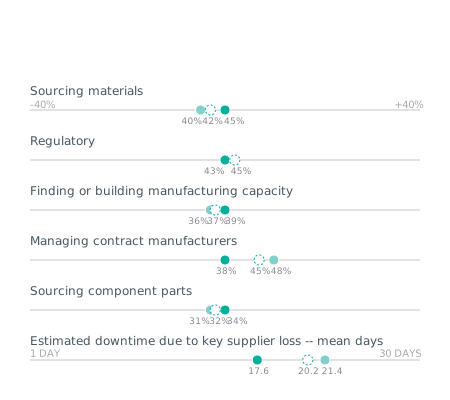
Though supply chain problems are endemic to the industry, the causes of disruptions are different for fast- and slow-growing businesses. Sourcing materials is the number-one supply chain vulnerability among life sciences companies growing revenues at 10% or more per year. Their very growth means that having access to enough materials could easily become problematic and create production-related issues. (The Covid-19 pandemic also revealed potential supply-chain vulnerabilities due to the fact that many pharmaceutical raw materials are available chiefly from overseas, especially China.)
However, for slower-growing businesses, managing contract manufacturers is the key issue. Indeed, these businesses are ten percentage points more likely to say contract manufacturing is a top vulnerability than their faster-growing peers are to say the same. The slower-growing companies also say their downtime would be longer if they lost a key supplier.
Supply chain disruptions often results in material impacts on business processes, especially for fast growers
This suggests that high-performance companies are better at managing their supplier relationships overall. While they are presumably more dependent on their supply chain partners for materials, testing, and production services—and more likely to suffer when any link in the value chain is broken—they also appear more vigilant about staying ahead of the issues, perhaps by maintaining greater visibility up and down the supply chain, stronger suppliers, and more flexibility and resilience. Overall, fast-growing companies experience 18% less downtime due to supply chain disruptions.
Regardless of rate of growth, regulatory issues are another supply chain vulnerability. If a supplier fails to respond to a regulatory request in a timely manner, or worse, fails a regulatory inspection, it could lead to missed deliveries or even shutdown, causing significant ramifications for the life sciences businesses that depend on it.
The greatest supply chain vulnerabilities differ by rate of growth
Choosing Partners
In life sciences, commercialization and distribution are much less straightforward than they are in many industries. Many producers of new compounds, biologics, and devices rely on third-party manufacturers, which must be found and managed; many of these products need to be produced with custom-built equipment. Further down the value chain, getting those goods into the hands of physicians and, ultimately, patients, is complex, too: Health insurance companies often play a gatekeeping role, deciding whether or not to cover the cost of a new medication or device, and their approval must often be obtained, or other financing solutions worked out, before providers will stock or administer a medication. The entire system is shot through with extraordinary demands for quality control and privacy, along with regulations.
It’s not surprising then, that nearly half (46%) of life sciences companies cite commercialization and distribution processes as significant challenges. In general, the issues are bigger for the downstream companies than they are for those that innovate new pharmaceuticals, products, and devices. Pharmaceutical companies in particular seem to be less encumbered, perhaps because this part of the industry is the most developed and many of the kinks have already been worked out. Commercialization and distribution are, however, more difficult for the fastest-growing organizations: 55% of life sciences companies growing revenue at 10% or more annually say these processes are very challenging compared to 42% of slower-growing companies.
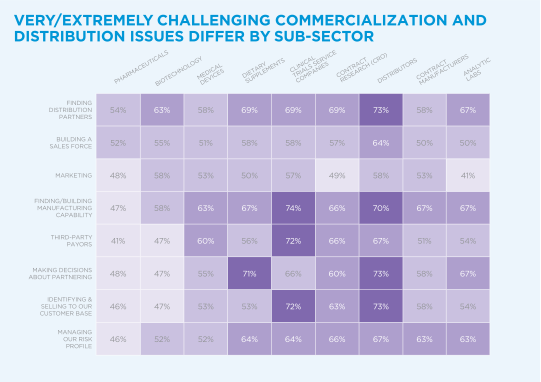

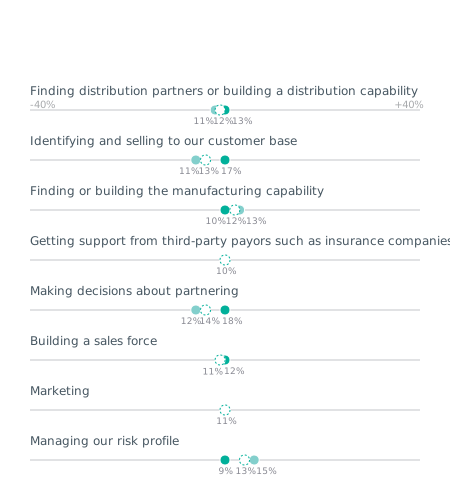
Within the commercialization and distribution process, finding distribution partners or building distribution capacity is the most widespread challenge for the industry as a whole. But the hardest challenge to manage is choosing the right partners. Higher-performing companies struggle with this to a much greater extent than their slower-growing peers. The fast growers are also much more likely to cite challenges with identifying and selling to their customer base. Slower-growing businesses, on the other hand, primarily contend with managing their risk profile.
The single most challenging aspect of commercialization differs by company growth rates
Spotlight
When the National Center for the Middle Market and its research partners surveyed life sciences companies in March 2020 for this report, the COVID-19 pandemic was just beginning to escalate in North America. As such, the immediate and longer-term impact of the virus on the life sciences industry is not reflected in the survey data.
In mid-May, we followed up with several life sciences executives to gauge perceptions of how the industry, which operates at the epicenter of the pandemic, has already changed and will continue to evolve in a post- COVID-19 world. We learned that, like many industries, some life sciences companies saw their business skyrocket overnight. For example, Nosco, a full-service packaging solutions provider serving more than 400 pharmaceutical and natural health companies, has seen an average 25-30% surge in demand in April and May 2020 as it has worked to support customers whose products are directly involved in combatting COVID-19.
“We knew from week one this was going to be a different season, and we stepped into the middle of a crisis,” says Nosco president Craig Curran of this employee-owned business, which is based in Gurnee, Illinois, north of Chicago. For Nosco, this has meant running operations around the clock and expediting every aspect of the manufacturing process. In some cases, orders that typically had a two- to four-week turnaround have been in and out of the facilities in less than 24 hours. And for some product lines, the company has produced in the last two and a half months what it typically makes in a full year. Of course, meeting these aggressive demands would not be possible without the right suppliers. Curran gives credit to his partners, citing his company’s long-standing relationships and supply chain risk management tactics as key to Nosco’s ability to procure additional quantities of essential materials.
Other life sciences companies have experienced a much different reality in the wake of COVID-19. In April and May 2020, most life sciences product research not directly related to the virus has been sidelined either because of capacity or safety concerns. Equillium, a San Diego-based biotechnology company committed to treating severe autoimmune and inflammatory disorders, has paused two of its three clinical trials for the drug itolizumab. “First and foremost, we must ensure patient safety. In our early stage asthma and lupus nephritis studies, our assessment of the potential benefits versus exposure risks contributed to our decision to pause enrollment,” says Jason Keyes, Chief Financial Officer. However, Equillium continues its study in patients with acute graft-versus-host disease (aGVHD), a life-threatening disease that remains a medical priority during this time. “Patients in the aGVHD study have an acute and severe illness, and there is a realistic expectation our drug could save their lives. For this trial, we believed the benefits of going forward outweighed the risks,” Keyes explains.
For Equillium, the most significant impact of putting trials on hold is the inability to collect and report data. “As a pre-revenue company, data is our currency,” explains Joel Rothman, SVP of Development Operations. “We need the data to raise money to fund continued clinical development necessary to get new drugs approved that can improve people’s lives.”
Wherever a middle market life sciences company currently falls on the spectrum—operating well above typical capacity or waiting for business to resume—as the virus abates and industries adapt, business will start to return. But it will be different in many ways as companies apply lessons learned during this time.
Some changes we might see long term include
Altered Product Mixes
Even after the crisis abates, demand for healthcare and personal hygiene products such as hand sanitizer will remain strong for some time. Curran says he also expects demand for natural health products and supplements to remain high as patients pay more attention to and make greater investments in their health and immunity.
Protocol Deviations or Modifications
“It’s likely that a lot of what’s happening in healthcare at a macro level will trickle down into clinical trials,” says Rothman. “Telehealth”—delivering healthcare services via internet, video, and other non-physical channels—is a good example. “Telehealth has taken off since the onset of the pandemic. And patients in trials may prefer seeing their doctors from the comfort of their own homes.” This represents just one way that protocols may need to be modified going forward. As life sciences companies deal with the impact of the virus on issues such as the ability to obtain and process samples or visit clinical offices, “they are going to need to decide what protocol deviations they can live with over the next period of time and carefully assess how that is going to impact their work. This will need to be done on a patientby- patient or project-by-project basis,” Rothman says.
Industry Consolidation
The life sciences industry is largely represented by small and middle market businesses, some of which are run in the expectation of being acquired by big companies. Companies that have seen their work come to a halt because of the pandemic may find that they don’t have the resources to stay afloat, depending on how long the impact of the virus lasts. This could accelerate what is already a rapid pace of M&A in the industry.
Supply Chain Diversification
The vast majority of active pharmaceutical ingredients (API) are currently sourced from China, which has led to shortages of critical medications during the pandemic period. Going forward, it is possible we will see some of this balance shift to domestic suppliers—out of caution or in response to legislation. There might also be more stockpiling of essential raw materials at the national level or by life sciences companies themselves. If nothing else, the situation will have life sciences companies even more carefully scrutinizing and solidifying relationships along the value chain where possible.
Expedited Product Development Timelines
“When you have to deal with diseases that come on quickly, like SARS, or Ebola, or COVID-19, it’s clear that the system isn’t designed to support rapid development of solutions,” says Curran. But as the pandemic has clearly illustrated, everything can be sped up in an emergency. Companies on the front lines working toward a vaccine have seen the process of conceptualizing a clinical trial and obtaining approval shrink significantly. Obviously, these are unprecedented times. But it’s possible that efficiencies born of necessity will carry over and help to streamline operations in normal times, permanently altering the timeline for getting new medicines and devices to market.
Relaxed Regulations
Our study shows that the vast majority of middle market life sciences companies believe that, while complex, regulations are just about right. Yet, they unquestionably add time to the lengthy process of researching, developing, and commercializing new innovations. The pandemic has shown regulatory bottlenecks that can be removed in critical situations. “We might find ways in the future to modify regulatory procedures to make them faster without making them less rigorous,” Curran says. “We should look for ways to learn from our present experience and how we can apply this to the future.”
In many ways, COVID-19 has exacerbated every one of the critical challenges faced by middle market life sciences companies: keeping up with innovation and science; identifying and resolving supply chain vulnerabilities; choosing the right partners; controlling risk; and navigating the regulatory environment. The coronavirus has also helped to spotlight and expedite opportunities for improvement, some of which have already been seized. As middle market life sciences businesses continue to rise to the challenges and work through the pandemic, we may find a stronger, more nimble, and more proactive industry capable of even greater contributions to both personal and economic health.
Growth Through Risk
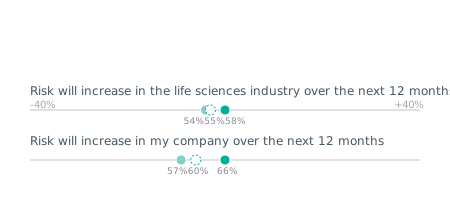
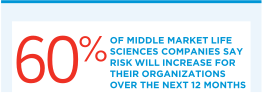
Risk is inherent in the life sciences industry, especially for the companies responsible for innovating drugs, medical devices, and supplements that are directly tied to human health. That risk comes from all directions. And it’s expected to grow: 55% of middle market life sciences companies say risk will escalate in the industry over the next 12 months while 60% say it will increase for their individual businesses. It is also notable that high-performance companies are significantly more likely than slower-growing businesses to say enterprise risk is on the rise.
Risk is growing in the industry, especially for high-performance companies
High-performance companies are more likely to see themselves as risk averse

Companies perceive risk as high and they take risk management seriously. Overall, more than half of middle market life sciences businesses describe their companies as risk averse—with faster-growing companies even more likely to say this (63% vs. 48% for slower growers). Companies that produce dietary supplements, contract manufacturers, and distributors are also highly likely to have a risk-averse posture.
Some types of companies in the life sciences ecosystem are more likely to self-describe as risk averse

Risk Management Challenges and Priorities
The vast majority of life sciences companies—81%—say risk management is a top priority compared to just 64% of all middle market businesses. Among the fastest-growing life sciences organizations, the proportion prioritizing risk management jumps to 90%.
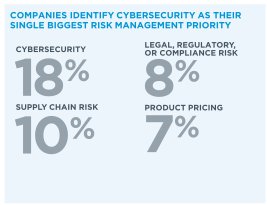
Given the nature of the business, it’s not surprising that most companies say legal, regulatory, and compliance risk are major challenges. Interestingly, however, these are not the top risk management priorities. They fall behind cybersecurity and supply chain risk, with cybersecurity topping the charts as both the most difficult risk to manage and the number one risk management priority for the industry as a whole.
Companies cite a wide range of risk management issues as very or extremely challenging
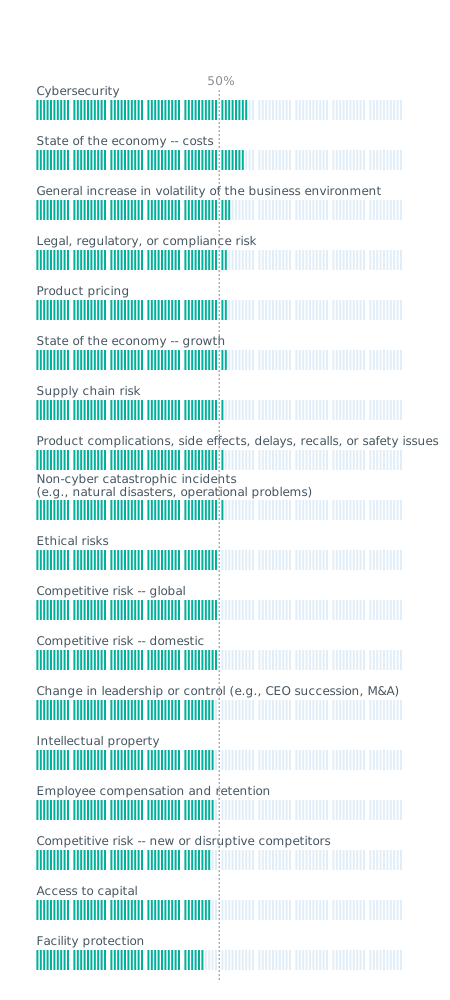
The cybersecurity threat is especially complex for a couple of reasons. First, life sciences companies are often targets: 52% of the companies in our survey report experiencing a cybersecurity breach. (This compares to 17% for the middle market as a whole, according to 2018 data. Of course, it is a rule of thumb that many more companies are breached than know about it.) Second, many regulations must be considered. Regulations created by the Health Insurance Portability and Accountability Act (HIPAA) require companies to take significant measures to ensure patient data from medical records or connected devices does not fall into the wrong hands. Devices themselves must be secured. Employee and customer data must also be protected. Third, the stakes are high. If health information is the target of an attack, patient safety could be compromised as a result. In addition, there is evidence that cyberterrorists are increasingly targeting IP, looking to steal formulas for drugs or blueprints for devices, for example, which could result in disastrous and potentially irrevocable damage for companies. Regardless of the motivation behind the attack, even a single incidence has the potential to shut down a life sciences business for days, weeks, or longer as the company sorts out the consequences and works to recover from the damage.
Risk Management Approach
Because risk management is crucial for life sciences companies, executives take a sophisticated approach to risk management. Fifty-two percent say they have a business continuity plan in place. The majority of organizations regularly engage in structured dialog around risk, with board members, investors, and top executives all invited to contribute to the conversation. Nearly half (46%) of companies also consult with outside advisors to evaluate insurance, IT, operational, and legal risk.
Most have an enterprise risk management executive function responsible for identifying and addressing risk holistically. Compared to the broader middle market, life sciences companies are much more likely to have an executive-level person specifically dedicated to the task: 30% of life sciences companies assign risk management to a risk officer while another 13% entrust a regulatory and compliance officer with the job. Comparatively, amongst the broader middle market, just 16% have a risk manager and only 8% employ regulatory and compliance officers.
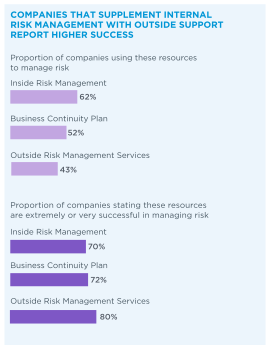
Overall, most life sciences executives, and particularly those at the fastest-growing businesses believe they are successful at using their internal resources to manage risk. Interestingly, even though external risk management is less common than internal risk management, those that do work with outside advisors are more likely to say their approach is successful.
Regulatory Edge Wins
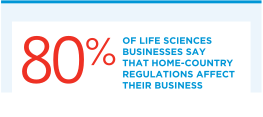
Regulations rank second only to cybersecurity threats in terms of the prevalence of challenges that life sciences companies face with 53% of businesses saying the regulatory environment is very or extremely challenging. Overall, the life sciences industry is shaped by regulations in more ways than most industries are, and clinical trial companies in particular say that regulations have an impact on their business and are challenging to manage. On one hand, regulations can add time, expense, and hurdles that complicate the work life sciences companies do. On the other, they also set standards for processes and products that benefit companies and can even help control competition and keep out rivals. Good or bad, more than four out of five businesses (84%) indicate that home-country regulations have an impact on their business while about half as many (44%) say their operations are also affected by international regulations.
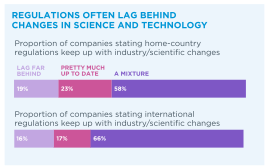
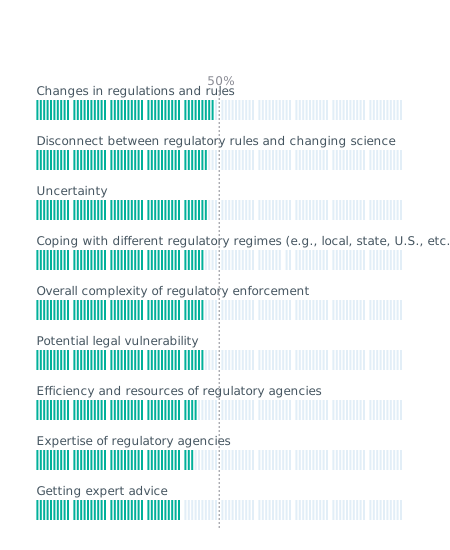
In general, regulations are not viewed as too strict—most companies say the regulatory environment is just about right, and life sciences leaders clearly understand the need for oversight given the nature of their products and services. Challenges with regulations stem more from complexity and uncertainty: the regulations change frequently, and they don’t always keep up with changes in science and technology. Many businesses must also deal with layers of regulations from the local, state, national, and international levels, creating additional complexity.
Faster-growing companies are more likely to describe the regulatory environment as very or extremely challenging

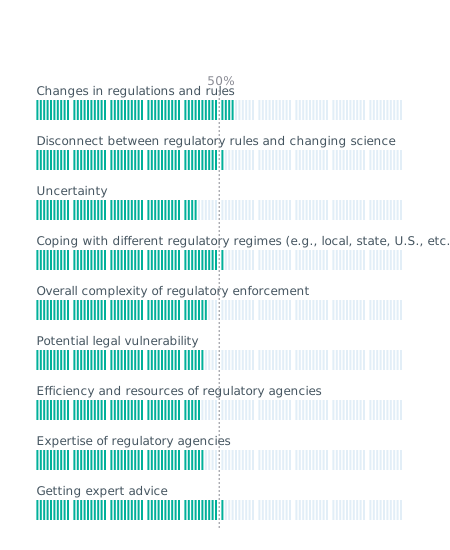
These issues are especially challenging for fast-growing life sciences companies: they are significantly more likely than slower-growing companies to say national regulations are tough to manage and almost twice as likely as their peers to say the same about international regulations.
Complexity and uncertainty are the most difficult aspects of the regulatory environment
Proportion of companies that find home-country regulations very or extremely difficult to manage
Proportion of companies that find international regulations very or extremely difficult to manage
Conclusion
What High-Performing Life Sciences Companies Do Differently
Succeeding in the life sciences industry is challenging. Innovation is essential, and companies must fiercely defend their knowledge and learning in order to be first to market. In the process of doing so, they are exposed to high levels of risk, supply chain vulnerabilities, and a regulatory environment that is necessary but complex, sometimes contributing to delays and extra expenses.
For companies that are growing most rapidly and outpacing their peers, all of these challenges are felt with extra acuity. Indeed, those companies that perform the best and grow the fastest also tend to be the ones that say they face the greatest hurdles. Through the process of tackling the issues and navigating the territory, these companies develop robust capabilities, including strong innovation, risk management, and compliance skills. As a result, they are not only growing faster today, they are poised to continue setting the pace and to provide the greatest job growth in the industry going forward.
Specifically, the data suggest (and real-world experience confirms) that fast-growing life sciences companies distinguish themselves from slower-growing peers by:
Prioritizing Innovation
Fast-growing life sciences businesses are more likely than slower-growing companies to cite keeping up with technology, keeping up with science, and managing innovation as extremely challenging issues for their businesses. This suggests that their focus on and attention to all three knowledge-related areas is intense. Additionally, they place greater emphasis on advanced technologies, including new materials as well as emerging manufacturing processes. Across the board, the fast growers appear to have a broader appreciation of both the importance and the difficulty involved in staying ahead of the field and are extremely committed to rising to the challenge.
Balancing the Innovation Journey
Even companies that are growing rapidly understand that the process of bringing a new medication or device from the innovation stage through the approval process is a lengthy and expensive one. The successful growers, while committed to innovating new offerings, are opportunistic at the same time. They look to maximize opportunities to profit from existing offerings in order to help fund their ongoing innovation. They also take measures to expedite the development process wherever possible in order to extend patent-protected time on the market and reap the most rewards from their innovation efforts.
Choosing the Right Partners
Fast growers are particular about the partners with whom they work. And this is true both upstream and down. Companies that enjoy successful revenue growth are attuned to the ecosystem within which they operate and aware of the interdependencies between companies that innovate new offerings, and those that support testing, commercialization, and distribution of those products and services. While high-performance businesses are not immune to disruptions along the supply chain, they are better at managing partner relationships, which helps to smooth the transitions between one phase of the process and the next and minimizes the duration and impact of any disruptions that do occur.
Addressing Risk From Every Angle
Fast-growing life sciences companies place a higher priority on risk management than slower-growing businesses, and they have a more sophisticated approach to risk management, which often shows up in the collaborative approach they take to understanding and reducing risk across the company. For example, companies that are best in this area tend to routinely hold meetings between the risk management, legal, medical/quality control, and finance departments to proactively address the situation, instead of merely responding to problems once they occur. Because they view risk management as a true capability, they experience fewer issues. And when a problem does arise, they are better able to catch it quickly and mitigate the damage.
Managing Multiple Challenges Systemically
There is evidence that the most successful middle market life sciences companies take a holistic approach to addressing the complex landscape that defines their industry. Instead of tackling each individual problem in a silo, they look at the interrelationships and synergies that exist between the various issues, for example, the ways in which regulations can contribute to supply chain disruptions or lag behind changes in technology, or how cybersecurity issues tie directly to innovation and IP. Those that are closest to mastering the dynamics between innovation, regulations, and risk have found ways to operate at the edge of a risk-inherent industry—staying in step with the rapid pace of evolving technology—while methodically and strategically protecting their businesses throughout a long-term process.
About This Report
The life sciences industry is complex and varied. It includes pharmaceutical and biotech producers, makers of medical devices, dietary supplements companies, companies that conduct clinical trials for new medications, contract research companies, contract manufacturers, analytics labs, and distributors. The vast majority of these businesses are small or middle market organizations: a recent report from BIO Industry Analysis shows that more than 90% of the biopharmaceutical industry is made up of small, emerging companies with less than $1 billion in sales.
The life sciences industry is concentrated in the middle market—the segment that drives the U.S. economy. These businesses are critical to national financial health, and, as recent events have made all too clear, every individual has a personal stake in their performance and how quickly they can bring their innovations to market.
In March 2020, the Center surveyed 400 life sciences companies to learn more about the industry’s economic impact, the challenges companies face, and what the fastest-growing middle market life sciences organizations do differently to overcome hurdles and sustain growth. We found that in the 12 months that ended in February 2020, middle market life sciences companies reported robust revenue growth and they added new jobs at a rate that outpaced overall middle market employment growth. The companies projected significant gains in both revenue and employment growth for 2020 and into the first quarter of 2021. However, they indicated that achieving that growth won’t come easy. Companies cited a range of headwinds, not least among them successfully managing the inherent risk in the business and dealing with a complex set of local, state, national, and global regulations. These data were collected just as the COVID-19 pandemic began, and, accordingly, do not reflect its impact. (See pg. 14 for more on COVID-19.)
This report presents key findings that can serve as a platform for middle market life sciences executives looking for insight into their own challenges as well as the challenges faced by their partners in the industry. It provides valuable information for regulators and economic development agencies who are, perhaps more keenly than ever, invested in the ongoing growth and vitality of this essential segment of the economy.
Methodology
The National Center for the Middle Market worked with experts from Chubb and faculty advisors from The Ohio State University Fisher College of Business to survey 400 strategic decision makers from life sciences companies operating in the United States and Canada. While middle market companies are typically measured by revenue, for this research, we also included pre-revenue companies if they had at least 100 employees and at least $25 million in outside capital. This was done for several reasons. First, the industry has a long product development life cycle and companies can be viewed as forces to be reckoned with, even before producing revenues, as long as they have some scale (employees and investment dollars). Second, the industry is dynamic and companies can very quickly leap from pre-revenue to considerable sales, warranting their inclusion in this study. All survey respondents were actively responsible for financial decisions at their organizations. They replied to a 20-minute self-administered online survey conducted between March 12 and March 23, 2020.
