

The Importance of Digitizing the Customer Experience
Experts agree that a superior customer experience is no longer a nice-to-have; it’s a must have. And in a world where technology plays an increasingly starring role in all touchpoints along the customer journey, digitally-savvy companies have a competitive edge. Yet, many businesses struggle to find ways to meaningfully connect with their customers on digital platforms. Middle market firms, in particular, face challenges when it comes to integrating digital solutions into the customer experience: Only 38% claim to be very adept at the process. Those who have figured it out—the 21% of middle market businesses that we’ve dubbed Digitally Strategic—are capitalizing on the advantages it affords in more ways than one. Strategic use of digital assets in managing the customer experience is positively impacting all areas of their businesses, from customer service, to productivity, to performance visibility. And these firms post some of the highest year-over-year revenue and growth rates in the middle market. Understanding how these firms integrate customer experience digitization in their businesses, and the advanced tools they are using to transform how customers experience their brands, can help the middle market as a whole do a better job of transforming the customer experience and, thus, a better job of competing with larger firms for customers and market share.
Executive Summary
In 2015, the National Center for the Middle Market studied the state of digitization among middle market companies. Our report, How Digital Are You? revealed that companies have made more progress in digitizing back-office functions than those that directly interface with customers or clients. We also found that companies expected to increase the emphasis on customer facing activities (such as sales, demand generation, and service) in future digital efforts. To see what the result of that investment has been and what progress remains to be made, this study looks at customer facing digitization, and, in particular, how digitization has affected the customer experience, or what customers see, feel, touch, and do when they engage with a company.
There’s no question that technology is reshaping the customer experience at touchpoints all along the customer journey. From the way we buy and sell everything from houses to hamburgers, it seems there’s an app for that. Middle market companies are no strangers to this phenomenon. Nearly three-quarters of middle market leaders agree that digitization is essential to growing and transforming their business and meeting future needs. And nearly all mid-sized firms say that digital solutions have had some level of positive impact on the way they do business.
Yet many middle market firms have been slow to integrate digital solutions into the customer experience. This is not because they don’t value customer experience; in fact middle market companies say that customer experience ranks second only to quality, and exceeds price, in importance to a company’s ability to compete.
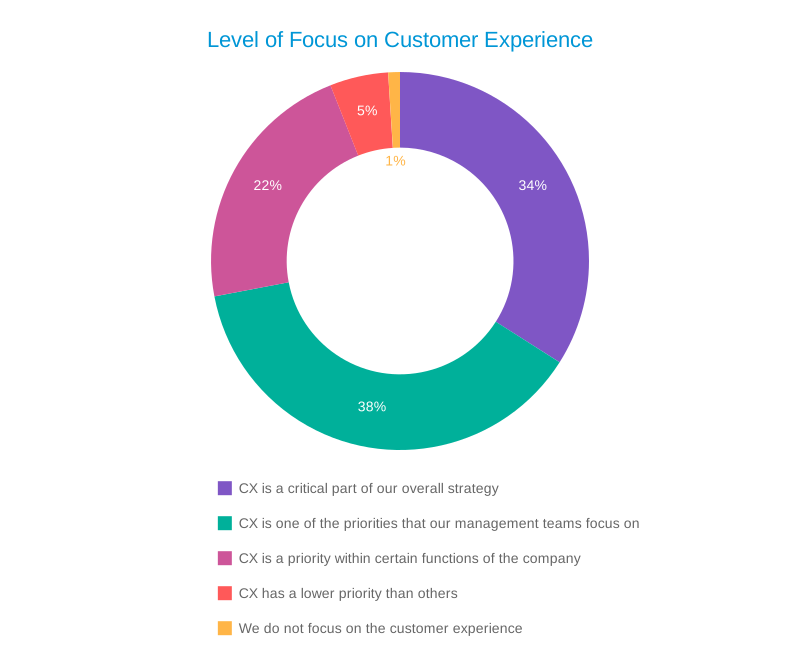
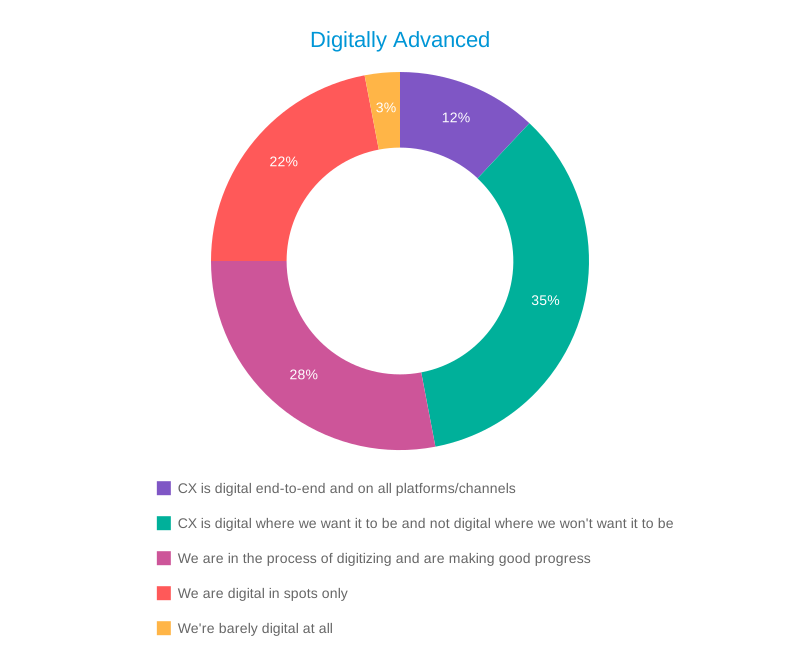
However, only 34% of companies say that customer experience is a critical part of their overall strategy. Without that strategic focus on customer experience, it’s not surprising that digital integration continues to progress more quickly for managing back office functions and business analytics than for customerfacing business functions such as sales and marketing. As a result, only 38% of middle market companies claim to be highly effective at customer experience digitization, or “CX digitization,” as we will call it. Just 12% of companies have achieved a truly omnichannel end-to-end digital experience on all platforms. For many companies, CX digitization is reactive, or “just sort of happening,” without an intentional initiative to drive it forward.
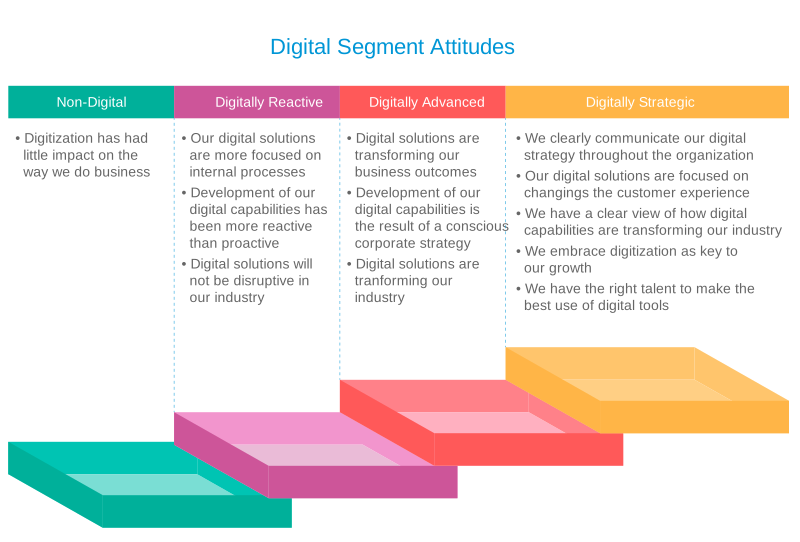
Some mid-sized firms have embraced CX digitization to a much greater extent than others. As companies progress from Non- Digital, to Digitally Reactive, Digitally Advanced, and, ultimately, Digitally Strategic, their attitudes shift and they adopt a more proactive approach to making technology a strategic part of the customer experience. For firms in the Digitally Strategic cluster, CX digitation is not just about specific tactics. It’s embedded into the firm’s overall strategy.
The Digitally Strategic firms have a clearly defined digital strategy that directs their significant investment in the digital CX tools needed to deliver on that strategy. These tools range from a social media presence and digital marketing to eCommerce, mobile service and sales tools, and intelligent devices (Internet of Things or IoT). Digitally Strategic firms have invested in the right talent, too; people with the specific digitization expertise and skills needed to see their strategies through. These investments are making a difference. Compared to their peers, Digitally Strategic firms are much better at achieving their customer experience goals, and digitization is contributing to notable improvements across all areas of the business.
These firms also grow at a much faster rate than less-digital firms: They report nearly 10% year-over-year revenue growth and 4.6% year-over-year employment growth. The numbers not only stand apart from the growth rates of Non-Digital firms (4.7% revenue growth and 2.7% employment growth); they are notably higher than growth rates reported even by Digitally Advanced firms (6% revenue growth and 3.1% employment growth). It appears that the benefits of CX digitization are non-linear and begin to accelerate once companies have made the strategic decision to prioritize a digital customer experience and, subsequently, made a significant investment in the right tools and talent to deliver on that strategy.
Fully 80% of companies say they are currently investing in digitization, and much of that investment is being channeled toward the customer experience and customer interaction. But many businesses struggle to capture the direct financial return from their investment in CX digitization. Executives cite conflict between digital and analog areas of the business—for example, brick and mortar sales versus web sales—as a barrier to greater levels of digitization. Some companies simply lack knowledge or the right talent to fully optimize digital CX tools. A few may feel that their digital investments are best directed behind the scenes, and that there is no particular value or advantage to digitizing their direct interactions with customers.
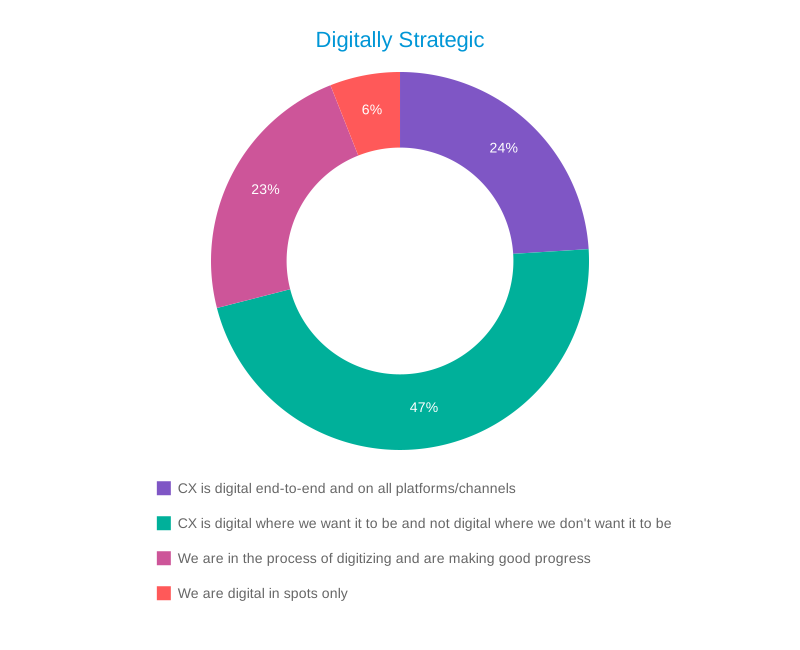
What is clear is that there remains enormous opportunity to profit from customer-experience digitization. In no area of digitization do companies believe they have captured more than half of the full potential benefit. Even among the Digitally Strategic firms, only about a quarter have achieved end-to-end omnichannel digitization.
By continuing to focus on CX digitization as a strategic initiative, by investing in the most effective tools and talent, and by making digitization an intentional, integrated, and coherent component of the overall customer experience, middle market firms have opportunities to transform the way they do business, gain competitive advantage, and advance their growth goals as a result.
Key Findings
Digitization is Transforming the Customer Experience
Middle market executives rank customer experience second only to quality, and more important than price, when it comes to the ability to compete for business. Today, digitization is playing an increasingly important role in delivering that experience. Nearly seven out of 10 leaders agree that digitization is essential for delivering a seamless customer experience. Without doubt, technology is creating opportunities to transform or augment many interactions and touchpoints on the CX journey, from how customers first learn about and begin exploring a company’s offerings, to the ultimate purchase and customer support processes.
Where CX Matters Most, It is Likely to be Digitized
About a third (34%) of middle market companies that say customer experience is a critical part of overall corporate strategy. These companies are the most likely to invest heavily in CX digitization tools. In other words, the companies that place the greatest value on the customer experience overall are most likely to see the value in digitizing that experience and, thus, invest in the tools to do so. They approach CX digitization as a cohesive strategy as opposed to a collection of ad hoc tactics.
Middle Market Firms Fall Into Four Distinct CX Digitization Clusters
Based on attitudes toward digitizing the customer experience and actions that have been taken, the research shows that middle market companies can be divided into four categories: Digitally Strategic, Digitally Advanced, Digitally Reactive and Non-Digital. A fifth have strategic, advanced digital capabilities; another fifth are laggards; the rest fall in the middle.
The Greater the Strategic Investment in Digitization, the More Pronounced the Rewards
The benefits of CX digitization are many, from cost savings to increased loyalty and share of wallet. But these advantages are not entirely linear. In many cases, they fully materialize only at the leading edge of CX digitization, after companies have strategically and heavily invested in the right CX technology and talent to deliver on their specific goals. Digitally Strategic firms are much more likely to cite the effectiveness of the digitization tools they deploy than all of their less-digital peers.
Digitally Strategic Firms Are Best at Customer Experience. They Make the Most Money, Too.
Digitally Strategic firms are much more likely than their peers to believe they do a good job delivering against their customer experience goals. These companies give themselves a grade point average, or GPA, of 3.0 in this area, compared to 2.7 for the overall middle market. Digitally Strategic companies are growing much faster than their counterparts, too. At 9.9% year-over-year revenue growth, these firms are growing twice as fast as Non-Digital companies and significantly faster than firms in the Digitally Reactive and Digitally Advanced clusters.
All Firms Have Opportunities to Realize Greater Benefits from CX Digitization; But They Will Have to Overcome Key Challenges First
Just 12% of all middle market companies and 24% of Digitally Strategic businesses have achieved an end-to-end omnichannel digital customer experience on all platforms. What’s more, middle market leaders indicate that they have only just begun to realize the advantages of customer experience digitization, and they have made the most progress in back office areas. Even in those back office functions, such as payments and records, companies have realized just half the potential benefit. There is even greater gain to be had in customer-facing functions, such as service and marketing. To achieve these benefits, middle market firms must first find ways to overcome some key barriers to customer experience digitization, including capturing the financial return from their customer experience digitization efforts and managing conflict that may exist between digital and analog areas of the business.
Strategically Investing in the Most Effective Customer Experience Digitization Tools May Help Companies Achieve Their Goals Faster
Companies say they will continue to invest in CX digitization— and that investment will have the highest return when it is tied to a company’s overall customer experience strategy versus ad hoc deployment of various digitization tactics and tools. However, the most popular CX digitization tools are not always the most effective. Customer/partner collaboration tools, Internet of Things (IoT) and smart devices, and system automation with partners appear to offer the most promising returns. By choosing the most appropriate and effective tools to deliver against specific goals, and ensuring the right talent is in place to deploy those tools successfully, middle market firms can create meaningful and advantageous digital experiences across the customer journey.
Introduction
Half a century ago, in 1967, the first automatic teller machine came into service at a Barclay’s Bank brand in the north London borough of Enfield. Since then, more and more of the ways companies interact with customers have become digital. Digital customer experiences have thoroughly and rapidly become the norm that we as customers have come to expect.
Consider, for example, buying a house. Today, prospective homeowners are likely to begin browsing for houses on a website like Redfin or Zillow, rather than in a realtor’s office; they can get a Rocket Mortgage on their smart phones; even the closing can be virtual. In essence, people can practically buy a new home without setting foot outside their current one. Or think about how you planned your last vacation—looking for accommodation via Hotels.com or Airbnb, booking flights on Expedia and checking in with an app, picking sites to see and places to eat on Yelp.
B2B transactions are not exempt either. E-commerce platforms like Alibaba and Amazon Web Services, both of which have been growing about 50% a year, have created new ways for buyers and suppliers to meet. All kinds of transactions with financial service firms, from raising capital to making payments, can be done online. Just as consumers can track their FedEx, UPS, and USPS packages online, so can companies track and manage their supply chains. Or, consider your last business meeting. Did you hold it face-to-face? Or did you meet and collaborate via WebEx or some other virtual meeting space?
The Center’s past research report, How Digital Are You?, revealed that middle market companies are traditionally more apt to embrace digitization in their back office functions and less likely to deploy it in customer-facing initiatives. However, they indicated a desire to make customer touchpoints more digital. In our latest research, the Center set out to evaluate how middle market companies are fairing in this regard and to what extent they are (or are not) embracing the idea of digitizing the customer experience.
For the purposes of the study, we defined digitization as taking manual, paper-based, or offline business processes and converting them to online, networked, computer-supported processes with the goal of standardizing, automating, and integrating systems and data so as to create a real-time operating and decision-making environment.
We defined customer experience as the experience the customer has across the entire lifecycle or journey with a company, from marketing and sales, through engagement, expansion, customer service, and even when they cancel.
Then we looked at how the two mesh up. What we found is that middle market companies place high value on the customer experience and that most believe digital solutions are transforming the industry. But marrying digitization to customer experience isn’t always easy. In general, middle market businesses continue to do much better at digitizing back office functions then they do at leveraging advanced digital CX tools to create an omnichannel digital experience across all touchpoints in the customer journey. At this point, few middle market firms have digitized the customer experience end-to-end. But most are at least somewhat digital when it comes to CX. This report places companies into four categories base on where they are in the process: Non-Digital, Digitally Reactive, Digitally Advanced, and Digitally Strategic.
Across the middle market, progress is being made and many companies have plans to continue investing in making the customer experience more digital. Whether that’s reactive—customers are demanding it or companies are keeping up with industry norms—or by strategic intent, middle market firms have much to gain by finding appropriate and effective ways to integrate digital solutions into the overall customer experience.
Detailed findings
Customer Experience
Customer Experience Is Second Only to Quality
Middle market firms understand the importance of customer experience. Seven out of 10 leaders rank experience as one of the top three areas affecting a company’s ability to win business, second only to quality. Interestingly, customer experience trumps price, and will continue to gain in importance in the years to come.
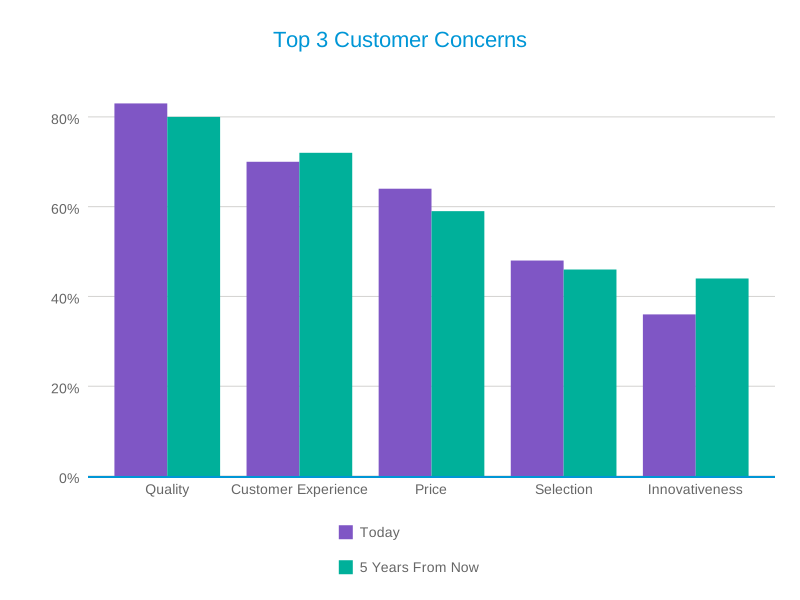
For most middle market companies, customer experience goals center around ensuring open communications, being viewed as a partner, and delighting customers or exceeding their expectations. The majority (73%) of firms measure customer satisfaction in some way, either with quarterly or annual surveys, by tracking repeat business, and/or by keeping tabs on complaints.
While most middle market companies prioritize customer experience and understand its bottom line impact, only a third of company leaders say that they have placed it at the center of their overall strategy or that the customer comes first in all areas of the business. While customer experience is a low priority for a mere 6% of firms, 22% say CX matters only to certain departments or functions.
The Role of Digitization in the Customer Experience
A digital customer experience is important—but not a strategic priority for most firms.
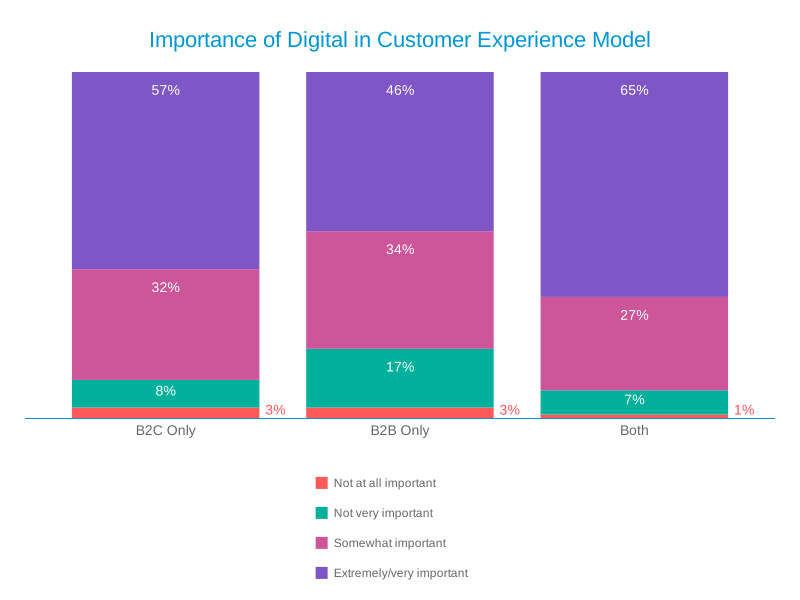
More than half (57%) of middle market firms say that digital solutions play an important role in the customer experience. And nearly seven out of 10 at least somewhat agree that digital capabilities are essential for delivering a seamless customer experience. Yet only 29% of all middle market companies say that digitizing the customer experience is a strategic priority, and only 12% have implemented a truly end-to-end omnichannel digital customer experience.
Generally speaking, B2C companies are more likely to say that digital CX is important than companies that sell exclusively to other businesses. However, it may be a misguided assumption that end consumers expect and/or appreciate digitization more than business clients.
In any case, B2B firms are somewhat more likely than B2C firms to say digitization is more reactive than proactive. But consumer focused-businesses are more likely to agree with the statement “It’s just sort of happening.” Whether by strategic intent, necessity, or happenstance, nearly all firms (90%) have digitized some aspect of the customer experience. Only one in 10 is not pursuing CX digitization at all.
Middle market firms fall into four distinct CX digitization clusters.
Based on attitudes toward digitizing the customer experience and actions that have been taken, the research shows that middle market companies can be divided into four categories:
- Digitally Strategic: 21% of middle market companies are Digitally Strategic. These firms embrace the customer experience and CX digitization. They are most likely to say CX is critical to overall corporate strategy, and they understand how CX digitization is changing their industries. They believe a digital customer experience it is essential to growing the business and meeting future needs.
Some of these companies would classify themselves as “disrupters” and some would not: But all have staked out positions at the forefront of their industry. Three-quarters of these companies say their customers demand a digitally enabled overall experience compared to about half of Digitally Advanced firms and just 40% of Digitally Reactive firms.
Digitally Strategic firms have a clear digital strategy in place specifically designed to change and improve the customer experience, they communicate that strategy organization-wide, and they have invested in eight or more customer experience digitization tools to implement that strategy. Significantly, Digitally Strategic firms stand out from the rest of the middle market in saying they have the right people in place, too, to capitalize on their investment in digital CX. In other words, just as they are deploying tools strategically, they are also employing people with specific expertise and skills in digitization, rather than just throwing bodies at the issue.
While these companies tend to be younger, digitally-native firms, they are fairly equally split between B2B and B2C companies. Business, professional, and technology services firms are well-represented in this category.
Even among these Digitally Strategic companies, only about a quarter say they have achieved an end-to-end omnichannel digital customer experience.
- Digitally Advanced: Just over a quarter (26%) of middle market companies fall into this cluster. Digitally Advanced companies have a conscious corporate strategy for digitization and believe that digital solutions are transforming their industries as well as their own business outcomes. However, they lack the universal or all-hands-on-deck mentality of their Digitally Strategic peers. While digital CX is important to these firms, they may lack the right people, expertise, or possibly even the desire to bring it to life at all levels of the company and all customer touchpoints. They focus digital CX efforts in spots, functions, or business units as opposed to infusing it throughout the entire company.
While customer experience in general is important to these businesses, it is just one of several key priorities for the management team. Digitally Advanced firms have invested in four to seven CX digitization tools. The group includes firms in the business, professional, and technology services industries, which tend to be further along in the digitization process than their peers in other industries. Most of these companies have either already digitized, or in the process of digitizing, specific aspects of the customer experience.
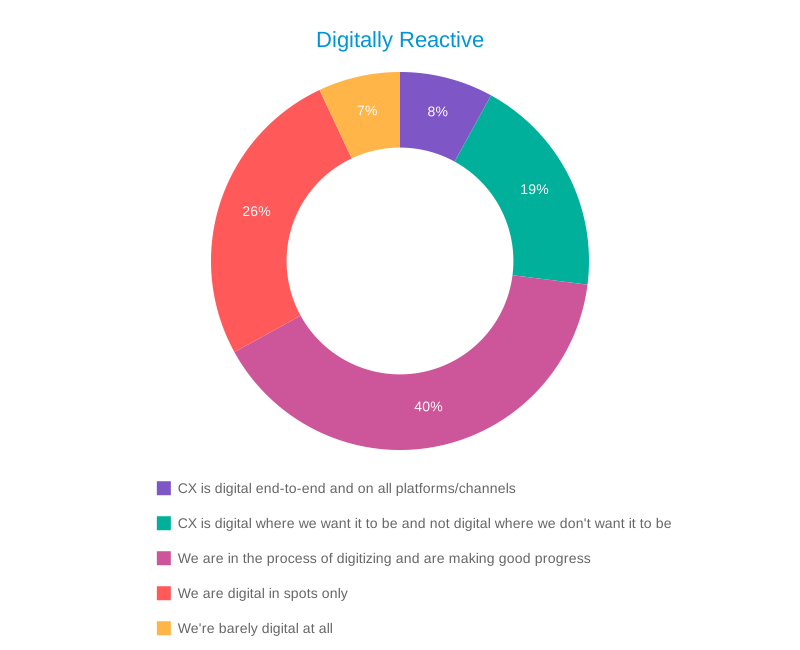
- Digitally Reactive: The largest segment, representing 32% of middle market firms, is made up of companies that have a reactive versus proactive approach to digitization. They primarily focus digital efforts on internal processes. Digitally Reactive companies have invested in at least one CX digitization tool, but no more than three. The majority of this segment is made up of B2B firms, and manufacturers in particular tend to fall into the Digitally Reactive category. Many of these companies are currently in the process of digitizing some aspects of the CX, but their efforts tend to be more tactical than strategic.
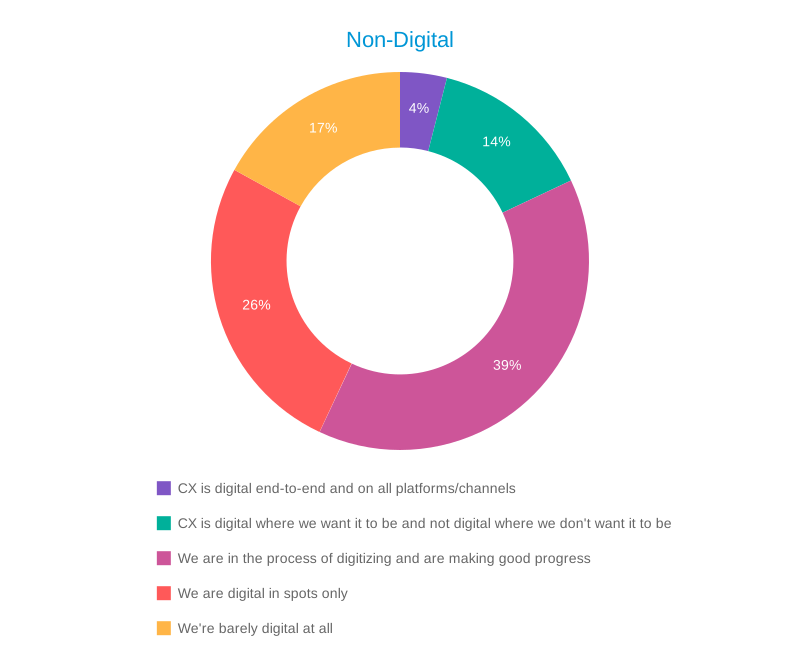
- Non-Digital: 21% of middle market companies are decidedly Non-Digital. They have not yet invested in any digitization tools for customer experience, and they feel that digitization has little impact on their business.
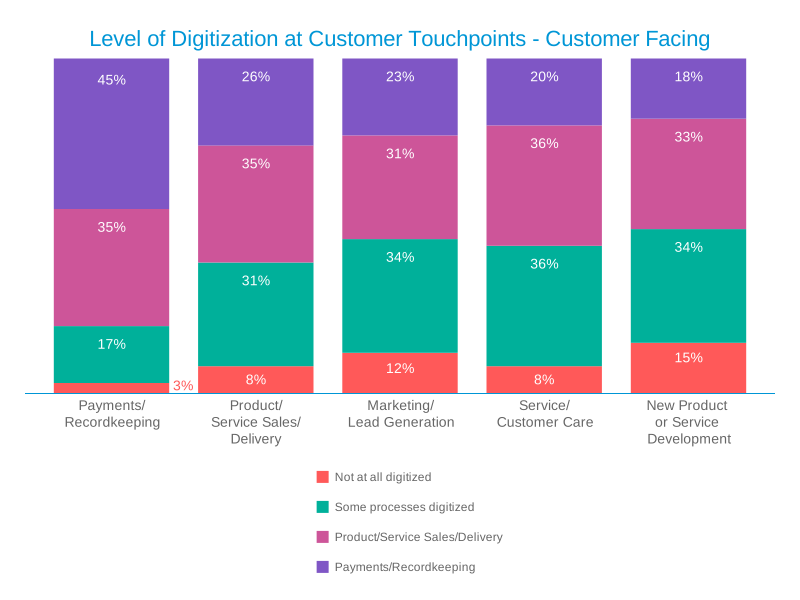
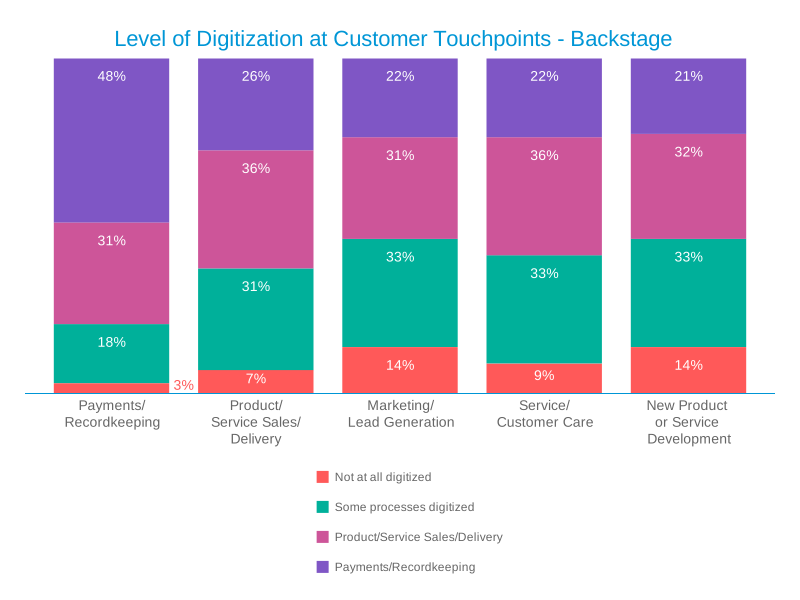
CX digitization happens more backstage than on stage.
The customer experience is a journey made up of many different touchpoints. As with digitization efforts overall, the customer experience touchpoints that tend to be the most digitized are associated with internal company processes. For example, payments and record keeping are almost twice as likely to be fully digitally integrated than marketing or customer care.
The right talent is critical to CX digitization.
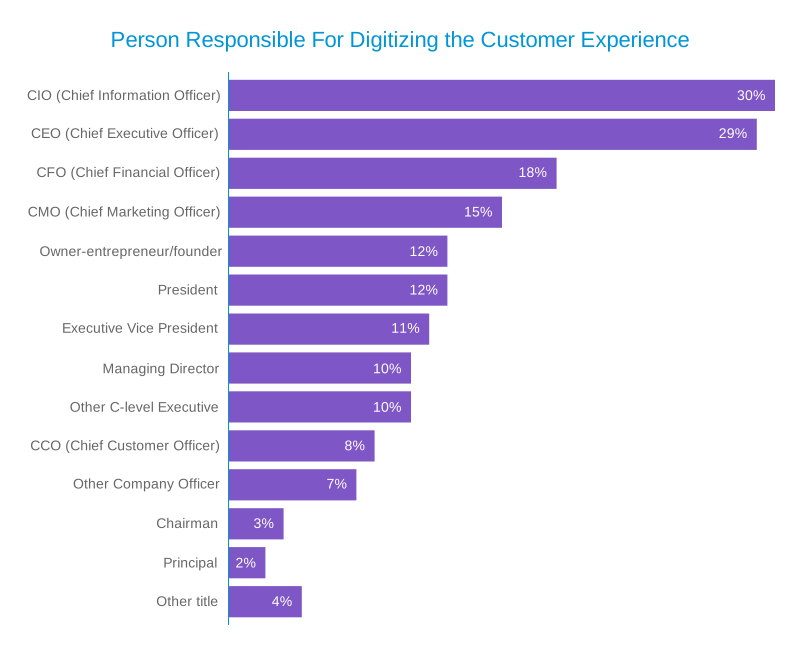
The focus on backend digitization may be by default rather than design. Overall, responsibility for digitizing the CX rests with executives at the top of the organization, which speaks to its importance. However, by a 2:1 margin, middle market firms put their Chief Information Officer (CIO) in charge over their Chief Marketing Officer (CMO). So it’s not surprising that the most digitized aspects of the CX tend to be the most technical.
Companies seeking a truly omnichannel customer experience need people with both the technical and customer-facing skills to make it work. Having the right talent in place is one factor that sets the Digitally Strategic firms apart from their peers: Just 17% of all middle market companies completely agree they have the right talent to make the best use of digital tools compared to 39% of Digitally Strategic firms. And more than three-quarters (78%) of Digitally Strategic firms at least somewhat agree that they have the right people heading their initiatives. These highly digital companies clearly understand the importance of investing in people, and not just technology, when it comes to executing their CX digitization strategy.
The Impact of CX Digitization
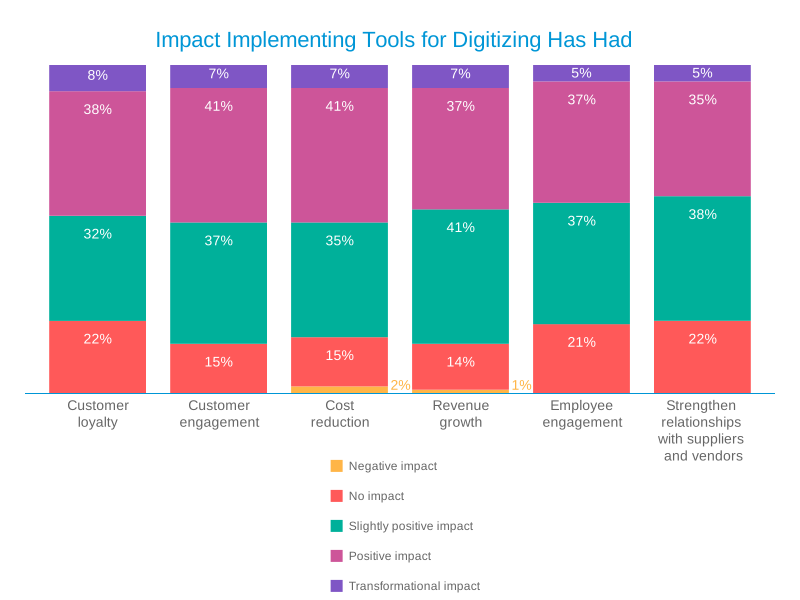
Digitizing the customer experience has had a positive, if not transformational, impact for most firms.
Middle market companies in all CX digitization categories are most likely to say that digital solutions have had a positive impact on key business priorities, most notably, customer loyalty, customer engagement, and cost reduction. Few, however, say that their CX digitization efforts have truly transformed their businesses.
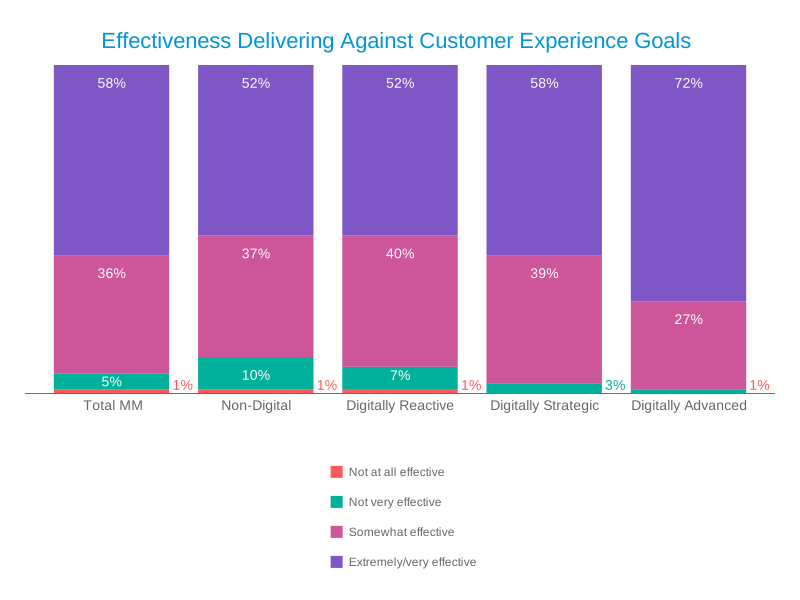
Middle market firms are above average when it comes to meeting their customer experience goals.
The survey asked middle market leaders to rate their companies’ abilities to deliver against customer experience goals on a scale from 0 to 4, where a rating of 0 means the company is not effective at meeting its goals at all, and a rating of 4 means the company is doing excellent. The results provide a meaningful CX Grade Point Average for the middle market.
The middle market as a whole gives itself a B-/C+ (2.7) for delivering against CX goals. As a company gets more strategic in its digital approach and employs a greater number of CX digitization tools to deliver its strategy, the GPA goes up, with the Digitally Strategic set assigning itself a 3.0, or solid B.
Companies are less effective at integrating digital solutions into CX.
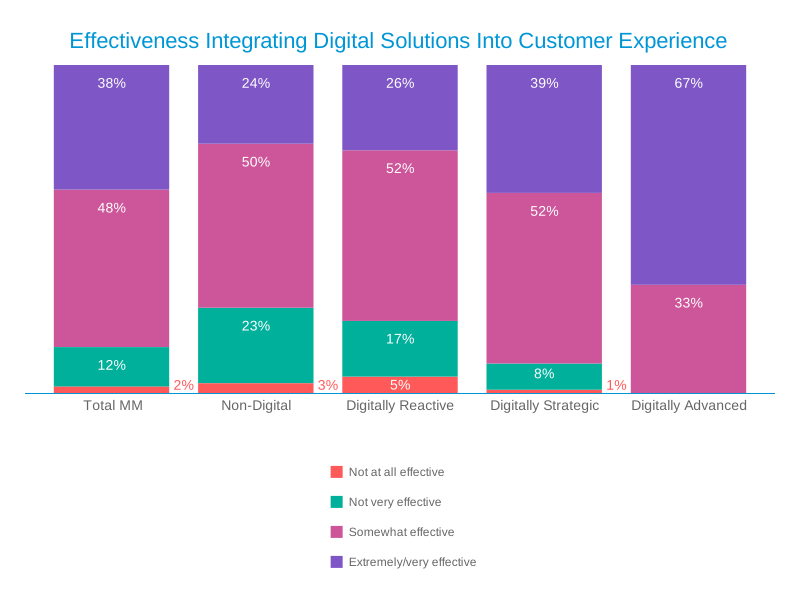
Although the majority of companies believe they are doing a decent job of meeting their CX goals, just over a third are highly satisfied with how well they are integrating digital solutions into the CX. Again, using a scale of 0 to 4, we can assign GPAs to the integration effort. Overall, the middle market gives itself a 2.4, or a mid to low C for this effort. Not surprisingly, Digitally Strategic firms have a higher score: they give themselves a 3.0 for this effort as well.
Some companies claim they lack the budget and/or the systems to digitize the customer experience, while others say their digitization efforts have been focused on internal processes rather than customer-facing touchpoints. Even Digitally Advanced firms, which have invested in four to seven CX digitization tools, report only moderate effectiveness at integration.
What is interesting is that the Digitally Reactive firms give themselves the same (relatively low) grade as the Non-Digital companies for integration. This suggests that the companies in the reactive cluster are doing only what they feel they must do in terms of integration; they lack a strategic vision on how the digital pieces fit together to create advantage or superior experience for customers.
Overall, while the data show that most companies are making progress on CX goals, fully integrated, omnichannel CX remains elusive, or at least a struggle, for even the most digital firms in the bunch.
The benefits of digitization compound with strategic investment.
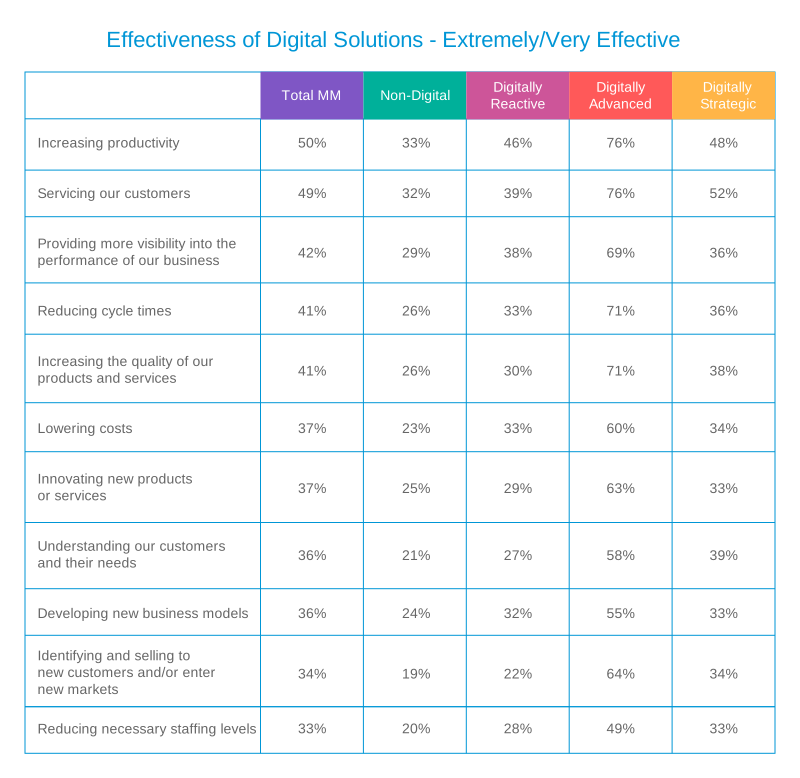
The most digital middle market firms enjoy the benefits of digitization across a wide variety of factors to a notably greater extent that their peers. In fact, it appears that the impact of digitizing CX is not linear. Digitally Strategic firms not only enjoy better performance across a variety of factors than Non-Digital or Digitally Reactive companies; they significantly outperform companies in the next closest category, the Digitally Advanced firms. These data suggest that many of the benefits of digitization only materialize after a company has taken a strategic approach to CX digitization and invested significantly in the tools and people to deliver on that strategy. Indeed, many of the benefit appear to come from the integration of digital into a seamless, omnichannel customer experience.
Companies that successfully integrate digital solutions into CX are growing more rapidly.
Perhaps most telling, Digitally Strategic firms are growing their revenue and increasing their headcount at a much faster rate than companies in all other digital clusters. This suggests that digital solutions clearly do have the potential to transform a company’s success, especially among companies that make CX a strategic priority, embrace a wide range of digital tools, and find ways to integrate the technology into all aspects of the customer experience.
Customer Experience Digitization Challenges
With so many benefits to be had from more fully embracing digitization in the CX arena, why are most middle market firms only partially digitized at best? They recognize that digital solutions are a key part of the customer experience; but they fail to make it a strategic priority. Even among the most Digitally Strategic firms, only about a quarter have succeeded in creating a fully digital omnichannel customer experience.
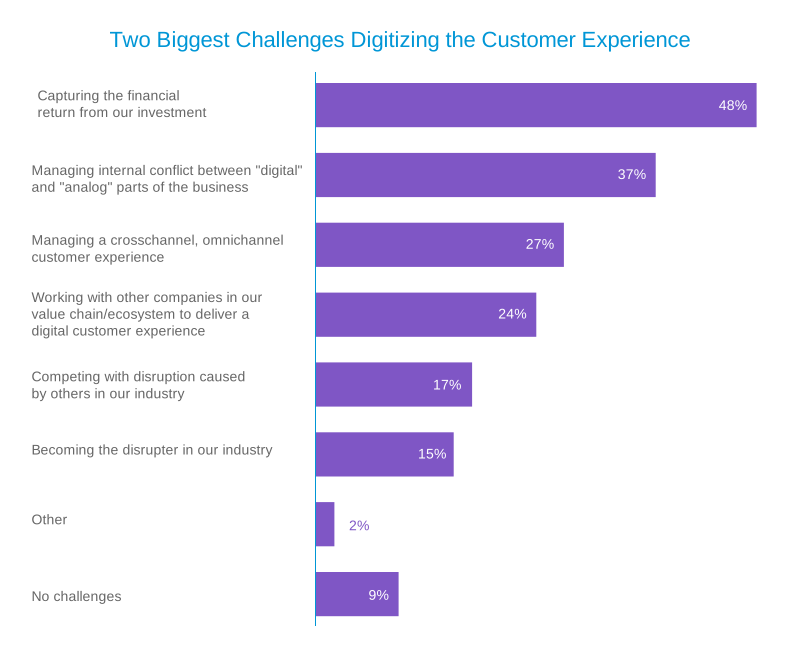
It’s difficult to capture the financial return from investing in digitizing CX.
The most cited barrier to digitizing CX is an inability to fully capture the financial return on investment. About half (48%) of middle market companies list this as one of the two top challenges. While data show that Digitally Strategic firms experience greater revenue and employment growth, companies may not be able to draw a straight line between these numbers and their specific investments in digital CX tools.
Additionally, since the most notable benefits begin to clearly materialize only after a significant investment in strategic digitization has been made, it may be difficult to prove the return on initial investments. This, in turn, can make it all the more difficult to justify the cost of subsequent digitization efforts.
Conflict and confusion exist between digital and analog parts of the business.
More than a third (37%) of middle market leaders note conflict between digital and analog parts of their businesses. This may explain why so few companies have been able to create an end-to-end, omnichannel digital CX across all platforms, and why many contend that their customer experience is digital where they want it to be, and non-digital where they prefer to keep it that way.
The problem, however, may be rooted not only in conflict, but also confusion. Companies that fail to effectively integrate digital solutions into CX have told us that they lack the systems and the knowledge needed to make it happen. Digitally Strategic companies, on the other hand, not only have the tools in place; they have the talent they need to understand and fully leverage their digital technologies. This may be partially because Digitally Strategic firms tend to be younger. They grew up in the digital era, so they likely have a more innate grasp on how digital solutions fit into the overall customer experience. But overall, company age does not seem to be a factor when it comes to CX digitization challenges: Old dogs can learn new tricks just as younger companies may have trouble knowing where, exactly, to digitize.
The Future of Customer Experience Digitization
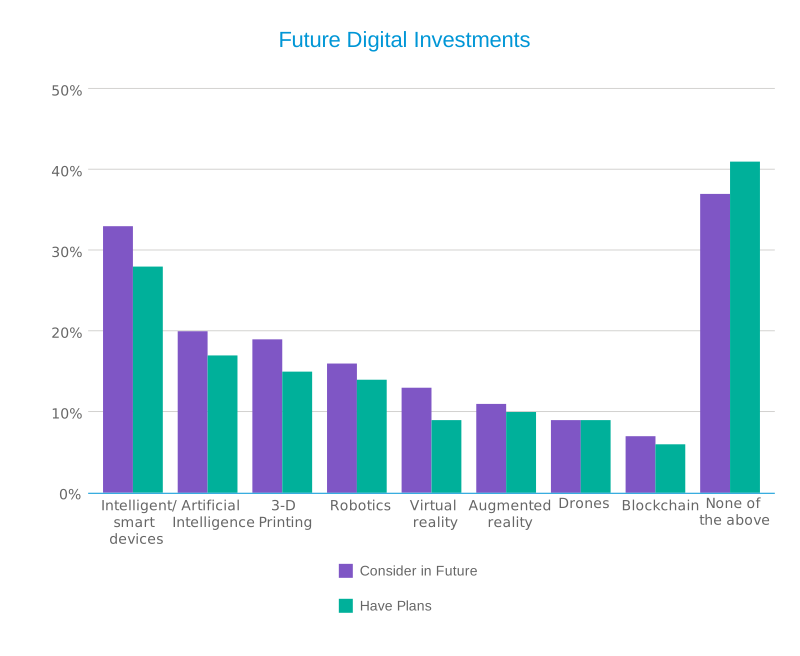
Challenges notwithstanding, the vast majority of middle market firms continue to invest in digitization, with customer experience receiving the lion’s share of the investment. More than three-quarters of firms believe that their customers will continue to place a great deal of importance on the digital experience.
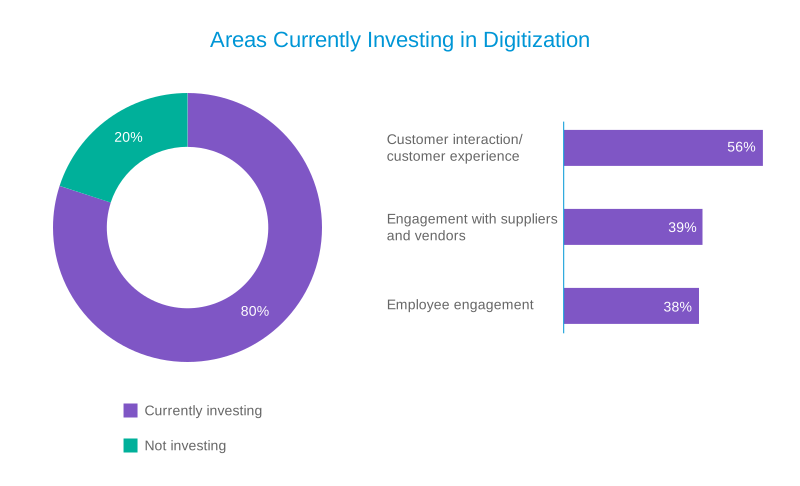
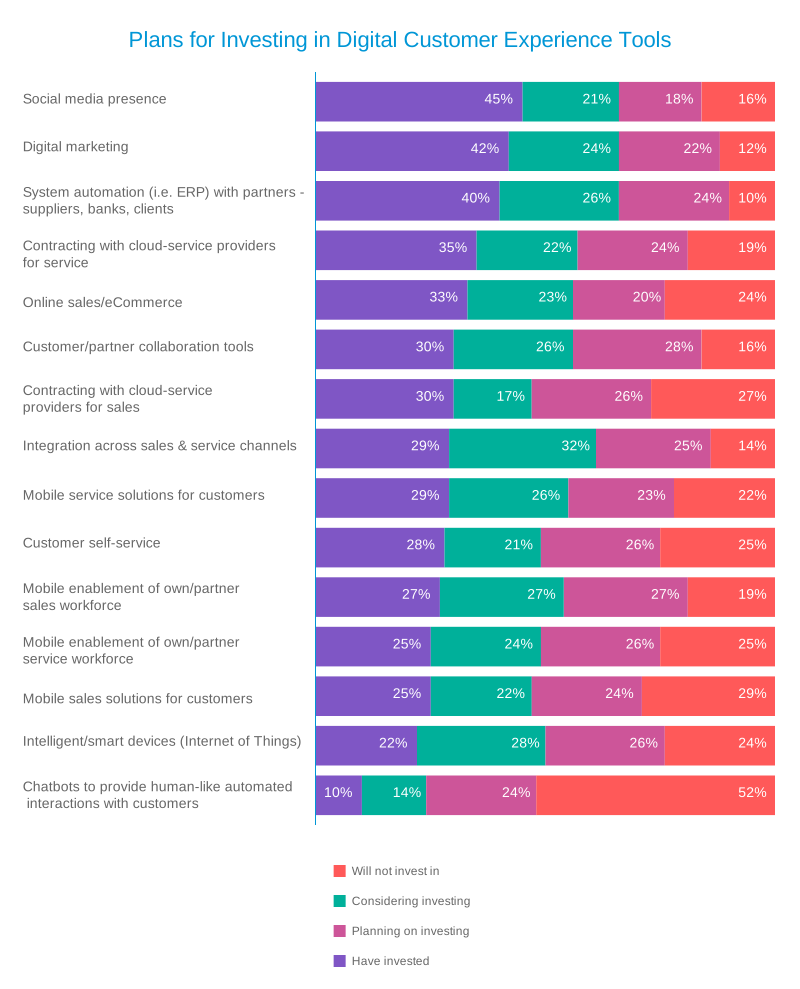
As a result, most firms either have plans in place, or are at least considering, a future investment in a particular area, such as smart devices (IoT), artificial intelligence, or 3D printing. Greater understanding of these tools and the ability to measure their effectiveness will be important to helping companies get the greatest return from their future digital investments.
Digital Tools
Many middle market companies, and Digitally Strategic firms in particular, have invested in several digital tools related to the customer experience. Interestingly, the most popular tools are not always the most effective.
For example, the most used tool—a social media presence—is considered highly effective by only 54% of companies. In contrast, while fewer than a quarter of firms have invested in Internet of Things (IoT) devices, 69% of these firms are realizing a significant impact from the intelligent devices they are using. It appears that IoT projects have an immediate ROI.
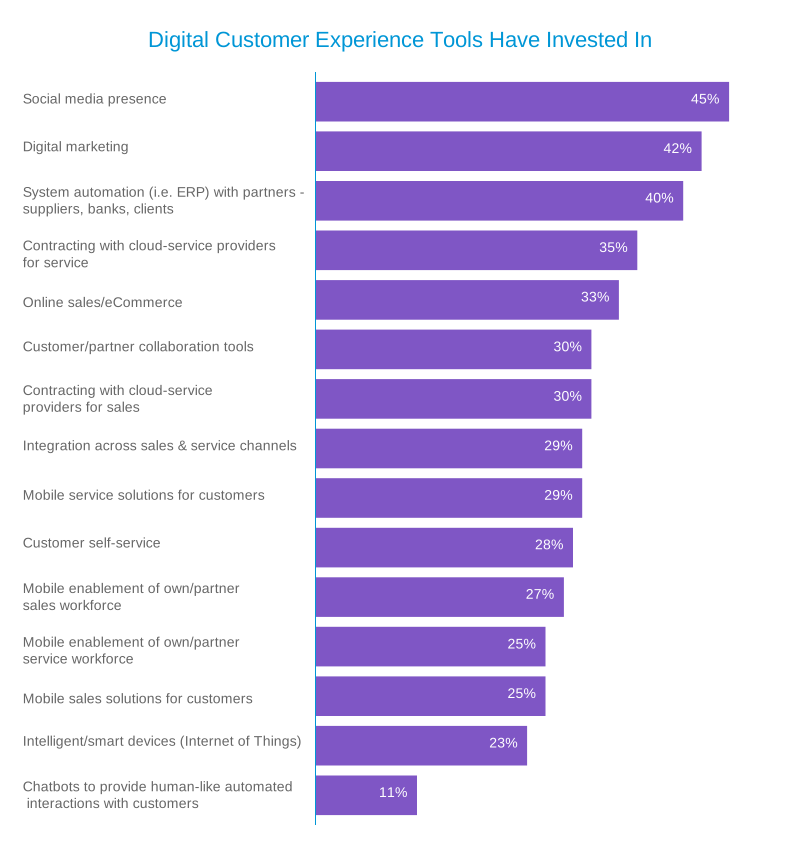
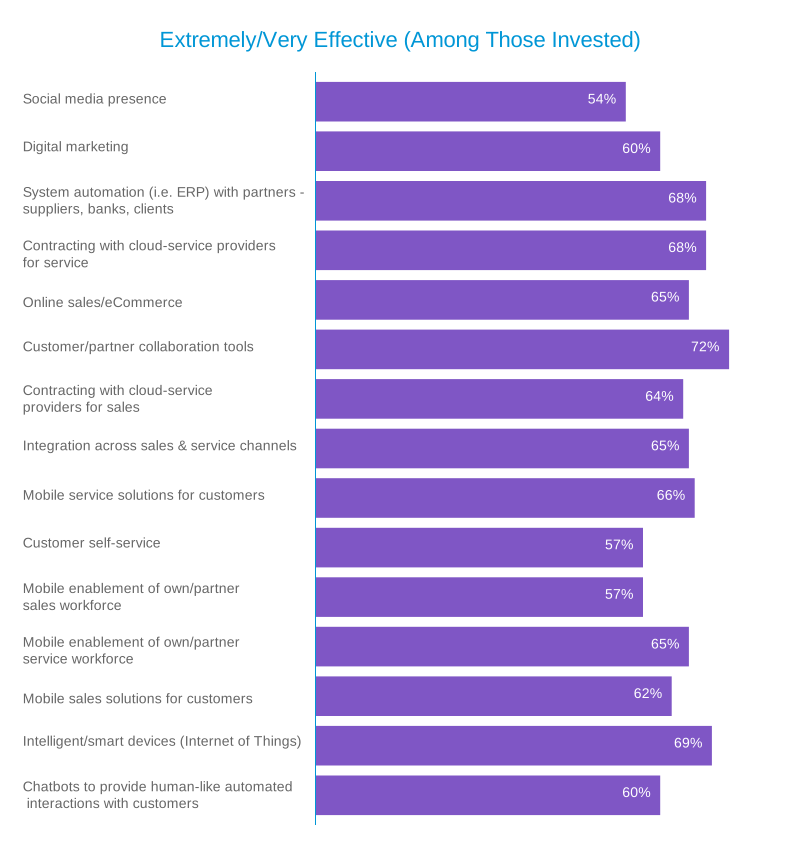
IoT is also one of the most popular areas for future investment, along with integration across sales and service channels. With IoT, sensors and communication devices are imbedded in products ranging from garage doors to food slicers to self-driving vehicles, promising to create almost constant contact between companies and their customers. This opens a whole new dimension of CX–and a whole new competitive battleground. It is one in which the line between sales and service may become indistinguishable, especially among companies with a strategic approach to the digital efforts.
Digital Alignment
Digitizing the customer experience requires a sophisticated orchestration of several sets of activities. One set is performed by customers. They visit websites, pop into stores, meet in offices. They buy tickets, check in, fly, collect baggage. They pay, complain, return. Sometimes they do these events alone (at an ATM, for example) and sometimes with a company employee (with a teller). All these activities happen onstage—that is, the customer sees them and often is an active participant.
Another set of activities happens backstage where customers do not see them. The content-management system that keeps the website up-to-date. The warehousing and shipping processes that deliver the goods and accept the returns. The accounting system that prepares the bill. These are invisible, but if they are done badly, they will damage the customer’s experience just as much as an overcooked steak or a dirty hotel room.
- Step 1: Create a Journey Map
The first step in digitizing the customer experience is to create a “journey map.” This is a document or, often, a wallboard covered with Post It notes capturing every interaction, or touchpoint, between company and customer during a typical transaction or relationship. The map may have “use cases” for different types of customers: business vs. vacation travelers, cancer patients vs. accident victims, shoppers looking for a gift vs. shoppers buying for themselves, and so on.
This journey map is the “big picture.” Only when the big picture is visible does it become possible to realize the full value of digitizing the customer experience–the exponential gains that Digitally Strategic companies show. - Step 2: Coordinate Onstage and Backstage
The second step is to understand and coordinate what happens onstage and backstage at each touchpoint. What is the customer trying to do? What are his expectations? Emotions? Does she need to make a decision? What does the customer see–and what do you want her to see?
Then, backstage, what needs to happen to deliver the experience you want the customer to have? Think of this as vertical coordination–connecting onstage and backstage at each point.
Touchpoints are one thing; handoffs are another. Customers want their journey to be smooth, and that requires horizontal coordination–processes that connect the customer and his information between one department to another. or from one channel to another (from the web to the phone, for example).
Onstage, when you can see the big picture, you can use digital tools at each touchpoint and handoff to:- Make it more convenient for customers (because you are fast, mobile)
- Make it more simple for customers (because you show one face to the customer)
- Make it more personal (because you know more about each customer)
Meanwhile, backstage at each touchpoint and handoff, use digitization to:- Achieve more loyalty and cross selling (because you are “sticky”)
- Have lower coordination costs (because you have a single view of the customer)
- Get better marketing (because of data and analytics)
An Omnichannel Lens
Warby Parker was born digital. When it was created in 2010, the founders imagined that it would sell prescription eyeglasses entirely online, with no retail storefronts. Accordingly, Neil Blumenthal and Davd Gilboa, business-school classmates when they conceived the idea, designed a digital customer experience to address questions they knew customers would ask. Blumenthal says, “We were trying to sell a brand that no one had heard of, over the Internet where no one had bought glasses, at a fraction of the price of what people are used to paying, so it naturally invited skepticism about quality.” Warby Parker created confidence in every possible way: with necessary licenses, a clean design, an elegant interface to help customers choose frames, free shipping and returns–and an offer to send five sample frames to customers to try on, at company expense.
Warby Parker might have stayed digital, but it caught on so quickly that the company ran out of samples to mail, and the founders invited nearby customers to drop by their apartment to try on glasses. When they moved into a real office, they created a showroom with an iMac on which customers could place an order. That led to a pop-up shop, then a traveling store in an old school bus, and, as of 2017, more than 50 stores in the U.S. and Canada, some of which offer eye exams–run from a Manhattan headquarters and supported by a call center in Nashville.
The shops don’t have a uniform look–some are in storefronts chosen for their architectural uniqueness. What is consistent is the customer experience–smooth, reliable, socially responsible, fun, and literate–which is the same at every touchpoint, and which is managed by the same superb backstage IT infrastructure. “Our customers don’t think of engaging with us through separate channels,” says Gilboa. “They think of us as a brand. It’s about engaging with Warby Parker, not whether they do it on our website, on their phone with our mobile experience, or in retail.”
Conclusion
The world is becoming increasingly digital. And customers—both consumer and commercial—increasingly expect, and sometimes even demand, their experiences with a company to be virtual as well as face-to-face; and they expect companies to be able to hopscotch easily from one mode of interaction to another.
In the middle market, leaders clearly understand the importance of digitizing the customer experience. While most companies continue to be more digital in their back office functions than they are with customer-facing touchpoints, this is changing as middle market firms continue to invest in more CX digitization tools—especially those firms that prioritize the customer experience and put their customers central to their overall corporate strategies.
Strategic CX digitization is clearly tied to a wide range of benefits—faster revenue and employment growth not the least among them. However, the Warby Parker example illustrates that analog experiences still have a critical place in the customer journey. It seems that virtual or face-to-face, the ultimate goal should be an experience that is consistent across touchpoints regardless of channel. To achieve that goal, middle market firms will need to elevate the overall importance of the customer experience, making it central to the firm’s strategy, and find better ways to integrate digital solutions into that CX.
Those that do it best and find ways to overcome challenges, including finding the budget and the talent to make it happen, can look forward to richer, more rewarding relationships with their customers that will help set them apart from their competitors and fuel their business goals.
