

M&A Drives Middle Market Growth
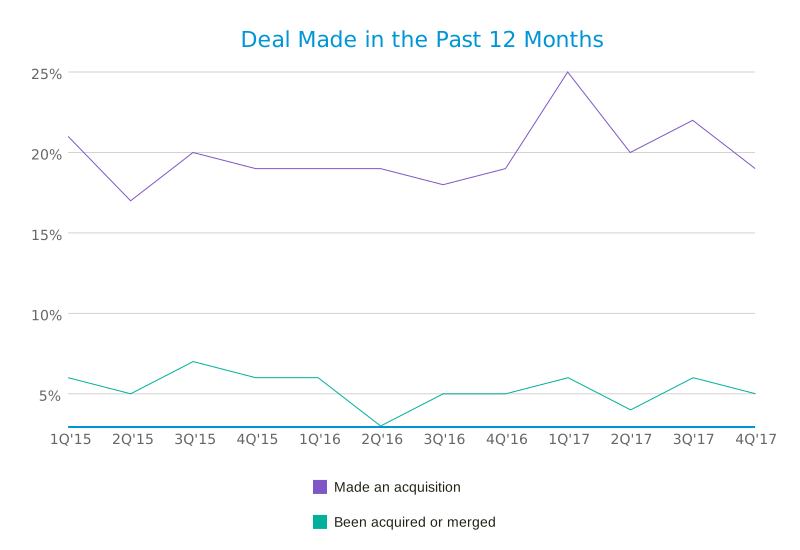
Every year about 20% of middle market companies make an acquisition of all or part of a business and about 5% make a sale. Although a few of these businesses are serial dealmakers, it is fair to say that over an extended period of time, a majority of middle market companies will find themselves negotiating a transaction. In some cases, it will be a turning point in a company’s life, such as the transfer of ownership of a family business. In other cases, mergers and acquisitions (M&A) are a critical part of a company’s growth strategy; buyers’ executives expect to realize 26% of their total growth from these transactions. In addition, middle market companies are the favorite target of hundreds of billions of dollars of private equity capital.
Clearly, inorganic growth is important, and companies need to get deals and deal-making strategy right. Yet, most executives in the middle market lack significant experience at the deal table, which opens the door to unexpected challenges that can impede the success of acquisitions and sales. By better understanding the obstacles middle market companies face and by leveraging their learnings, executives can better plan for future transactions, and the professionals who advise them can better tailor their services and support. When buyers and sellers come to the table prepared for the close itself as well as the post-deal integration process, all parties stand to gain more by quickly realizing the full potential value of the acquisition or sale.
Executive Summary
The middle market shows a strong rhythm of merger and acquisition (M&A) activity. Annually, roughly 20% of middle market businesses acquire all or part of another company, and about 5% of businesses sell or divest all or part of their organizations. When middle market executives initiate acquisitions, the buys are mostly based on a strategic rationale: Buyers are looking to drive growth by acquiring market share, capabilities, technology, and/or talent. Selling is more often done for financial reasons and a need or desire to monetize all or part of a business. However, strategic objectives can also play an important role in sales decisions, such as wanting to sell off ancillary divisions or units in order to focus on the core business. While most buyers and sellers make their decision first and then begin looking for a potential target or buyer, quite often opportunities present themselves, and even if leaders were not intending to buy or sell, they take advantage of the circumstances.
Whatever the motivation, and whether the purchase or sale is strategic or opportunistic, M&A is crucially important to the companies that participate in it. Buyers, specifically, hope to obtain 26% of their total growth from their acquisitions.
Yet most middle market companies lack extensive M&A experience. Among companies that bought or sold in the past three years, roughly 30% were doing their very first deal, and about 40% say they do deals infrequently. As a result of this inexperience, middle market executives may fail to drive the best bargain or may encounter unexpected challenges that impede the success of both deal execution and post-merger integration. What’s more, middle market companies often fail to fully leverage outside expertise and support that could help pave the way to a more successful deal.
Clearly, no one wants to sell to the wrong buyer or for too low a price; nor do buyers want to overpay or invest in the wrong target. Today, the stakes are higher than ever as the result of an increasingly competitive M&A environment. Enormous sums of capital are waiting to be invested, thanks to record-high corporate profits, the availability of bank loans and other debt capital, and the growth of private equity. This, combined with favorable economic conditions and rising executive confidence, drives the competition and intensity in the market.
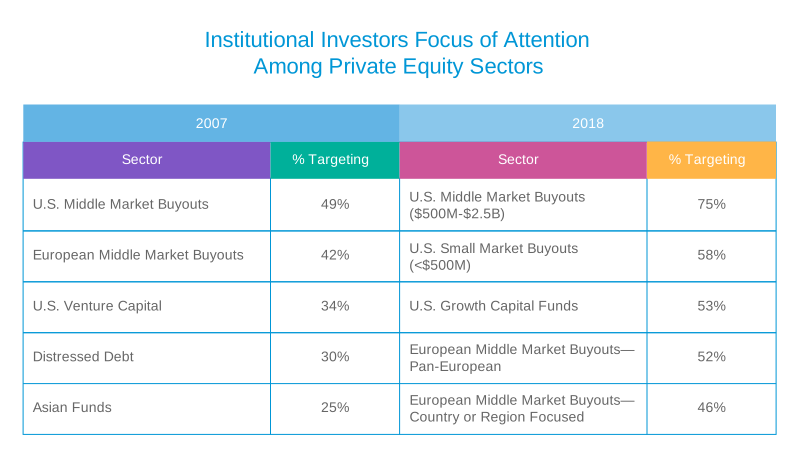
The growth of private equity funds in particular has created additional opportunities for sellers as well as for buyers looking for ways to finance their deals. Various sources indicate that nearly $200 billion is waiting to be invested, and middle market companies are the most desirable destination for that money, targeted by 75% of private-equity investors. The presence of these powerful buyers adds a layer of complexity to the mix: Private equity buyers often have financial versus strategic motivations for acquiring companies. They tend to have deeper pockets, which can make it challenging for strategic middle market buyers to compete, especially if they are inexperienced players.
But compete they must, if they want to achieve their growth goals and avoid the financial, technical, and cultural problems that can transpire as the result of poorly executed deals.
As with most things, preparation is key here. Middle market leaders resoundingly told us that they were insufficiently prepared for the challenges and complexities they faced during the M&A process. By becoming deal-ready and developing the capabilities and connections needed for successful inorganic growth well before getting into the fray—two or more years prior to executing a transaction is an ideal planning horizon— middle market companies can avoid some obstacles and be better equipped to surmount others.
The reality is, most middle market companies will eventually buy or sell. Whether that deal is driven by ambition or necessity, the findings and recommendations in this report can help executives:
- Gain a better understanding of the M&A landscape.
- Identify those areas that deserve careful consideration well in advance of pursuing an acquisition or sale.
- Do a better job of sourcing sellers or buyers, conducting due diligence, crafting smarter deals, and planning for post-merger integration.
- Make better use of expert outside advisors.
When companies invest in careful planning and assemble the right deal team, they can make smarter M&A decisions that are more likely to deliver the desired results with fewer headaches along the way.
Key Takeaways
M&A Is Critical To The Growth Of Many Middle Market Businesses
A majority of middle market executives who participate in M&A—60%—say that inorganic growth plays an important role in company growth strategy. The desire to drive growth is the number one reason companies consider M&A. Companies that have completed an acquisition in the past three years hope to achieve 26% of their total growth through inorganic means.
M&A Is Prevalent In The Middle Market With As Many As Half Of Companies Doing At Least One Deal At Some Point
Every year, roughly 20% of middle market companies complete an acquisition and about 5% of companies sell to or merge into another business. While some of these companies are serial dealmakers, many have never made a deal before or do deals only infrequently. Over time, it is likely the majority of middle market companies will engage in some type of M&A activity.
Plenty Of Capital And Healthy Financial Conditions Are Driving Increased Competitiveness In The M&A Arena
The availability of more money to go after a relatively constant number of targets is driving valuations up. So, while actual deal counts have increased only slightly, there are more players in the game along with a heightened sense of urgency around deals, contributing to a perception that M&A in the middle market has increased more than it actually has.
Most Middle Market Companies Have Little M&A Experience
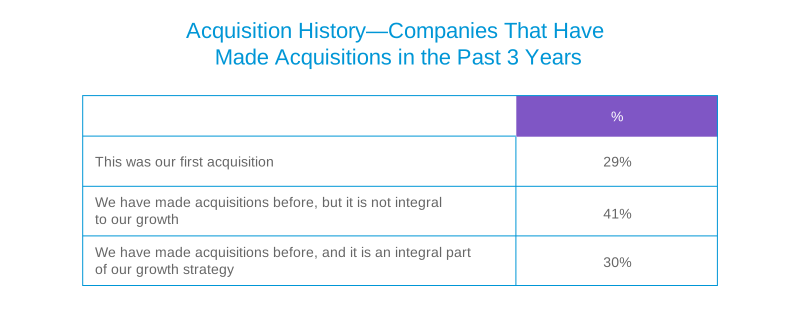
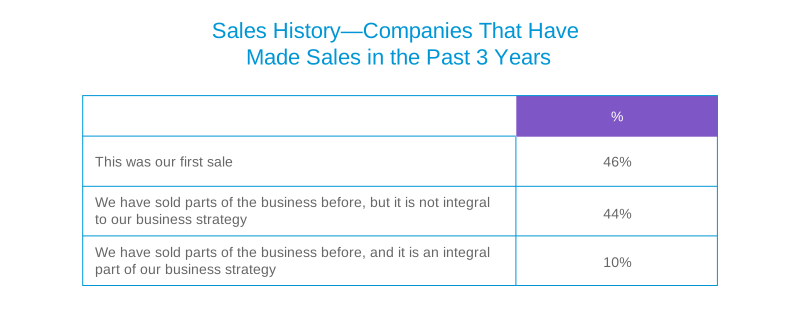
Among companies that have completed a purchase in the past three years, 29% were doing their first deal and 41% had limited previous experience. Among sellers, 46% were selling for the first time and only one in 10 companies had significant previous experience with sales.
Companies Fail To Fully Leverage The Support Of External Advisors
Although middle market leaders say that finding the right target or buyer is one of the most confusing aspects of M&A, they don’t seek much help with the process. Both buying and selling companies tend to rely heavily on their internal executives and top managers when searching for companies to buy or sell to. During the search process, about a third of buyers consulted an external law firm, and even fewer talked to consultants or investment bankers. Sellers were even less likely to bring in external advisors as part of their search for the right buyer.
Financial Valuations And Integration Complicate Deals
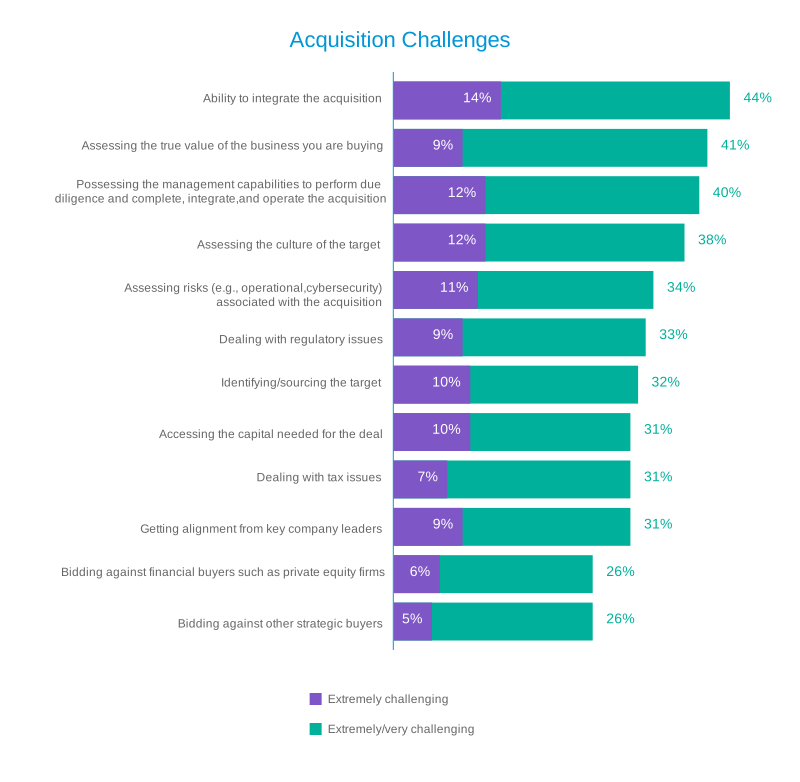
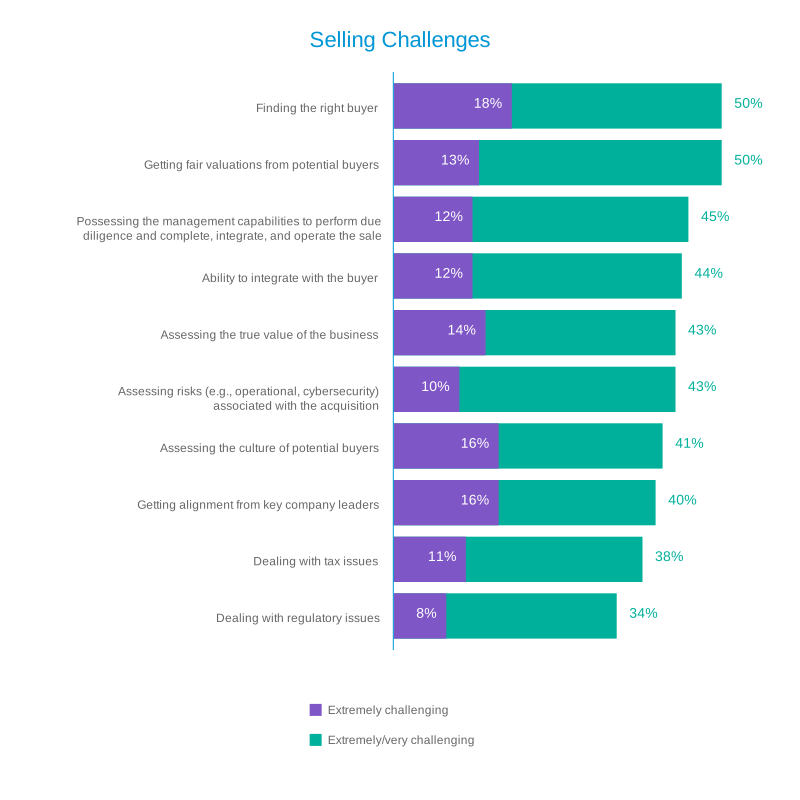
On the front end of an acquisition or sale, 41% of buyers and 43% of sellers find it difficult to assess the value of the business they are buying or trying to sell. Parties on both sides of the table face difficulties obtaining, assessing, and analyzing financial data. Post transaction, 44% of both buyers and sellers say integration is a major challenge, including technology and systems as well as operational, commercial, cultural and people-based challenges.
Successful Deals Take Time And Careful Planning
With many deals, progress can be slow and difficult to measure due to unexpected issues. Most deals take three to 12 months to complete. The planning horizon to become deal-ready ideally should be three to five times as long as the deal-making process itself. Developing or getting help with capabilities in planning, financial reporting, valuation, and execution well in advance of having a specific target in mind ensures that companies are ready to move when the time comes.
Overview
Higher Valuations and More Buyers Drive Increased Intensity of M&A in the Middle Market
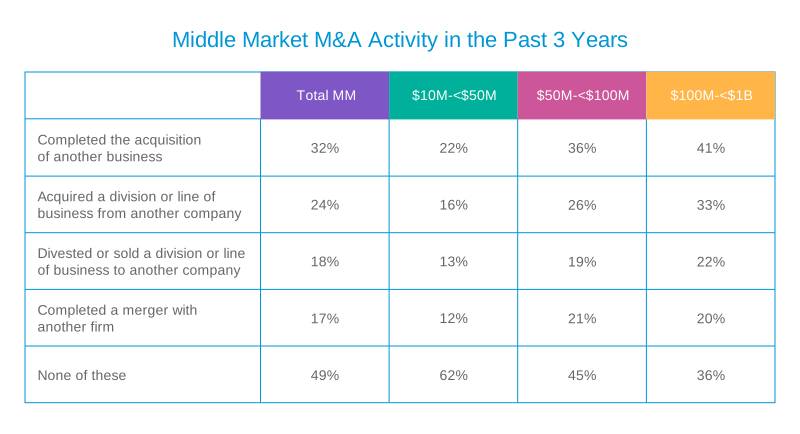
According to the Middle Market Indicator, around 20% of middle market companies make an acquisition each year, and around 5% of businesses are acquired each year. That percentage has held steady since we began measuring it in 2015, and it is corroborated by what leaders told us in our latest research: Over the past three years, only 49% of middle market companies did not engage in any type of acquisition or divestiture.
Upper middle market companies, with annual revenues between $100 million and $1 billion, were more likely than lower middle market businesses to be engaged in M&A—just 36% of these larger businesses indicated that they did not do any type of deal making at all in the past three years.

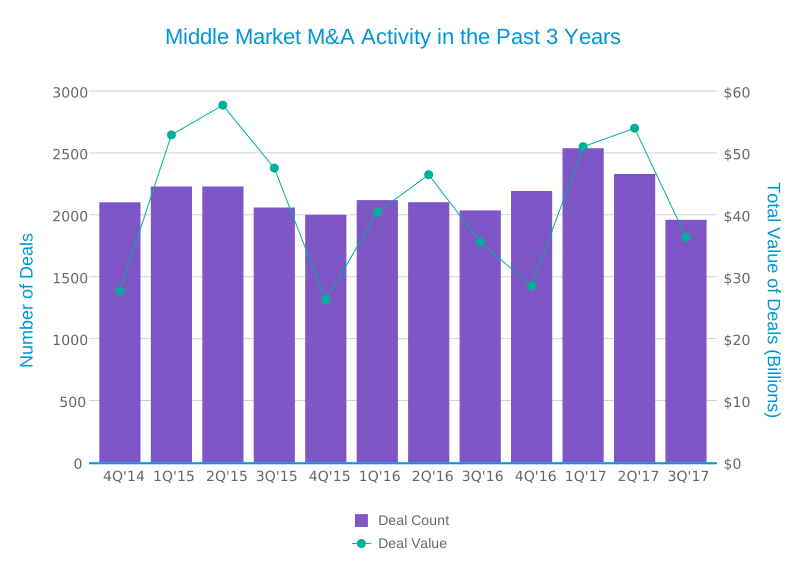
 Data from Thomson Reuters provides further evidence of a strong and steady rhythm of M&A, showing that around 2,000 deals are done in the middle market each quarter since 2014.
While deal count has remained fairly steady, three out of five middle market executives say they perceive M&A activity to have increased. This may be true in some industries—buying and selling in healthcare has been particularly strong, for example. It is also true that there is more M&A activity, with more buyers circling a fairly consistent number of sellers. As a result, valuations for deals of all sizes are increasing. The data show that companies are selling for relatively high multiples of EBITDA. According to Standard & Poor’s, the multiple of EBITDA for deals has increased from 8.8x in 2013 to 10.3x today.
Several factors contribute to higher deal value. First, favorable economic conditions have driven up corporate profits as well as the availability of private equity, meaning there are more funds chasing the same number of deals, and thus a much more competitive landscape for acquisitions. Second, Middle Market Indicator data show that executives’ confidence levels are very high and that appetites for all types of investment are ticking up, which may make companies more open to the idea of buying or acquiring another business.
The rise of private equity is also changing the color and composition of the middle market M&A landscape. With vast amounts of private equity funding looking to be put to work, a higher percentage of deals are being done by “financial” buyers as opposed to “strategic” buyers. These financial or professional buyers may have deeper pockets. They also feel pressure to put money entrusted to them to work.
 Given this urgency and a relatively constant pool of targets—and banks’ limitations on the amount of debt they are willing to put into an investment—private equity buyers are increasingly likely to put more of their own money down to win a deal: The equity portion of all U.S. leveraged buyouts has increased from around 30% in 2013 to 42% today, according to S&P.
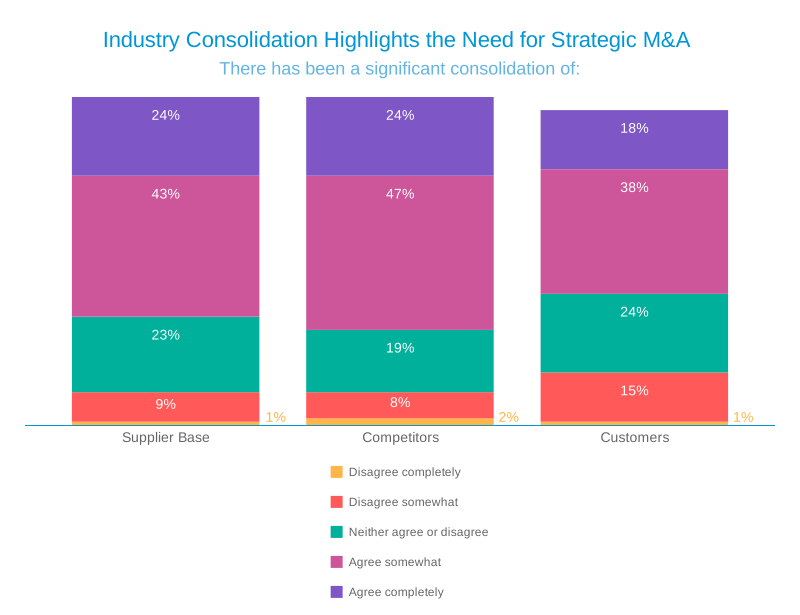
At the same time, middle market executives, especially those at larger organizations, believe that industry changes, including increasing consolidation among suppliers, customers, and competitors, are heightening the need for strategic M&A. They are looking to make deals not just because the economic conditions are right, but because they feel consolidation and scale are critical to their growth strategy. Yet these strategic buyers often feel overmatched by the financial buyers.
With more financial and strategic buyers competing more aggressively for the same number of available deals, the excitement and intensity around middle market M&A opportunities is high. In any given year, a fifth of middle market companies will make an acquisition. And a good percentage of these companies are regular or serial dealmakers. Further, a large number of middle market companies have private equity ownership, either in whole or in part, so they are part of, or engaged with, a firm whose mission is the buying and selling of companies: In most cases, a private equity investment will be sold in five or so years.
Cleary, M&A will continue to be an integral part of the middle market landscape, and companies with good deal-making capabilities will have an advantage, if and when they choose to get into the game.
For Middle Market Businesses That Engage in M&A, Transactions Are Crucial to Company Growth and Gaining Market Share
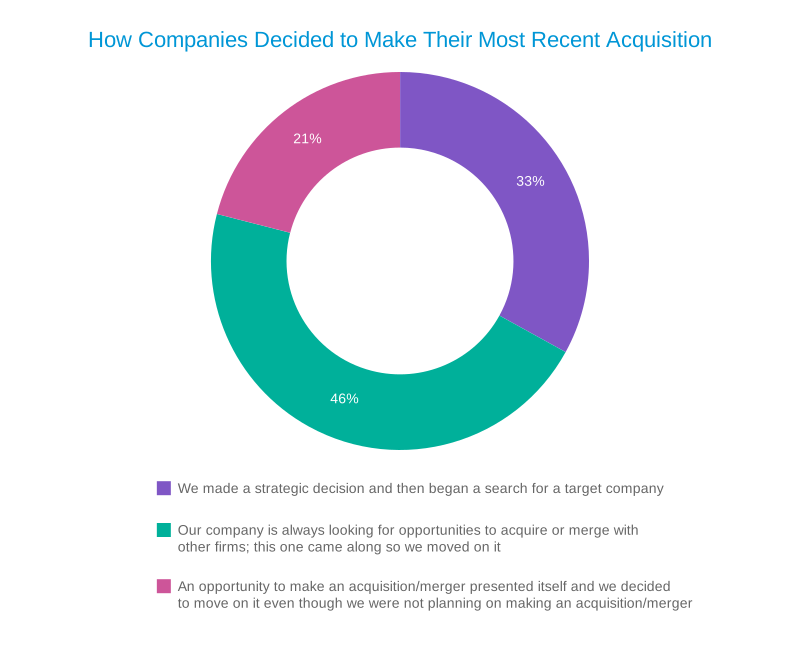
When middle market businesses decide to buy all or part of another company, the motivation is usually strategic—that is, to add customers, talent, technology, or other capabilities or assets to help their business grow. Close to half (45%) of companies that participated in an acquisition in the past three years say they always have an eye out for opportunities to acquire, and 53% consider multiple targets before making a decision. However, 21% of buyers and 45% of sellers say they responded to an unexpected opportunity that came their way. For buyers, that might be a phone call from a banker, lawyer, or peer letting them know about a company that wants to put itself up for sale. For the seller, it might be the opposite—an overture from an investment fund or another company that comes directly or through an advisor.
Whether planned or opportunistic, transactions play a critical role in the growth of many middle market companies. Among businesses that have made a deal in the last three years, 60% say that M&A is very important to their growth strategy. From a demographic perspective, the largest middle market companies, those in the healthcare industry, and sole proprietorships and partnerships are even more likely to say M&A is critically important.
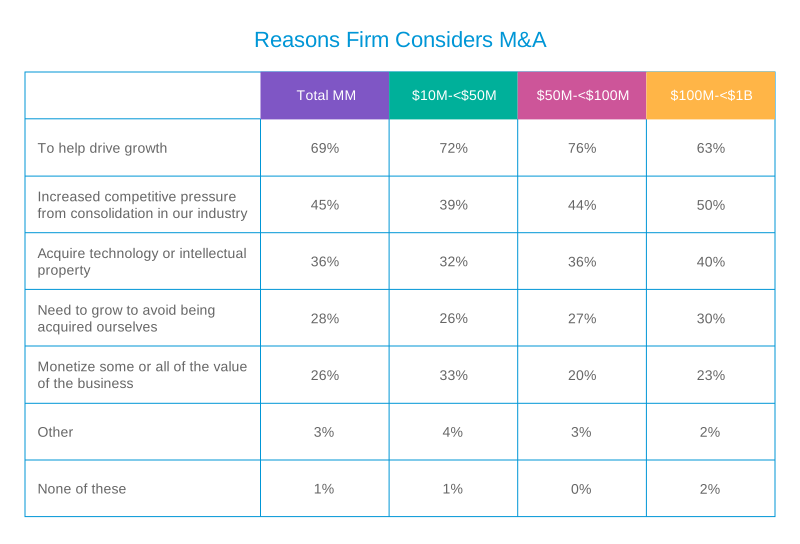
In fact, driving growth is by far the most important reason for doing a deal among middle market companies of all sizes, and especially for those with annual revenues between $10 million and $100 million. In 2017, inorganic growth accounted for 6.4% of total growth among all growing middle market businesses, according the 4th quarter Middle Market Indicator. Those that participate in M&A are much more aggressive in their expectations: On average, deal-making companies expect acquisitions to drive 26% of their firm’s overall growth. Other motivators for M&A, particularly for upper middle market companies, include responding to increased competitive pressures from consolidation in the industry and the desire to acquire technology or intellectual property. A substantial number pursue inorganic growth defensively—to respond to consolidation by becoming big enough to avoid being acquired themselves.


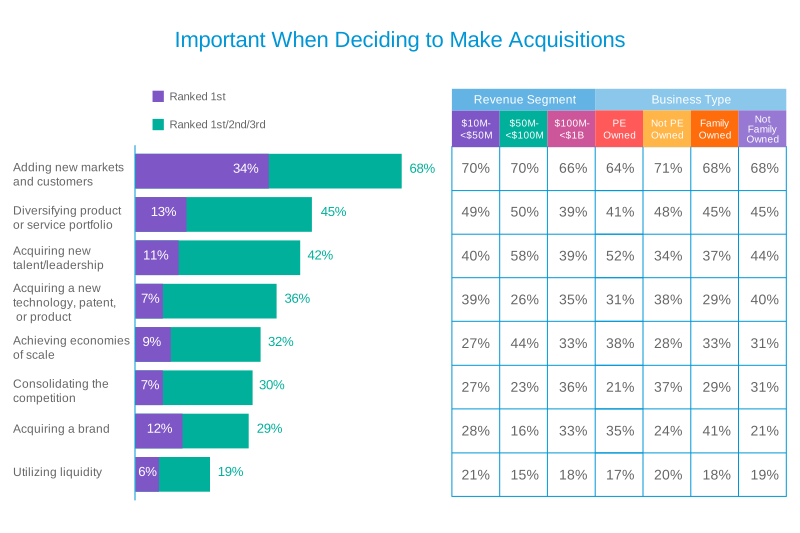
 Middle market companies of all sizes and ownership structures primarily seek to add new markets and customers when they make an acquisition. Two other motives are nearly as important: obtaining a company’s products and services (and the underlying intellectual property) and acquiring its talent. PE-owned firms and core middle market businesses (annual revenue between $50 and $100 million) are particularly interested in talent.
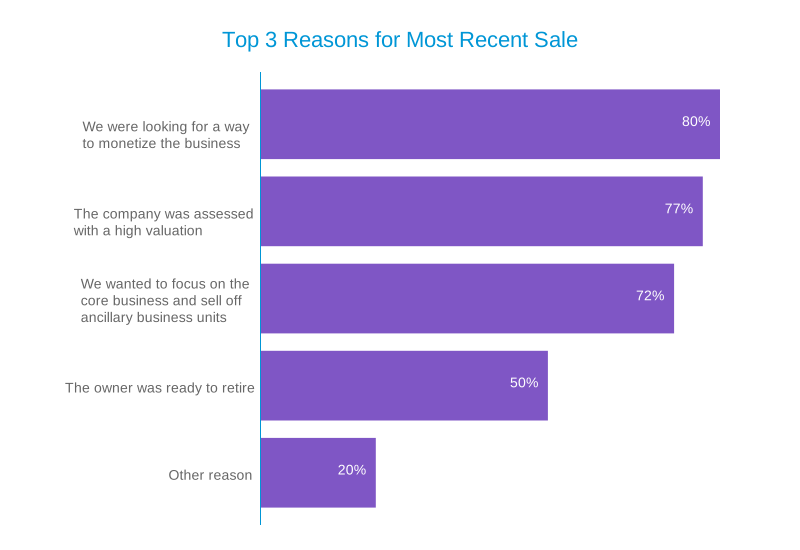
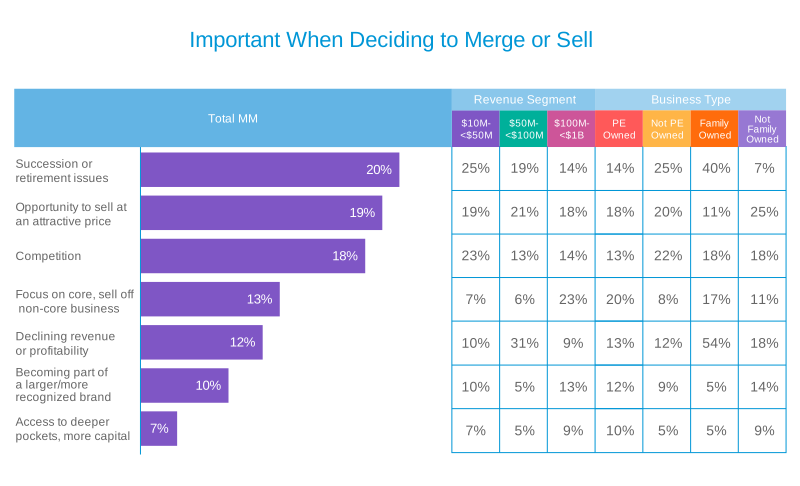
On the other side of the table, sellers are primarily interested in monetizing all or part of their business or taking advantage of a high valuation. Though financial motives predominate, a substantial number of executives have a strategic motive, for example, narrowing their focus and concentrating on their core business by selling off ancillary business units. Often a sale is motivated by the owner’s retirement. Lower middle market businesses and (not surprisingly) family-owned businesses tend to be even more concerned with succession and retirement issues than they are with price when it comes to considering a sale. Family-owned businesses often come to the selling block because their sales or profits have declined.
In many cases, of course, these reasons are intermingled: Retirement, monetization, and a declining business might together motivate a company to sell. And a buyer might be interested in talent, technology, and consolidating the competition. In the future, executives will make better deals if they take the time to understand how these motives come together and which ones take top priority.
Middle Market Transactions Are Primarily Influenced by Internal Teams
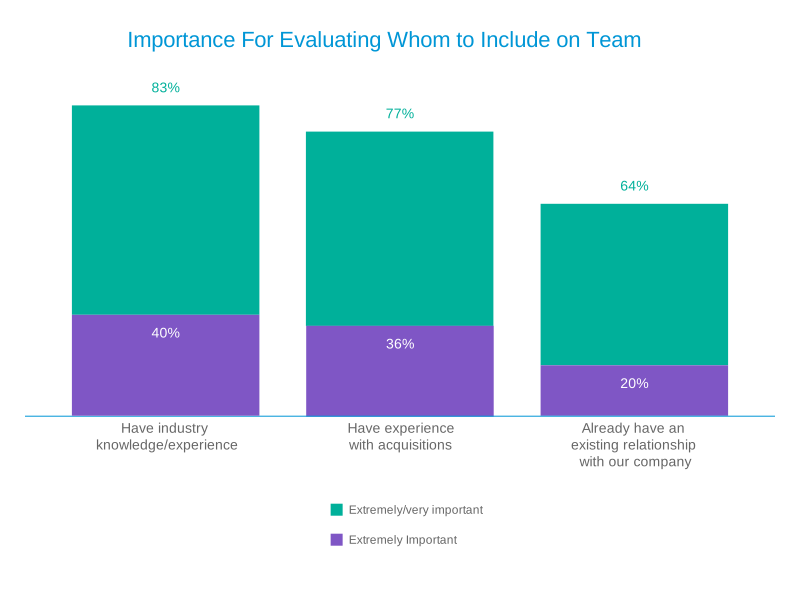
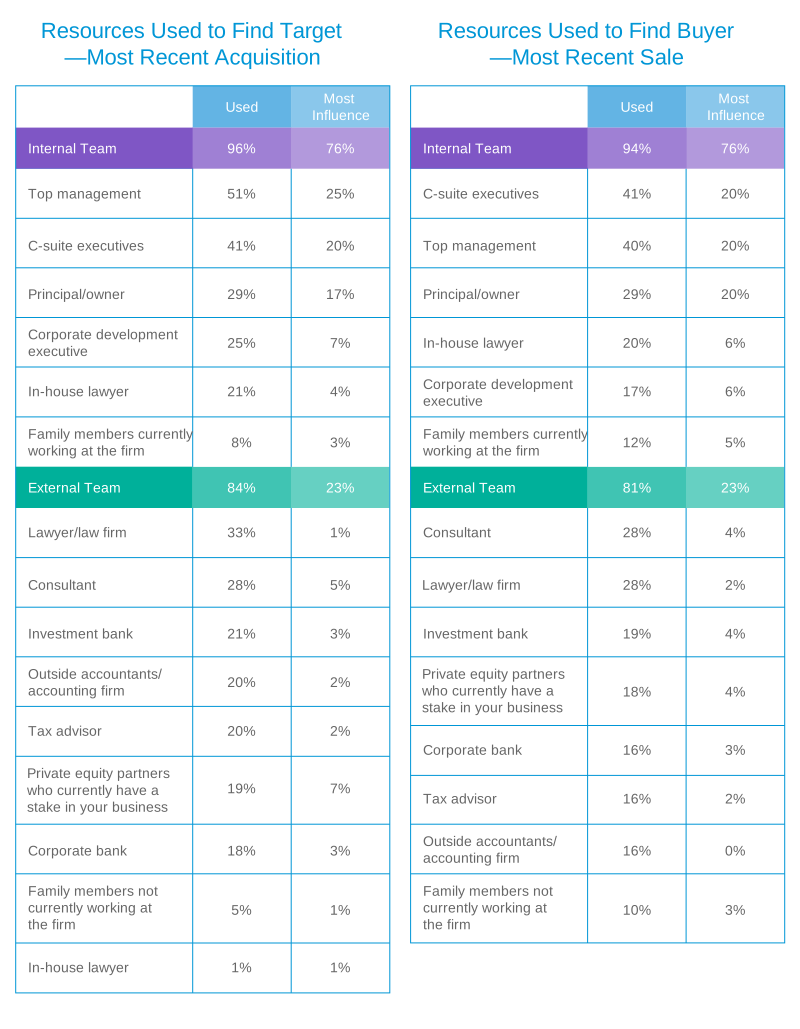
When looking for target companies, nearly all buyers rely on C-suite executives or top management. A majority (84%) consult some type of external expert, such as a lawyer or banker, although the input from these experts is rarely considered more influential to the deal than that of internal company leaders. Among those businesses that do engage advisors during the search for targets, lawyers are the most commonly consulted experts (used by 33% of companies), followed by consultants and investment bankers (used by 28% and 21% of companies, respectively). Industry experience is considered more important when considering who should be on the deal team than previous experience with acquisitions.
For their part, sellers also rely heavily on their C-suite executives and top managers when looking for a buyer. They, too, consult outside experts when making this decision, with, again, lawyers and consultants being most often part of the team. As with buyers, internal team members have much more influence than external lawyers, consultants, or bankers when it comes to deciding to whom the business will sell.
Cash Is King in Middle Market M&A
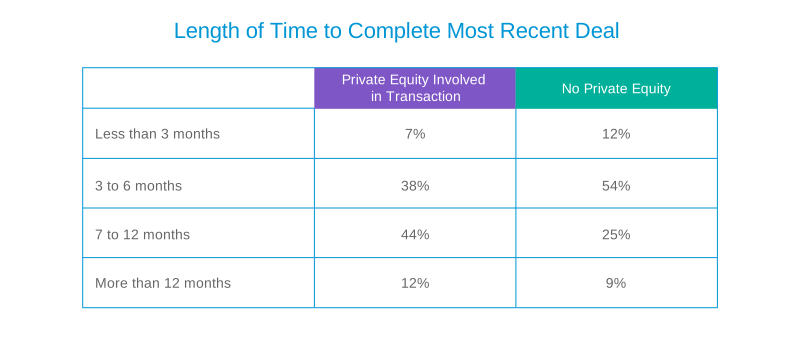
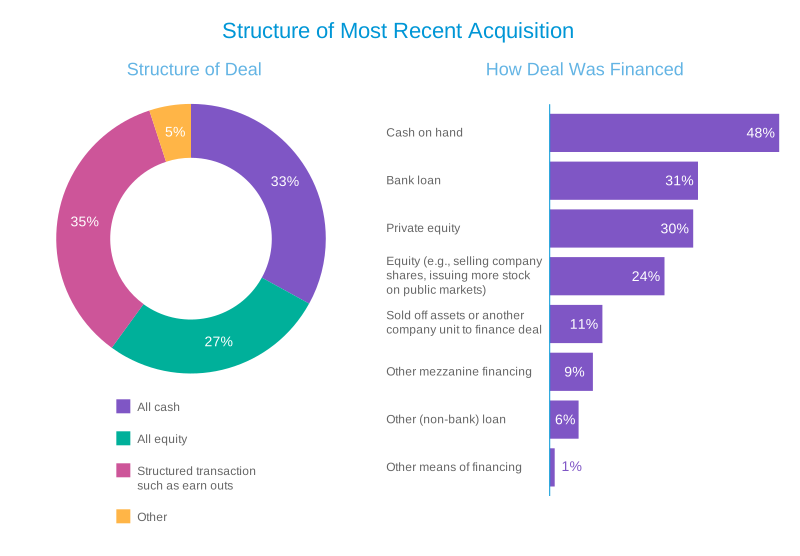
For middle market companies, acquisitions generally take anywhere from three to 12 months to complete. These transactions are most often structured in all cash and paid for with cash on hand. This may be because middle market executives have a preference for relatively simple deals—as we’ve seen in other research on finance and governance,1 middle market companies tend to be leery of debt. (Though, obviously, private-equity buyers do not feel this way.) Cash deals in the middle market may be as much a product of necessity as they are of preference. Outside capital and financing are not always readily available for smaller deals. In general, the smaller the deal, the smaller the pool of financing options.
Upper middle market companies are more likely to engage in structured deals and substantially more likely to work with private equity firms. When private equity is involved in a deal, the deals tend to take longer to execute, perhaps because of their complexity.
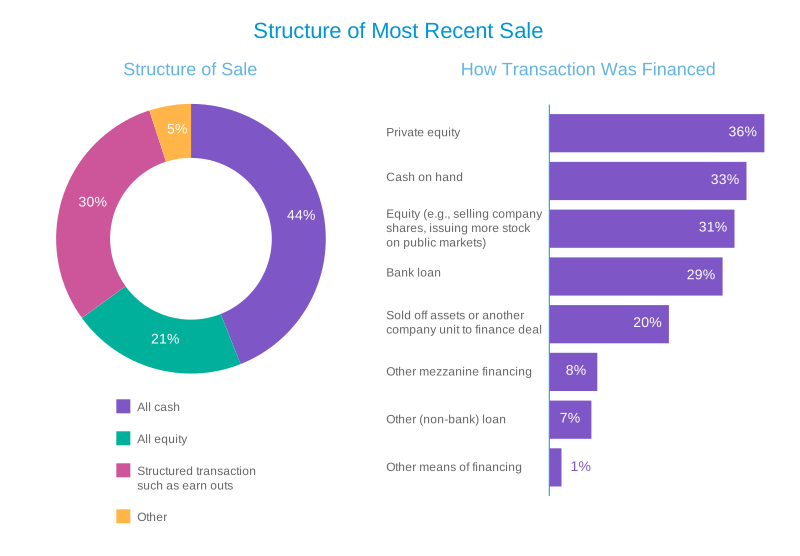
When companies sell, they prefer cash or structured transactions. These deals are financed in a variety of ways including private equity, cash on hand, equity, and bank loans.
Deal Success Is Measured on Revenue Growth
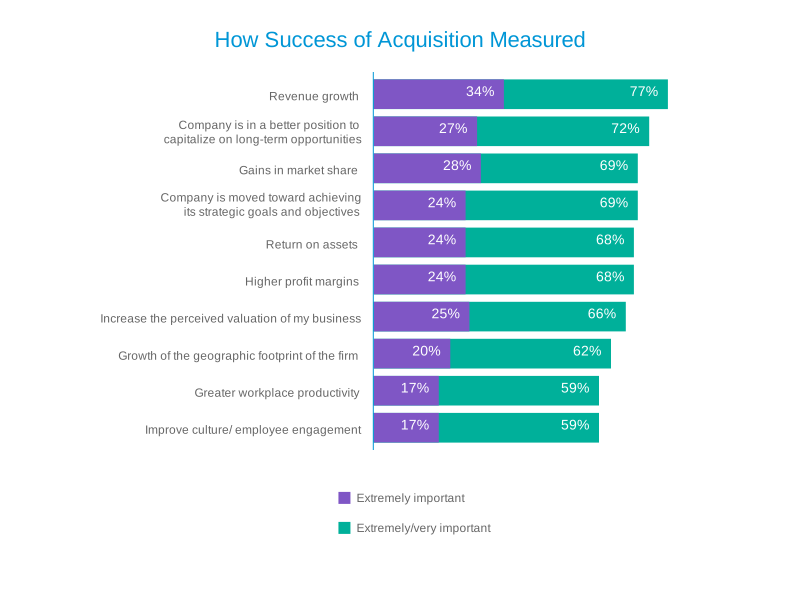
For middle market companies that make an acquisition, revenue growth is the most important factor used to assess the success of the deal. Interestingly, higher profit margins fall much lower on the list. This reinforces the fact that middle market companies participate in M&A first and foremost to fuel top-line growth and position for long-term opportunities. Profitability and productivity considerations may come later down the road.
Challenges & Obstacles
Inexperience Can Cause Deals to Fall Short of Expectations
Among companies that engaged in any type of M&A activity in the past three years, 30% of buyers and 10% of sellers say they participate in M&A activity regularly as part of their business strategy. But the majority of companies have limited M&A experience; 29% of the buyers and 46% of the sellers we talked to were doing their very first deal.
This inexperience can translate into unexpected challenges and obstacles. Lack of adequate preparation and strategic planning is a reoccurring theme among companies as they assessed their last M&A experience. A great many executives (both buyers and sellers) told us that the due diligence process was more confusing and difficult than they expected; and many told us that the process would have gone much more smoothly had they planned better in advance.
For buyers, the challenges of integration and valuation, including the stresses on their top management and the strains of corporate culture, outweigh even the difficulty of finding the right company to buy. Indeed, the top five buyers’ challenges all have to do with valuation and management. (See challenges exhibits.)

 Of course, considering that 21% of buyers and 45% of sellers say that their last deal resulted from responding to an unexpected opportunity, it’s not surprising that many businesses found themselves less than prepared. This can be compounded by the fact the companies may not have clearly defined governance and decisions rights related to the deal. Family businesses in particular might not have worked out the decision-making rules they want to follow, and dissenting family member shareholders could very well stall or block a deal.
While executives say most deals ultimately make money, they often fall short of expectations. Sometimes it’s because it is difficult to measure the true success or impact of a deal. In other cases, it’s due to weak execution. These problems, which are reported even by M&A veterans, are exacerbated for companies with little experience in inorganic growth.
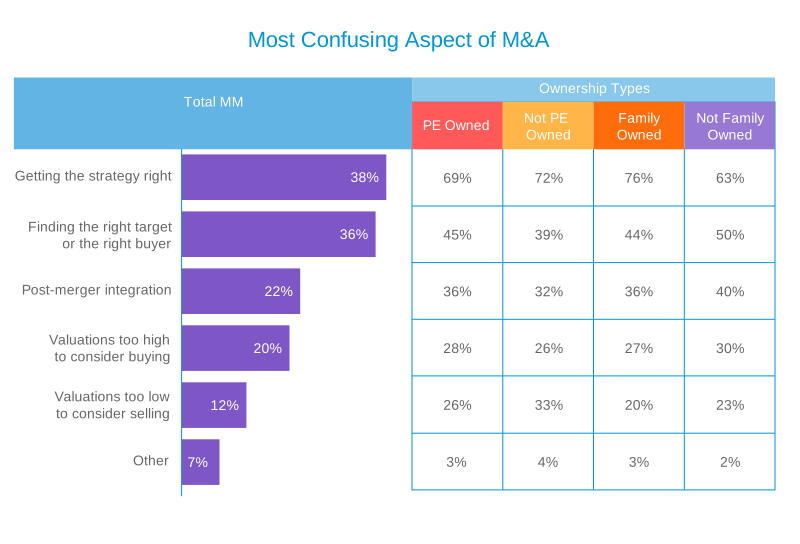
Middle market executives say the most confusing aspect of M&A is getting the strategy right, followed by finding the right target or buyer. Yet many companies fail to consult external experts such as lawyers and bankers when searching for a target to acquire or a buyer to sell to. Instead of taking advantage of the resources that exist to help, companies rely primarily on their internal teams and may be approaching buying and selling in an ad hoc fashion instead of in a strategic manner with the right advisors in place.
As a result, many middle market companies discover that they are unprepared for the technical, financial, and integration-related aspects of the acquisition or sale, including keeping up with day-to-day management demands during the time when the transaction is underway.
Integration
For buyers, the ability to integrate an acquisition is the number one M&A challenge. Only 19% of acquiring companies indicated that integration is not challenging at all. Sellers, too, cite the ability to ingrate with buyers as a top obstacle.
Integration issues can be operational, commercial, technical, and people-related. Companies tell us that integrating two company’s servers and systems was more complicated than they imagined, and they indicate the need for faster approaches for bringing together two separate software systems, sets of books, customer lists, and cybersecurity defenses.
Executives cited cultural integration challenges as often as they did difficulties involving technology. Many found that a change in culture is resisted by many employees. Making sure that key talent stays in place post-merger or acquisition, and that salespeople don’t walk out the door with important customers, are other talent-oriented integration challenges companies must consider.
Valuations/Finances
Financial projections are, understandably, the top consideration when evaluating a potential target. However, obtaining reliable, fair valuations is a key challenge for both buyers and sellers, and middle market companies indicate a need to improve their ability to assess their own financials as well as those of other companies they are considering as partners.
A number of complex issues inhibit the ability to do proper valuations on mid-sized companies. First, publicly available data points are scarce for middle market companies, the vast majority of which are privately held. That makes it difficult to find comparables by which to estimate the value of a given business. Second, middle market companies typically have some degree of concentration in customers and/or employees. When a business is highly dependent on a handful of customers or key employees, valuation is more difficult—and risk is harder to calculate.
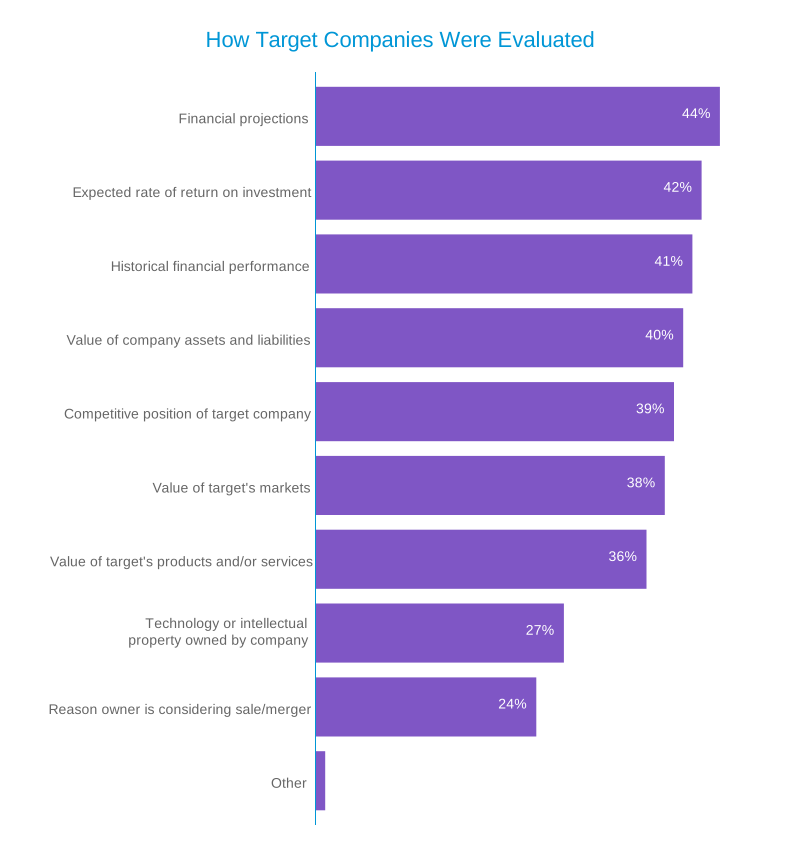
 Other factors can add to the difficulty in completing financial due diligence on private companies. Bookkeeping, particularly among smaller companies, may be informal. As opposed to providing a full operating picture of the company, the books may be designed more to deliver information for the taxman. Records, therefore, can be somewhat lacking when used for valuation purposes. The same can be true of operating processes and systems; they might not be fully documented and, instead, managed according to the tacit knowledge and experience of employees. Both of these issues are intensified by the fact that in 45% of cases, sellers were not expecting to sell and may not have had the time or foresight to get their accounting and processes into the shape a buyer would want. In addition, for some family businesses, it can be difficult to disentangle assets or activities that will be sold with the company from those that will remain with the family.
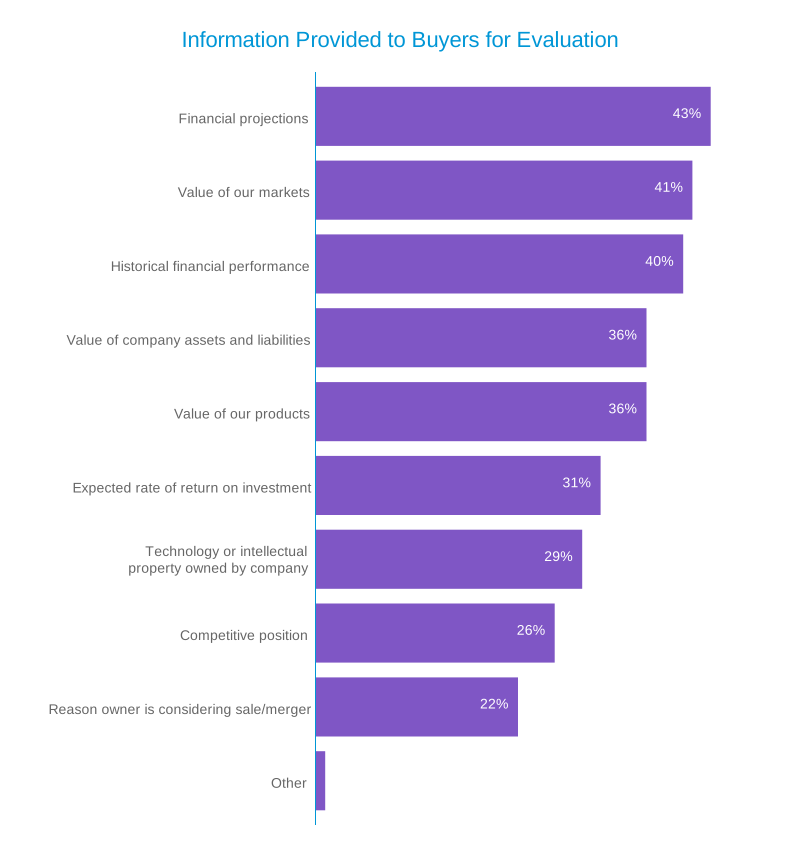
Whatever the reason, buyers had a hard time obtaining detailed operating and financial information about their targets, and when they did receive the information, they needed help assessing and analyzing the financials and assigning the proper value and potential to each product line or area.
For their part, sellers were unprepared for how much information they would need to divulge about their companies. They indicated that the appraisals, audits, and earning examinations made the process much slower than they were expecting.
When numbers are hard to find and to fathom, the cost is more than just time. Potential sellers, in particular, should consider that they put themselves at a disadvantage if it’s hard for a buyer to understand their books. Buyers are likely to lowball their estimate of value if the numbers are vague or spotty.
Technical Capabilities
Both buyers and sellers indicate a lack of internal management capabilities as a top obstacle to successful mergers and acquisitions. Most middle market companies simply don’t participate in deals frequently enough to necessitate building extensive M&A experience in house. As one executive put it, “The nuances and technicalities of each deal require a level of expertise for which we don’t need to pay on a permanent basis.” As a result, companies who go it alone fall short when it comes to their ability to perform financial, operational, technical, cybersecurity, and talent-related due diligence on the front end of the deal, and they lack capabilities for seamless deal execution and as well as integration on the back end.
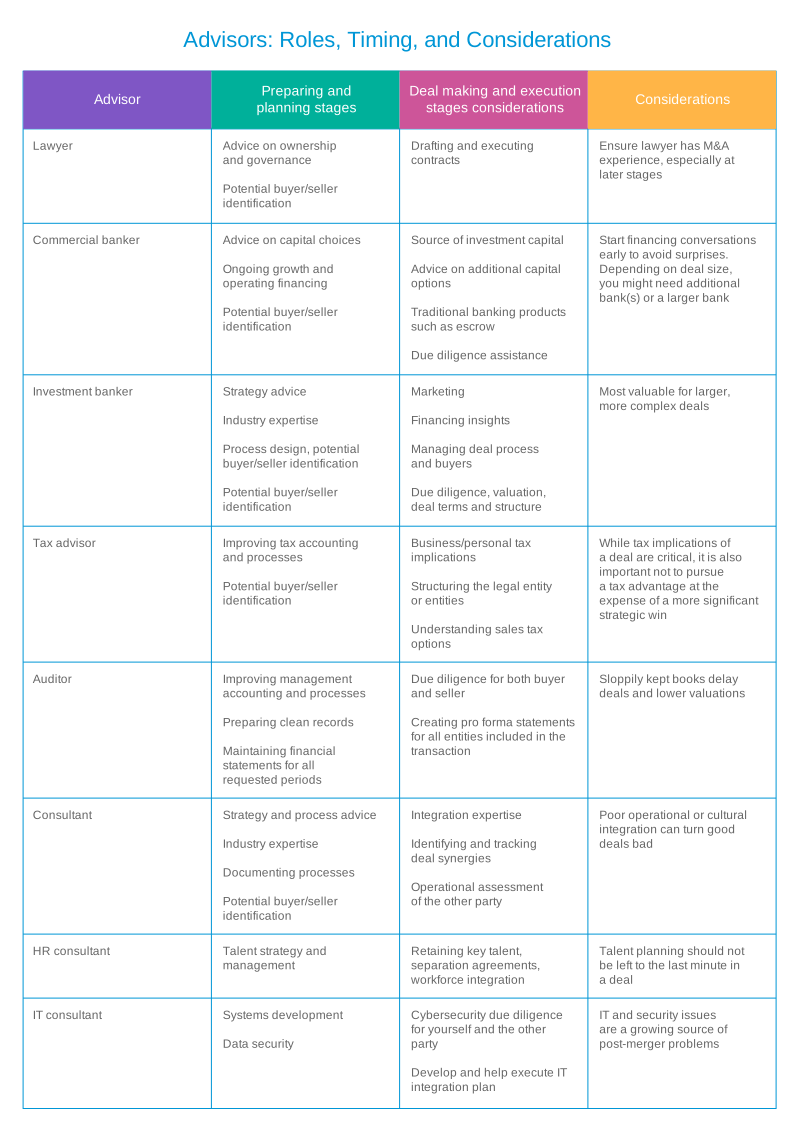
Most companies know that they will need technical, financial, accounting, and legal support from external professionals to bring their M&A plans to fruition. But many wait too long to bring these experts to the table. They often fail to make them a part of the deal team in the early stages when they are first looking for targets or potential buyers. This oversight probably contributes to the financial and integration challenges that companies experience.
Recommendations
A 3-Part Plan for M&A Success
Given the critical nature of M&A—companies expect to generate 26% of their growth from these deals—it’s imperative to get each transaction right. And since many companies may only do one or a handful of deals in their lifetimes, understanding motivation, developing capabilities, and careful pre-planning are all essential to success.
Following the three steps described below can help middle market executives prepare for smoother deals with fewer hiccups so that, ultimately, they can derive the value and the results they expect and need when they do undertake an acquisition or sale.
1. Become “deal ready”—whether or not you are in the market now
Many executives told us that they should have planned and prepared better for the M&A process. That preparation can and should start even before a potential deal starts to take shape. In other words, building up the muscle and systems that will make potential future deals run more smoothly makes sense for any middle market organization, including those that are not currently considering a transaction. Even if a deal never gets done, these capabilities can improve the performance of your organization.
Becoming deal-ready should include:
- Getting your accounting in order. Middle market buyers express how difficult it can be to obtain information from target companies, while sellers, for their part, are often unprepared for the information they need to divulge. Preparing this information before a deal is ever on the table can help pave the way for a smoother M&A journey down the road. The process may involve upgrading your financial systems and/ or working more closely with, or developing new relationships with, qualified financial advisors. In addition, it should include understanding and carefully documenting any of your personal or discretionary expenses, or add-backs, that are currently part of the business, but that will come out of the equation if and when a business sells. Eliminating these expenses when you sell will have a significant impact on the value of your company.
- Creating a budget, projections, and an operating plan, and tracking key performance indicators, so that you better understand your company’s potential and can illustrate its performance.
- Upgrading your IT and making sure you have an annually reviewed cybersecurity plan.
- Clarifying governance so that you know the process for making a buy or sell decision before a deal is actually live. Who will have a vote? Who should be part of the process?
- Identifying your key players and drafting plans to ensure their continued role.
- Documenting operating processes using standard frameworks.
- Improving working capital management. Not only will this make you a better performing company in general, it will throw off cash that can be used to fund future acquisitions or other investments and increase the amount someone will pay for your business.
- Building your relationships with lawyers, tax advisors, banks, and other consultants. If you are currently working with people who do not have M&A expertise, consider changing, or at least getting those advisors to introduce you to colleagues who have this expertise.
- Deepening your connections in your industry. This will open the door to potential targets or buyers. Particularly for buyers, having the option of going direct to a CEO can help you avoid having to compete with financial buyers. You should also get to know people who have made deals with private equity firms so you can learn from their experience if and when the need arises.
2. Understand your goals
The research indicates that growth is, by far, the leading driver of M&A activity in the middle market. But even if more sales is your primary motivation, there is often more to a strategic acquisition than just increased revenue. Companies often make acquisitions in order to acquire new capabilities, and this may include people, technology, relationships, or products. Indeed, most acquiring companies (64%) say they look first at the benefits a target can deliver, as opposed to starting with a specific price or size.
Having a clear grasp on what capabilities, specifically, you hope to gain from your buy, and the rate of return you expect, can help you better define your search and increase the likelihood that you will get what you want in the end. It can also help you better evaluate all available options for obtaining your end goal. In other words, acquiring a company may not be the only means of securing the capabilities or driving the growth you desire. Once you have a solid understanding of your goals and rate of return, you may find that you can develop what you need internally (build vs. buy) or perhaps pursue a partnership or joint venture.
In any case, asking yourself some leading questions (see 10 Questions to Ask the Mirror) is a good place to start clarifying what, exactly, you hope to achieve from a deal.
10 Questions To Ask The Mirror
- Is your main motive strategic, financial, or personal? Do you want to add to or focus the resources and opportunities of the company, monetize something or change the capital structure of the company, or make a leadership or personal transition? Clarity about your primary objective is critical to finding the right buyer or target.
- Who else will or should participate in the proceeds or investment? If you’re selling, are there people who do not have equity stakes who deserve to have one? If you are buying, have you consulted with your owners/ investors?
- Do you know how key talent and customers will react? Both buyers and sellers should know whether key players will stay. The same holds true for your customers and suppliers.
- How confident are you of the valuation put on the target (for a buyer) or on your own company (for a seller)? How can you be more sure?
- Who should be on the deal team—both insiders and advisors from outside?
- Are you (and your team) prepared for the demands of running the business full time for the next six to 12 months while running a parallel path to engage with potential targets or buyers? What resources will be needed to accomplish this successfully?
- Have you completed a full strategic, financial, and operational risk analysis, including cybersecurity risk, of yourself and the other company?
- Is a post-merger integration plan in place that covers more than the financials? Will you need new capabilities (e.g., in finance, operations, distribution, marketing) to succeed in the new environment?
- Do you have a good feel for the other company’s culture?
- Have you fully explored the tax implications of the deal?
3. Make your specific deal plan
If you’ve done your homework as described previously, you will be in a good position to take action when a potential acquisition or sale arises. At that point, you can focus your efforts on preparing for the specific deal you are considering. Ideally, you want to condense the execution timeframe as much as possible because time is rarely a friend to deal making. The more prepared you are in advance, the more likely that transaction will go according to your plans and expectations.
This prep work should include:
- FORMING YOUR TEAM. Middle market companies tend to rely on their internal executives and top managers to help make M&A decisions. Most agree they also need external assistance for these types of deals. But only about a third (or fewer) talk to lawyers, consultants, or bankers in the early stages of a deal when they are looking for a target or potential buyer. Bringing in the experts early on can help you identify a better partner for your deal, and that may help smooth deal execution and integration later on. The advisors exhibit provides guidelines for when and how to bring in deal team members and how various consultants can help in the process.
- UNDERSTANDING YOUR CAPITAL OPTIONS. The size of the deal, the industry, and the performance of assets will all affect the capital choices that are available for your deal. Generally speaking, smaller deals come with fewer outside capital options. By working with your commercial banker, you can identify your options and assess the costs associated with each. Companies tend to gravitate toward the lowest cost and/or most flexible capital. But each financing option comes with pros and cons. For example, paying with cash means there are no financing costs, but the buying company assumes all the risk. Using private equity introduces another layer of considerations, and you need to carefully consider what you will gain in exchange for giving up some of the equity in your business. For more details, see the private equity discussion.
- DECIDING WHAT’S FOR SALE AND WHAT’S NOT. One of the most common issues that comes up during M&A deals is real estate. Will this be part of the sale and go with the company when it’s sold? Sellers need to decide whether they want to hold on to their real estate assets, and buyers also need to consider whether or not they are willing to buy these assets as part of the deal. Beyond real estate, there may be other assets that companies may or may not be willing to buy or sell along with the business. These determinations need to be made in order to facilitate proper valuation.
- COMPLETING DUE DILIGENCE. Planning and completing thorough due diligence not only identifies your financial risks and opportunities, it can also help you scope out the complexity of operational, technical, cyber, and HR-related issues involved in acquiring or selling to another company.
You’ll want to plan to thoroughly assess each of these areas and perhaps create integration checklists for key areas such as:
Financial—including tax
Operational—make sure the underlying operations support the numbers
Commercial—understanding the customer base and trends
Supply Chain—understanding the supplier base and trends
IT (See the technology integration checklist as an example of a tool you can use)
Cybersecurity—protecting sensitive data on both sides
Talent—identifying and retaining key players
Compliance—including safety, environmental, and regulatory compliance
It’s a good idea to have a neutral third-party weigh in on the due diligence process. You should also take time to define your no-go criteria before evaluating targets and buyers, so you know which red flags to look for and you understand the potential dealbreakers going into the process. - ASSESSING KEY CAPABILITIES AND BLIND SPOTS. A deal will go more smoothly if executives know before it starts where they are strong and where their capabilities may be lacking. Areas of weakness will likely necessitate bringing in external experts sooner rather than later (see the advisors exhibit).
Executives also need to be aware of common blind spots and biases they may have. For example, many executives believe they know their industry and competitors better than they actually do. As a result of this confidence, they sometimes fail to drill down as much as they should or to take the time to peel back the layers and fully understand what challenges may be on the horizon when it comes time to integrate an acquisition. Entrepreneurial types also may underestimate the difficulty of executing the deal itself.
You will also want to give some thought to what additional capabilities your company may need once the acquisition is made. If, for example, you buy a company that’s currently operating internationally, do you have the expertise and leadership to manage what you now own? Mapping out the new capabilities that the combined enterprise will require, and ensuring you have a plan to address or add those abilities, can prevent missteps.
Finally, giving thought to how the acquisition will be perceived by your legacy customers and suppliers is critical, especially if you are vertically integrating. If you currently make products for an industry, but then buy an operating company in that industry, your existing customers may take issue, and the acquisition could end up hurting your relationships or position in the industry. - DEVELOPING AN OPERATIONAL PLAN FOR THE TRANSACTION OR INTEGRATION. Making a deal and managing its aftermath take time. Typically, execution can range from three to 12 months, and integration can take 12 to 24 months. During all of this, you still need to run the shop. Giving both the deal and the day-to-day the attention they need can be a huge demand on management’s time, especially for mid-sized companies that usually have lean organization structures. Creating a solid operational plan that includes the following can help ensure nothing falls through the cracks during this critical time.
Key Operational Plan Elements for Integration:- Identify value drivers (synergies, improvements, sale economies, etc.) with associated capture plan and a trackerComplete a risk assessment and develop mitigation strategies for each riskDevelop a Day 1 checklistDocument interim operating policiesCreate a communications plan for keeping all stakeholders informedConduct a cultural assessment and develop an alignment planCreate detailed transition plans
In addition to the acquisition integration leader’s direct reporting staff, it’s also best practice to have an extended staff composed of full-time, senior manager, or director level dedicated leaders from each corporate function (sales, marketing, HR, operations, services, legal, finance, and IT). For IT, it’s best to leverage a full-time team dedicated to providing integration and separation services. The team should be composed of project and program managers who are assigned to a deal from start to finish.
M&A Best Practices for IT Teams
Adapted from Cisco Systems
- GOVERNANCE
Standardized, repeatable processes are critical to operational excellence especially for high M&A deal volume. Operational diligence questions, detailed discovery questions, standard work breakdown structures, etc., are key governing tools. - ENABLEMENT/”INTEGRATION”APPROACH
“Every Deal Is Different” and should be aligned to an archetype model. IT needs the ability to place a deal in the continuum of enablement models for the success of the acquisition—full integration, full-phased, extended, or federated? Also, senior functional leaders need to define the non-negotiables and determine who has decision rights (the acquired or the acquirer)? - DEAL VALUE DRIVERS
These drivers help guide trade-off decisions, task prioritization, and ultimately provide alignment for the cross-function teams working the deal. Example value drivers include:
- Vision/Strategy—Brand or reputation by segment or technology
- Talent/Employee Retention
- Financial—Meet/exceed financial commitments and goals
- Sales—Meet/exceed agreed-upon sales targets
- Product Roadmap—Key ship dates, new feature rollout, technical integration
- MONETIZATION MODELS
The monetization framework consists of structured offer components that standardize how to create and deploy offers, price and license products and services, and use uniform buying programs and streamlined routes to market. The goal is to simplify what you do, to allow your product and service teams to innovate faster, help your customers better understand your offers, help partners to communicate and sell the whole portfolio, and provide a faster and more cost-effective sales experience for your company. IT can provide a business integration enablement solution though technical architecture. - DEFINED IT SERVICES
The functional leader for IT acquisition integration should be responsible for the following service delivery:
- Enterprise Connectivity—Speeding employee productivity through architecting and installing company networks, deploying mobile & laptop solutions to employees.
- Business Integration Enablement—Enabling go-to-market capabilities, integrating the business systems that drive quoting, sales, service and delivery to customers, speeding revenue expectations of the acquisition.
- Business Unit Readiness—Integration of the acquired company’s engineering infrastructure, processes and tools into centrally supported models. Ensuring continuity of product development and release capabilities throughout the integration process.
- Business Operations make all of the above service execution happen via process, finance, and governance.
- FUNDING ACTIVITIES
Many companies just beginning to look at a standard process around acquisitions are unaware of these or underestimate the out-of-pocket costs of integration. It is important to educate them in areas such as:
- If the acquired company brings in a new business model, the costs of acquisition integration will be higher.
- Many times the acquired company will need to continue operating “as is” for a certain period of time. This requires a Dual Opex budget that will be managed for both people and systems.
- Vendor contracts are critical when thinking about funding.
- Costs associated with legacy systems and data archiving.
- Site retention. Ensuring the site meets all corporate standards for security (network connectivity, video cameras, badging).
- DIVESTITURES/CARVE OUTS/ASSET SALES
A critical component of any business strategy is the disposition of under-performing assets. Divestitures often represent the most complex project scope undertaken. It may be best to side with your customers, to ensure they are not harmed during the asset transition.
Private Equity
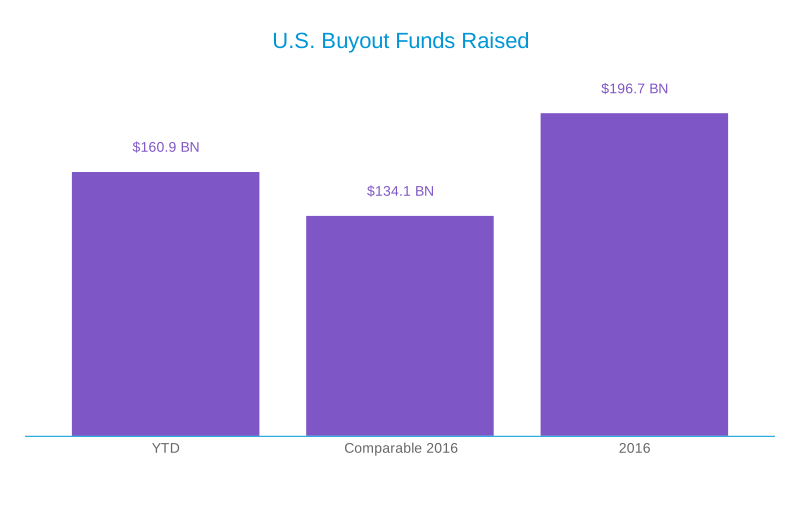
Private equity plays a role in approximately a third of middle market acquisitions and sales—and that percentage may be poised to rise significantly. Findings from a Probitas Partners survey of 98 institutional investors show that private equity firms are most interested in U.S. middle market companies with three out of four investors saying the U.S. middle market is their focus. According to data from Thomson Reuters, about $200 billion in private equity funds was waiting to be invested at the end of 2017, up from around $130 billion raised by the same time the year before.
The significant availability of middle-market focused private equity clearly introduces more options for both buyers and sellers. But it also brings with it a new set of considerations, chief among them, what will you gain in exchange for giving up equity in your firm?
On one hand, PE-owned firms consistently outperform other organizations in terms of revenue growth. Their success is based on a combination of factors. They pick companies that have the potential to grow and be sold for more than they pay. They may leverage the rest of their firm’s portfolio, and they are more aggressive about using the balance sheet. PE owners also tend to run leaner shops. And they may provide needed new growth capital.
However, not all PE firms are created equal. Indeed, when we asked middle market companies about their experience with PE owners, the experiences and perceptions were mixed and at times conflicting. One group says they love how fast their PE owners make decisions; another says they chafe because decisions are slow. Some love how PE management is sleeves-rolled-up and detail-oriented; helping with the finances; others complain that the firm is micromanaging. Some say the PE group pours money in; other says it is stingy.
If you are selling to a PE firm, or using PE money to fund an acquisition, it is important to find the right fit. It’s likely that you will be working with the PE firm for several years, and these owners will have a significant impact on the future of the company you are either buying or selling. So take your time in assessing potential PE partners. Talk to other companies in their portfolio; most PE firms will be happy to accommodate this request. And get to know a variety of PE firms. Your peers and your bank, accountant, or other advisor should be able to introduce you to some firms and PE-owned companies. The more effort you put into making a good match, the more likely you are to be pleased with the results.
Conclusion
The rate of M&A activity in the middle market has remained fairly consistent for several years, with about a quarter of companies participating in either an acquisition or sale each year, and a majority of businesses engaging in some type of transaction at some point. However, the deal landscape is more competitive than ever, making it imperative for middle market companies to understand the dynamics of each transaction and to prepare well in advance in order to get their deals right and to achieve the growth or payout they except.
When middle market companies come to the deal table, either as buyers or sellers, the vast majority have little, if any, experience in the process. Yet they have aggressive expectations for success: Buying companies anticipate realizing 26% of their total growth from such inorganic means. To achieve these goals, making external experts part of the deal team is a must. In many cases, involving those advisors earlier rather than later is key to ensuring better results.
Whether an acquisition or sale is currently on the horizon, or you just want to be better prepared for this eventuality, the time to start planning is now. If you’re an advisor with middle market clients that may benefit from a future transaction, your involvement and expertise can help make or break the deal. Either way, identifying the technical competencies needed for the deal, focusing on the financial aspects, and giving integration issues careful forethought well before the final papers are signed can pave the way for successful transactions that meet the needs of both buyers and sellers.
About the report
The U.S. Middle Market
The U.S. middle market comprises nearly 200,000 companies that generate more than $10 trillion in combined revenue annually. The middle market is defined by companies with annual revenues between $10 million and $1 billion. In addition to their geographic and industry diversity, these companies are both publicly and privately held and include family-owned businesses, sole proprietorships, and private equity-owned companies. While the middle market represents approximately 3% of all U.S. companies, it accounts for a third of U.S. private-sector GDP and jobs. The U.S. middle market is the segment that drives U.S. growth and competitiveness.
How the Research Was Conducted
The National Center for the Middle Market surveyed 400 strategic decision makers from middle market companies that either completed an acquisition or sale in the past three years or that are highly likely to sell a company or part of a company in the next three years. Respondents completed the 20-minute, self-administered survey online between October 16, 2017 and October 24, 2017. Survey respondents represent all industry segments and geographies and include a cross section of lower, core, and upper middle market firms. The Center designed the survey to understand attitudes and perceptions related to M&A, evaluate the importance of acquisitions and sales to middle market companies, identify drivers of M&A activity in the middle market, and gain insight into the obstacles and challenges involved in deal-making pre-, during, and post-transaction. In addition, the Center drew on more than five years of data from its Middle Market Indicator surveys of 1,000 executives. The learnings and takeaways are intended to inform both middle market executives and their external advisors and consultants in order to facilitate more successful deals in the future. This report was designed and prepared by the National Center for the Middle Market in consultation with Professor Steven Davidoff Solomon, Professor of Law, University of California, Berkley, and the Center’s sponsors, SunTrust Banks Inc., Grant Thornton LLP, and Cisco Systems.
The National Center for the Middle Market
The National Center for the Middle Market is a collaboration between The Ohio State University’s Fisher College of Business, SunTrust Banks Inc., Grant Thornton LLP, and Cisco Systems. It exists for a single purpose: to ensure that the vitality and robustness of middle market companies are fully realized as fundamental to our nation’s economic outlook and prosperity. The Center is the leading source of knowledge, leadership, and innovative research on the middle market economy, providing critical data analysis, insights, and perspectives for companies, policymakers, and other key stakeholders, to help accelerate growth, increase competitiveness and create jobs in this sector.
